Victoria Spearfishing Locations
The best spearfishing spots in Victoria — Port Phillip Bay, Mornington Peninsula, Great Ocean Road, and offshore. Species, seasons, and regulations.
Last updated:
Victoria has a diverse spearfishing environment ranging from sheltered bay diving to challenging open-ocean reef. Port Phillip Bay provides accessible, close-to-Melbourne diving, while the back beaches of the Mornington Peninsula, the Great Ocean Road, and offshore reefs offer more demanding conditions and larger target species.
This guide covers the key locations for shore-based spearfishing in Victoria, with notes on species, conditions, access, and the regulations that apply at each. Always verify current regulations with the Victorian Fisheries Authority before fishing — rules change and marine park boundaries are strictly enforced.
Victoria Spearfishing Overview
Victoria's spearfishing environment is dominated by Port Phillip Bay and Bass Strait. The bay is sheltered and accessible for year-round spearfishing but has lower species diversity and smaller fish than open-water sites. Bass Strait exposure — at the back beaches and Great Ocean Road — brings larger pelagics and reef fish but demands more experience, stronger conditions, and careful timing.
The Victorian spearfishing season runs year-round, though winter brings cold water (13–15°C) and summer brings better visibility on ocean-facing sites. Port Phillip Bay has the opposite pattern — visibility is better in winter but conditions are always mild.
For broader context on spearfishing in Victoria including regulations, gear, and getting started, see our complete spearfishing guide.
Regulations & Licences
Before spearfishing in Victoria:
- Recreational Fishing Licence: Required for all adults (18+). Available from the VFA website, fishing shops, and some retail outlets.
- Marine sanctuary exclusions: Spearfishing is prohibited in all no-take marine sanctuaries. These include Jawbone (Williamstown), Ricketts Point (Beaumaris), Point Cooke, Portsea Reef, Pope's Eye, and Port Phillip Heads marine parks. Check the Parks Victoria marine parks map.
- Pier exclusions: Spearfishing is prohibited within 50m of any pier, jetty, or boat ramp in Victoria.
- Bag and size limits: Apply to all species. Common targets: snapper (minimum 28cm), flathead (27cm), whiting (25cm). Check VFA for complete current limits.
- Night spearfishing: Requires a permit in some areas. Check VFA regulations.
- Abalone: Requires separate licensing. Catch by hand only — spearing abalone is illegal.
Regulations change. Always verify current rules at the VFA (Victorian Fisheries Authority) website before fishing. For a detailed breakdown of Victorian spearfishing rules — equipment restrictions, prohibited waters, size and bag limits, and protected species — see our complete regulations guide on Freediving For All.
Port Phillip Bay Sites
Port Phillip Bay has limited dedicated spearfishing spots due to marine sanctuary protections, pier exclusions, and heavy recreational use. The viable areas are:
Eastern Bay Reefs (Frankston to Mornington)
Rocky reef areas along the eastern bay shoreline between Frankston and Mornington offer accessible shore spearfishing for luderick, sweep, wrasse, and flathead on the sandy margins. Depth is typically 2–6m. Visibility is variable — 2–5m typical. Check for marine sanctuary boundaries at the southern end.
Altona & Laverton Area (Western Bay)
Open sandy and reef areas west of the Jawbone marine sanctuary (which is off-limits). Flathead are the primary target on the sandy bottom. Depth is shallow — 1–4m. Not a productive spearfishing area compared to other Victorian sites, but accessible for western suburbs residents.
Point Nepean (Entrance Channel Area)
The water around Point Nepean and the heads of Port Phillip is within a marine national park — spearfishing is prohibited. The adjacent areas outside the park boundary have stronger currents and deeper water with better species diversity, but require boat access and strong conditions management.
Mornington Peninsula Back Beaches
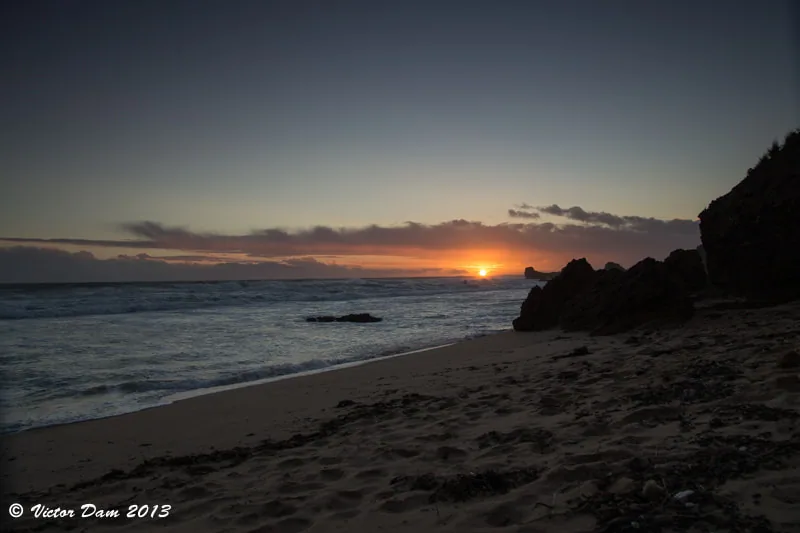
The ocean-facing southern coast of the Mornington Peninsula — Gunnamatta, Flinders, Cape Schanck — is the closest productive spearfishing to Melbourne for reef fish and larger species. These are exposed Bass Strait beaches and diving is only possible in suitable conditions.
Flinders Area (Outside Marine Sanctuary)
The rocky reef areas around Flinders — outside the Flinders Pier marine sanctuary boundary — provide access to sweep, wrasse, leatherjackets, and occasional snapper. Entry is from rocky shore access points. Visibility is typically 5–10m in good conditions. Swell management is essential — these sites can be 3m+ swell and are not beginners' locations.
Gunnamatta
Gunnamatta is primarily a surf beach with limited reef. Spearfishing is possible in calm conditions on the rocky sections. The main attraction is the lack of other divers and access to open-water pelagics in season. Rip management is critical — this beach has powerful rips.
Cape Schanck
Rocky reef at Cape Schanck provides more stable diving conditions than the open beach sites. The kelp forests here shelter wrasse, sweep, and leatherjackets. Access requires a walk from the car park. Check surf reports — swell wraps around the cape and can affect conditions without warning.
Bellarine Peninsula
The Bellarine Peninsula's ocean-facing south coast — from Ocean Grove through to Point Lonsdale — has rocky reef accessible for shore-based spearfishing. Conditions are generally less exposed than the Mornington Peninsula back beaches.
Ocean Grove & Barwon Heads
Rocky reef east of the Barwon Heads SLSC provides access to sweep, luderick, and leatherjackets in 2–6m. Entry is from the rocks — condition assessment essential. This is one of the more accessible ocean-facing reef sites within reach of Melbourne.
Point Lonsdale
The reef around Point Lonsdale lighthouse has interesting topography and species diversity, including occasional larger snapper and sweep schools. Current near the heads can be strong — time entry with tides and avoid the rip channel. Check marine park boundaries here carefully.
Phillip Island & Bass Coast
Phillip Island has diverse spearfishing terrain — sheltered bay side (Rhyll, Newhaven) and exposed ocean side (Woolamai, Cape Woolamai). The south coast reef can hold kingfish, snapper, and large sweep in season, but exposure to Bass Strait swells requires experience.
San Remo on the mainland side is more sheltered. Rocky reef around the bridge area has mullet, luderick, and flathead. Check for exclusion zones around the bridge.
The southern ocean coast of Phillip Island — accessible from the Penguin Parade area — is one of the better accessible kingfish hunting areas close to Melbourne during summer (December–March). Swell must be below 1m for safe entry.
Great Ocean Road
The Great Ocean Road coast offers Victoria's most diverse and productive coastal spearfishing, with marine national park sections interspersed with open-access reef. The distance from Melbourne (2–3 hours) means fewer day-trippers and less diving pressure on the fish.
Anglesea to Lorne
Rocky reef access at Anglesea, Point Roadknight, and Lorne with sweep, wrasse, and leatherjackets in 3–8m. Lorne pier is off-limits within 50m. The reef south and west of Lorne is accessible on calm days and holds better fish than the bay-facing reef further east.
Kennett River & Grey River
Less visited and more productive. Rocky points with kelp forest access to 8–12m. Sweep are plentiful, larger snapper possible in deeper areas. Current research before entry — access points require scouting.
Twelve Apostles Marine National Park
The Twelve Apostles area is a marine national park — spearfishing is prohibited. Respect the boundaries; fines are significant. The park covers approximately 75km of coastline. Open-access reef areas adjacent to the park are accessible.
Offshore & Boat Spearfishing
Offshore spearfishing — boat-based, targeting reef and pelagic species — is a different activity from shore diving. The main targets offshore from Victoria are kingfish (from December to April), snapper on bottom reef, and blue-throated wrasse on deeper reefs.
Charter boats operating from Queenscliff and Geelong run spearfishing trips to offshore reefs in season. Shore-based access to offshore reef quality is limited — a boat significantly expands the available locations. Depth training to 15–25m is necessary for productive offshore diving.
Target Species in Victoria
- Flathead: Year-round in Port Phillip Bay, sandy substrate, 1–5m
- Luderick (blackfish): Rocky reef, kelp, year-round on ocean coast
- Sweep: Ocean reef, kelp forests, year-round
- Leatherjackets: Bay and ocean reef, year-round, prolific
- Wrasse: Rocky reef throughout, most accessible on ocean-facing sites
- Snapper: Deeper reef (8m+), spring and autumn peak; size limits apply
- Kingfish (yellowtail): Offshore and ocean coast, December–April only
- Salmon: Seasonal run, beaches in autumn, pelagic
Safety Considerations
Spearfishing is a breath-hold activity — all freediving safety rules apply. Additional considerations specific to spearfishing:
- Never dive alone. The buddy system is non-negotiable for spearfishing. A loaded speargun in the water with an incapacitated diver is a serious hazard.
- Unload speargun before exiting water. A speargun should never leave the water loaded.
- Manage swell before entry. Ocean sites change rapidly. Never commit to entry until you have watched the swell pattern for at least 10 minutes.
- Carry a dive flag. A surface marker buoy or dive flag is required when spearfishing in Victoria to alert boat traffic.
- Handle catch safely. Reef fish with spines, flathead with gill plates, and any wounded fish can cause injury. Carry a knife for dispatch.
- Be aware of blue-ringed octopus. Present throughout Victorian waters — never handle any octopus. Fatal envenomation risk.
For full safety protocols, see our freediving safety rules guide.