Freediving Courses Melbourne
Compare every freediving course in Melbourne - prices from $350, certification options, class sizes, and what to expect on course day.
Last updated:
What to Look for in a Course
Not all freediving courses are created equal. Here's what matters when choosing a course in Melbourne:
- Certified instructors — Look for instructors certified by recognized agencies
- Small class sizes — More individual attention means better learning
- Pool and open water components — Both are essential for proper training
- Safety focus — Rescue skills and buddy procedures should be emphasized
- Theory education — Understanding the physiology is crucial for safety
Questions to Ask Before Booking
- What certification agency is the course through?
- What is the instructor-to-student ratio?
- How many pool sessions and open water dives are included?
- What rescue training is included?
- What happens if I don't meet the course requirements?
- Is equipment included or do I need to bring my own?
Red Flags to Watch For
Be cautious if you encounter:
- Very large class sizes (more than 4-6 students per instructor)
- No pool training before open water
- Minimal or no rescue/safety training
- Pressure to progress faster than you're comfortable with
- Instructors who aren't currently certified or insured
- No written materials or theory component
- Clubs or providers with governance or safety concerns — read the MFC review and Drifters Freediving review before committing
Certification Options
Several certification agencies offer freediving courses in Melbourne:
AIDA (Association Internationale pour le Développement de l'Apnée)
The original freediving certification agency, founded in 1992. AIDA courses are well-structured with clear performance standards at each level. Level 1 (AIDA 2) requires a 2-minute static breath-hold and a 16-metre constant weight dive. AIDA is widely respected in the competitive freediving community and has the longest track record.
SSI (Scuba Schools International)
A large dive training agency that also offers freediving certifications. SSI Level 1 requires a 90-second static and a 12-metre constant weight dive. Their digital learning platform means you can complete theory online before the practical sessions. SSI certifications are recognised globally.
PADI (Professional Association of Diving Instructors)
The world's largest recreational dive training organisation. PADI Freediver Level 1 requires a 90-second static and a 10-metre constant weight dive. PADI's brand recognition means your certification is immediately understood by dive operators worldwide.
Molchanovs
Founded by world champion Alexey Molchanov. Known for detailed technique instruction, particularly around equalisation (the Molchanovs system teaches Frenzel and mouthfill progressively). Wave 1 requires a 1:30 static and a 12-metre constant weight dive. Popular among freedivers who plan to pursue depth.
Course Formats
Melbourne instructors offer courses in different formats:
- Weekend intensive — The most common format. Theory on Friday evening or Saturday morning, pool session, then open water dive on Sunday. Good if you want to get certified quickly.
- Spread over multiple weeks — Theory one evening, pool session the following week, open water another day. Allows more time to absorb information and practise between sessions.
- Private or semi-private — One-on-one or small group instruction. More expensive but you get personalised attention and can progress at your own pace.
What to Expect on Course Day
A typical beginner course covers:
Theory
Usually 2–4 hours covering the physics and physiology of breath-hold diving: how pressure affects your body, why equalisation matters, what happens during a breath-hold (the dive reflex, CO2 build-up, urge to breathe), and risk management including shallow water blackout, lung squeeze, and nitrogen narcosis at depth.
Pool Session
Typically 2–3 hours in a pool. You'll practise:
- Static apnea — Lying face-down at the surface, building your breath-hold with instructor coaching
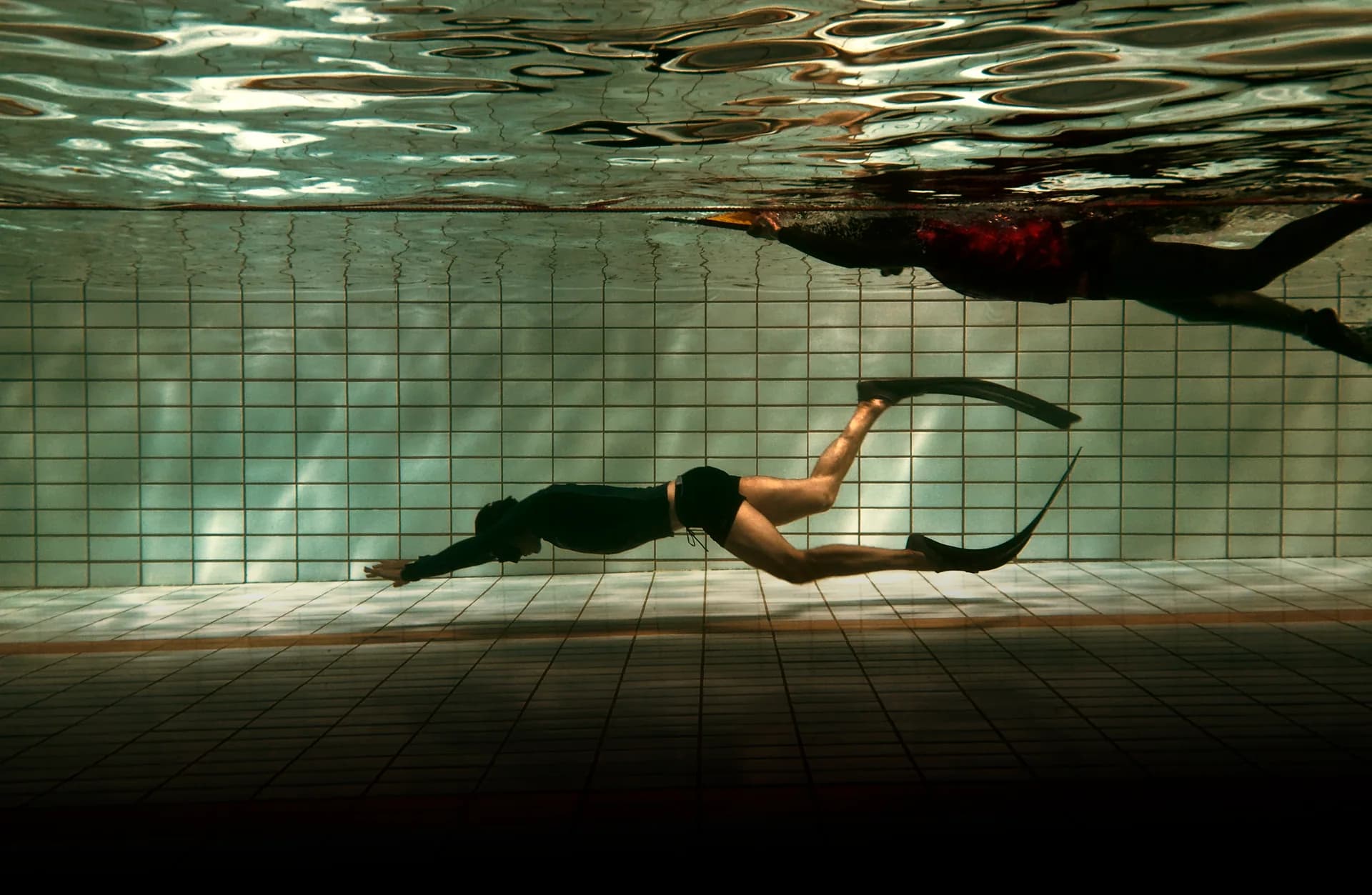
- Dynamic swimming — Horizontal underwater swimming to develop efficiency and finning technique
- Rescue skills — Recognising blackout and loss of motor control, rescue breathing, and towing an unconscious diver
See our pool training guide for more on what pool sessions involve.
Open Water Dive
Usually at a Mornington Peninsula pier site (Rye Pier is common for beginners). You'll practise descending along a line, equalising at depth, performing buddy safety procedures, and surface protocols. Most instructors bring a weighted line and float to a sheltered location with 8–15 metres of water.
For a national-audience walkthrough of what your first freediving course actually feels like — classroom theory, pool session, open-water dive, common surprises — see our companion piece: what to expect on your first freediving course.
After Your Course — Next Steps
Getting certified is just the beginning. Here's how to keep progressing:
- Join a club — Find regular training partners and organised dives
- Train in the pool — Weekly breath-hold training builds CO2 tolerance and technique
- Build your gear kit — Start with a basic kit and upgrade gradually
- Explore dive sites — Work through Melbourne's best freediving spots, starting with easy pier sites
- Consider Level 2 — Once you're comfortable at 10–16 metres, an intermediate course teaches advanced equalisation, deeper diving, and more
Melbourne Training Providers
Melbourne has several freediving schools and instructors. We recommend doing your research, reading reviews, and speaking with instructors before booking. Consider:
- Their certification agency and instructor credentials
- Where training takes place (pool locations, open water sites)
- What's included in the course price (see our costs breakdown)
- Reviews from past students
Safety Considerations
Freediving carries inherent risks. A good course will teach you:
- Proper breathing techniques and relaxation
- Equalisation methods (Valsalva, Frenzel, and when to use each)
- Recognising the signs of hypoxia and loss of motor control
- Buddy procedures and rescue techniques
- When NOT to dive (illness, fatigue, poor conditions)
Critical safety rule: Never practise breath-holds alone in water. Shallow water blackout can happen without warning, even to experienced freedivers. Always have a trained buddy watching you.