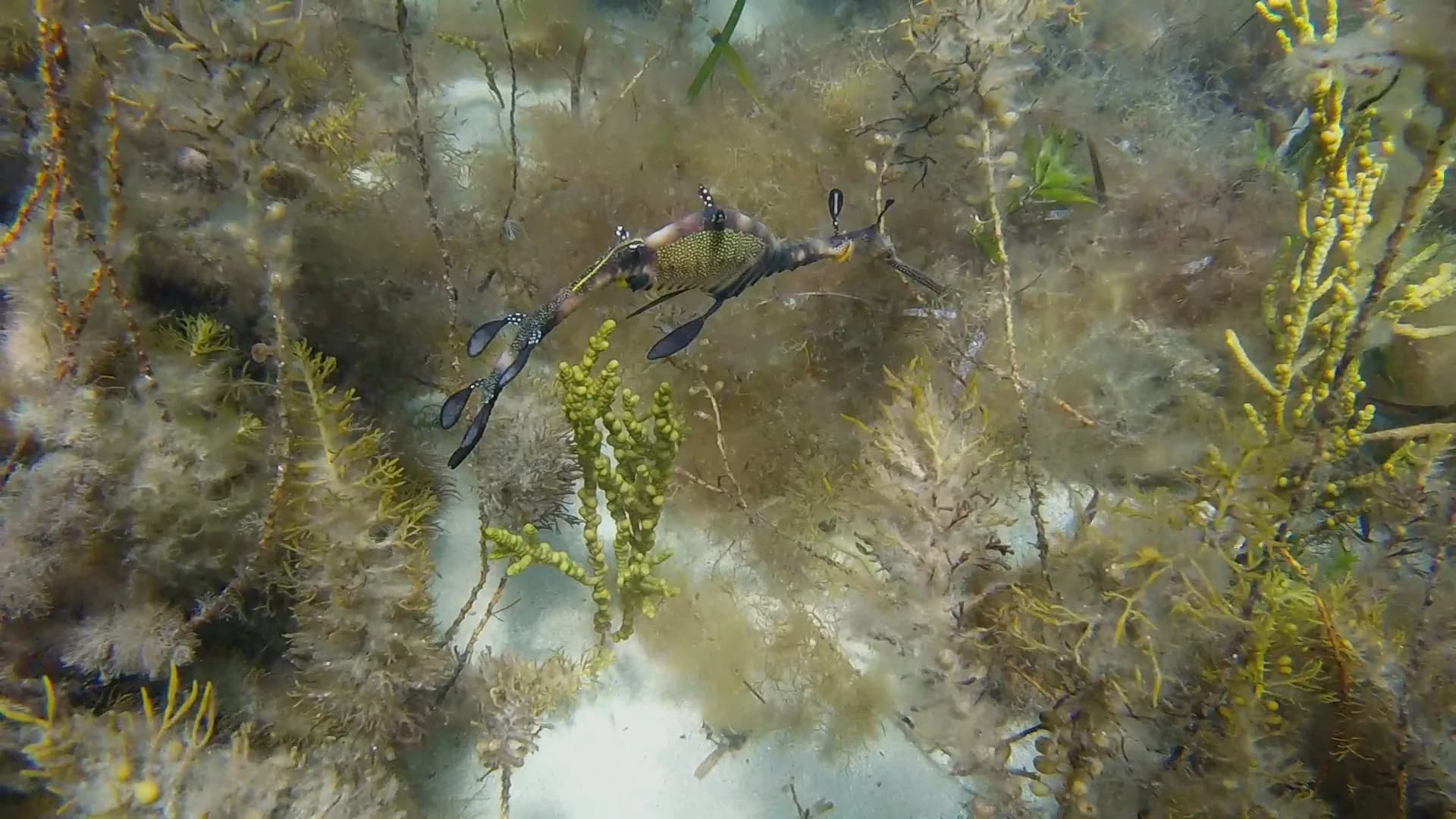
Freediving with Weedy Seadragons in Melbourne
Where to find Victoria's official marine emblem and how to help track these incredible creatures.
Last updated:
About Weedy Seadragons
The weedy seadragon (Phyllopteryx taeniolatus) is Victoria's official marine emblem. These remarkable fish are related to seahorses and can grow up to 45cm long. They're found only in the temperate waters of southern Australia, making Melbourne one of the best places in the world to see them.
Weedy seadragons are masters of camouflage, with leaf-like appendages that help them blend into seaweed and kelp. Unlike seahorses, they cannot grip with their tails and drift with the currents.
Where to See Them
Port Phillip Bay and Western Port are home to significant seadragon populations. For a complete overview of all diving locations, see our guide to the best freediving spots in Melbourne. The best seadragon locations include:
Flinders Pier
Perhaps the most famous seadragon spot in Australia. Flinders Pier was featured in BBC's Blue Planet II documentary. The pylons and nearby seagrass beds provide excellent habitat.
Portsea Pier
Another excellent location with good visibility and healthy seadragon population. The kelp forests around the pier are prime habitat.
Rye Pier
A more accessible location that's great for beginners. Seadragons can be found around the pier pylons and adjacent seagrass.
Blairgowrie Pier
Known for diverse marine life including seadragons. The marina area also holds good populations.
Best Times of Year
Seadragons can be seen year-round, but certain times offer special opportunities:
- Winter (June-August) — Breeding season when males carry eggs on their tails
- Spring (September-November) — Eggs hatch, juveniles may be spotted
- Year-round — Adults are present throughout the year
Water visibility is often best in autumn and early winter before winter storms.
Freediving Tips for Seadragon Encounters
- Move slowly — Seadragons are easily spooked by sudden movements
- Look carefully — Their camouflage is excellent; scan seaweed and kelp slowly
- Stay low — Approach at their level, not from above
- Give space — Maintain at least 1-2 meters distance
- No touching — Never touch or chase seadragons
- Watch your fins — Avoid kicking up sediment or damaging habitat
- Be patient — Spend time in one area rather than rushing around
Conservation Status and Protection
Weedy seadragons are fully protected in Victoria. It is illegal to:
- Catch, harm, or harass seadragons
- Remove them from the water
- Possess seadragons or their parts
Populations face threats from habitat loss, pollution, and climate change. As freedivers, we can help by:
- Reporting sightings to citizen science programs
- Avoiding damage to seagrass and kelp habitat
- Supporting marine conservation efforts
How to Help: VNPA Dragon Quest
The Victorian National Parks Association runs Dragon Quest — a citizen science program tracking weedy seadragon populations in Port Phillip and Western Port bays.
If you photograph a seadragon while freediving, you can submit your images to help researchers:
- Identify individual seadragons by their unique markings
- Track population numbers and distribution
- Monitor population health over time
- Understand breeding patterns and habitat use
Help Protect Melbourne's Seadragons
Your seadragon photos can contribute to vital conservation research. Join Dragon Quest and help track Victoria's marine emblem.
Contribute to Dragon Quest →Photography Tips
If you want to photograph seadragons for Dragon Quest or personal records:
- Capture both sides — Individual ID requires photos of both flanks
- Get close-ups of the head — Facial markings are unique identifiers
- Include location data — Note exactly where you saw the seadragon
- Avoid flash — Use natural light when possible
- Multiple shots — Take several photos to ensure you have clear images
Blue Planet II Connection
Melbourne's seadragons gained international fame when BBC's Blue Planet II filmed mating behavior at Flinders Pier. The footage showed male seadragons receiving eggs from females and carrying them until hatching — a process that takes about eight weeks.
This documentary brought global attention to Victoria's incredible marine life and the importance of protecting these waters.
For official information about Victoria's state emblems, visit vic.gov.au.