Freediving Gear Guide Melbourne
What you actually need, what can wait, and where to buy it in Melbourne.
Last updated:
You don't need much gear to start freediving. A mask, snorkel, fins, wetsuit, and weight belt will cover you for every pier site in Melbourne. The trick is knowing what matters, what doesn't, and what to upgrade when you're ready.
Start Simple
If you're taking a freediving course, most schools provide gear for the duration of the course. Try before you buy — you'll have a much better idea of what you want after a course than before one.
Essential Gear
Mask
A low-volume mask is the single most important piece of freediving gear. Low volume means less air space between your face and the lens, which means less air needed to equalise the mask as you descend. This saves oxygen and makes equalisation easier.
- What to look for: Low internal volume, tempered glass lenses, soft silicone skirt, comfortable fit
- What to avoid: Full-face snorkel masks (they fog, restrict breathing, and can't be equalised). High-volume scuba masks (waste air at depth)
- Fit test: Place the mask on your face without the strap and inhale through your nose. It should seal and stay on your face. If it doesn't, try a different shape
- Budget: $40-80 for a good low-volume mask. No need to spend more
- Popular choices: Cressi Nano, OMER Alien, Salvimar Noah, Aqualung Sphera
For a deeper dive on lens options, fit-test methodology, and troubleshooting, see our mask buying guide on Freediving For All.
Snorkel
Keep it simple. A basic J-tube or semi-dry snorkel is all you need. Freedivers use the snorkel for breathing at the surface between dives — not while diving.
- What to look for: Simple design, comfortable mouthpiece, flexible tube
- What to avoid: Dry-top snorkels with valves (they can trap water and restrict airflow). Snorkels built into full-face masks
- Budget: $15-30
- Tip: Many freedivers remove the snorkel before diving and tuck it into their wetsuit or weight belt to reduce drag
Fins
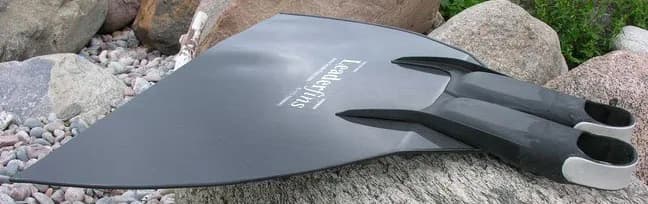
Fins are where freediving gear diverges most from snorkeling and scuba. Freediving fins are long — typically 80-100cm — which generates more thrust per kick, letting you move efficiently with less effort and less oxygen consumption.
Starting Out
You don't need long freediving fins immediately. Standard short snorkeling fins or bodyboarding fins will work fine for pier diving and shallow freedives while you develop your technique. Many beginners find long fins awkward at first.
Freediving-Specific Fins
- Plastic/polymer blades: $80-200. Durable, forgiving, good for beginners and intermediate divers. Brands like Cressi, Mares, and Beuchat make solid entry-level long fins
- Fibreglass blades: $200-400. More responsive than plastic with better energy transfer. A noticeable upgrade in efficiency
- Carbon fibre blades: $400-800+. The lightest, most efficient, and most responsive. Fragile — one knock on a pier pylon can crack a blade. Best reserved for experienced divers who know their technique
- Foot pocket fit: This matters more than blade material. The foot pocket should be snug but not painful. Try them on with the same neoprene socks you'll dive in
- Tip: Buy good foot pockets first (Cetma, Pathos, Leaderfins) and upgrade blades later. Foot pockets last for years; blades can be swapped
For a detailed comparison of fin materials, stiffness selection by body weight, and brand reviews, see our fins buying guide and the carbon vs fiberglass breakdown on Freediving For All.
Wetsuit
In Melbourne, a wetsuit is non-negotiable. The water is cold for most of the year, and without neoprene you'll be too uncomfortable to enjoy the dive — or worse, risk hypothermia.
Thickness by Season
- Summer (Dec-Feb), 18-23°C: 3mm
- Autumn/Spring (Mar-May, Sep-Nov), 12-18°C: 5mm
- Winter (Jun-Aug), 10-13°C: 5-7mm with hood and gloves
Freediving vs Standard Wetsuits
Freediving wetsuits are typically open-cell neoprene on the inside (sticks directly to your skin for better insulation) and smooth-skin or lined on the outside. They're more flexible and streamlined than scuba wetsuits, making it easier to breathe and move.
That said, any wetsuit will work when you're starting out. If you already own a surfing or scuba wetsuit in the right thickness, use it. Upgrade to a freediving-specific suit once you know you're committed.
- Budget option: Second-hand scuba or surf wetsuit, $50-150
- Entry freediving suit: $200-400 (Cressi, Beuchat, Salvimar)
- Mid-range: $400-700 (Omer, Mares, Elios)
- Custom-fitted: $500-1,000+ (tailored to your body measurements)
Weight Belt
A wetsuit makes you buoyant. A weight belt counteracts that buoyancy so you can descend comfortably. Without weights, you'll be fighting to get below the surface.
- Type: Rubber weight belt (stretches with your chest as you breathe, unlike nylon belts which restrict breathing)
- How much weight: Typically 2-5kg depending on your body composition and wetsuit thickness. Start light and add weight until you're neutrally buoyant at around 5-10 metres
- Quick release: The belt must have a quick-release buckle that you can open with one hand. This is a safety requirement — you need to be able to ditch your weights in an emergency
- Budget: $30-60 for belt, $3-5 per kg of lead weights
For the physics of weighting — neutral-buoyancy calculations, Boyle's Law at depth, rubber vs webbing belts — see our weight belt setup guide on Freediving For All.
Dive Float and Flag
A brightly coloured surface float with a dive flag is essential for open water diving in Melbourne. Boats and jet skis operate near most pier sites, and a float is how they know you're in the water.
- What to look for: High-visibility inflatable float with a dive flag (Alpha flag — white and blue). A line attaches the float to your weight belt or wrist
- Budget: $30-80
- Note: In Victoria, a five-knot speed limit applies to all vessels within 100m of a displayed diver-below signal
Nice to Have
Dive Computer / Watch
A freediving watch tracks your depth, dive time, surface interval, and water temperature. Not essential for pier dives where depths are well known, but very useful for tracking your progress and ensuring adequate rest between dives.
- Budget option: Suunto D4F (~$300) or similar entry-level freediving computer
- Mid-range: Garmin Descent G1 (~$500-600), Suunto D5, Shearwater Peregrine
- Alternative: A cheap depth gauge ($30-50) gives you depth without the other features
Torch
A small underwater torch is invaluable for pier diving — peering into crevices under pylons, spotting nocturnal species during the day, and essential for night dives. Melbourne's pier sites come alive at night with octopus, cuttlefish, and dumpling squid.
- Budget: $30-80 for a reliable dive torch
- Tip: A narrow beam is better for spotting small creatures; a wide beam is better for general navigation
Neck Weight
A neoprene collar with distributed lead weight, worn around the neck. Moves weight from your hips to your upper body, improving your trim and body position in the water. Not essential for beginners but a worthwhile upgrade once your technique develops.
- Budget: $50-100
Nose Clip
Some freedivers use a nose clip instead of a mask for pool training (static and dynamic apnea). Eliminates the need to equalise a mask and reduces air consumption. Not used for open water diving where you need to see.
- Budget: $10-30
Camera
Melbourne's marine life is incredibly photogenic. If you want to capture what you see, a small action camera (GoPro or similar) in a dive housing is the easiest option. For serious underwater photography, a compact camera with underwater housing and a video light opens up much more.
What NOT to Buy
- Full-face snorkel masks — They fog constantly, restrict breathing, cannot be equalised at depth, and have been linked to drowning incidents. Avoid them entirely
- Carbon fins as a beginner — They're fragile, expensive, and you won't notice the performance difference until your technique is solid. Start with plastic or fibreglass
- Expensive dive computers before your first course — Your phone's stopwatch works fine for tracking surface intervals when starting out
- Brand-new premium wetsuits before you've dived — You might discover freediving isn't for you, or that you prefer a different thickness or style. Start affordable
Where to Buy in Melbourne
Specialist Dive Shops
- Adreno Ocean Outfitters (Cheltenham) — The largest freediving and spearfishing gear retailer in Melbourne. Wide range of masks, fins, wetsuits, spearguns, and accessories. Knowledgeable staff. Also available online at adreno.com.au
- The Scuba Doctor (Rye) — Long-established dive shop on the Mornington Peninsula with good freediving gear selection. Conveniently located near the best dive sites. Staff know the local conditions well
- Simple Dive (Moorabbin) — Stocks freediving and scuba gear with courses available
Online
- Adreno (adreno.com.au) — Largest Australian online dive retailer. Free shipping over a certain threshold, good return policy
- DiveMaster Scuba (divemasterscuba.com.au) — Australian online option
- Spearfishing.com.au — Focused on spearfishing but stocks freediving gear
Second-Hand
Wetsuits, weight belts, and basic fins are all fine to buy second-hand. Check Facebook Marketplace, Gumtree, and the Melbourne freediving and spearfishing Facebook groups. Masks should ideally be bought new to ensure a proper seal.
Starter Kit Summary
| Item | Budget | Mid-Range | Notes |
|---|---|---|---|
| Mask | $40-60 | $60-80 | Low-volume, tempered glass |
| Snorkel | $15-25 | $25-35 | Simple J-tube |
| Fins | $50-100 | $150-300 | Short fins OK to start; long plastic fins mid-range |
| Wetsuit | $50-150 | $250-500 | 5mm for most of year. Second-hand OK |
| Weight belt + weights | $40-70 | $60-90 | Rubber belt, quick-release buckle |
| Dive float + flag | $30-50 | $50-80 | Essential for open water safety |
| Total | $225-455 | $595-1,085 |
For a full breakdown of all freediving costs in Melbourne including courses, club memberships, and ongoing expenses, see our freediving costs guide.
Frequently Asked Questions
What gear do I need to start freediving?
A low-volume mask, simple snorkel, fins (short fins are fine to start), a wetsuit appropriate for the water temperature, and a weight belt with weights. For Melbourne, a 5mm wetsuit is the minimum for most of the year. A dive float and flag are also essential for open water.
What wetsuit do I need for freediving in Melbourne?
A 3mm wetsuit for summer, 5mm for autumn and spring, and 5-7mm with hood and gloves for winter. A standard surfing or scuba wetsuit works fine when starting out — upgrade to a freediving-specific suit once you're committed.
Where can I buy freediving gear in Melbourne?
Adreno Ocean Outfitters in Cheltenham has the largest selection. The Scuba Doctor in Rye is another excellent option near the best dive sites. Both also sell online.
How much does freediving gear cost?
A starter kit (mask, snorkel, basic fins, second-hand wetsuit, weight belt, float) can cost $225-455. A mid-range setup with freediving-specific gear runs $595-1,085. Premium carbon fibre fins alone cost $400-800+.