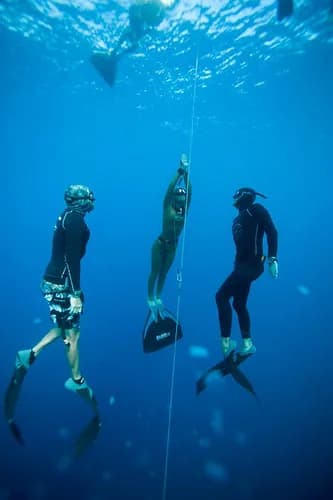
Freediving Schools Melbourne — Every Provider Reviewed
A comprehensive review of every freediving school operating in Melbourne and Victoria — what they offer, where they train, and how to choose the right one for you.
Last updated:
Melbourne has a strong freediving education scene. From established schools running monthly courses to intimate boutique providers and specialty instructors offering retreats, there's a course for every learning style and budget.
This guide reviews every freediving school currently operating in Melbourne and Victoria. We cover certification agencies, course formats, pricing, locations, instructor styles, and what makes each provider different. If you're wondering which school to choose, this is your starting point.
Overview
Freediving education in Melbourne has grown significantly over the past decade. What was once a niche skill taught by a handful of instructors has become a thriving scene with multiple schools, diverse teaching styles, and year-round course availability.
The schools reviewed here all operate under recognised certification agencies (PADI, Molchanovs, AIDA), maintain current insurance, and have established track records. Each offers something different — whether that's boat access, small class sizes, regular course dates, or specialty training.
This is not a ranking. There is no single "best" school — what matters is which school matches your learning style, schedule, budget, and progression goals. Read through each provider, compare what they offer, and make an informed choice.
What to Look For
Before choosing a school, read our guide on how to choose a freediving course. It covers what questions to ask, what red flags to watch for, and how to evaluate an instructor's credentials.
Salt Sessions Freediving
Salt Sessions is the largest and most established freediving school in Victoria. Founded by experienced instructors with backgrounds in competitive freediving and spearfishing, Salt Sessions has been running courses in Melbourne since 2016.
What They Offer
- Certification agencies: PADI Freediver
- Course schedule: Monthly courses year-round, with additional courses during peak season
- Class sizes: Typically 4-6 students per instructor for Level 1, smaller for advanced courses
- Course format: Theory session (online or evening session), pool training at Melbourne Aquatic Centre or similar, open water dives at Mornington Peninsula pier sites (Rye Pier, Blairgowrie, Sorrento)
- Pricing: From $350 (PADI Basic Freediver, pool only) or $600 (PADI Freediver Level 1, 2 days with open water). Level 2 from $600. Boat dives from $170-250.
- Gear rental: $90 locally
Unique Strengths
Salt Sessions' main strength is consistency and availability. If you want a course that runs on a regular schedule with multiple dates to choose from, Salt Sessions delivers. They offer PADI certification.
Their instructors have deep local knowledge of Melbourne dive sites, particularly the Mornington Peninsula piers. Many students return for Level 2 and Level 3 courses, and Salt Sessions has a strong post-course community with regular club dives and social events.
Who It's Best For
Salt Sessions is ideal if you want a structured, well-established course with regular scheduling. It's a good choice for beginners who value a clear progression path and access to ongoing training after certification.
Freediving Family
Freediving Family is Australia's largest freediving school, operating across multiple states. Their Melbourne operation is based at Adreno Cheltenham for theory and pool sessions, with open water training conducted from boats departing Queenscliff and Portsea.
What They Offer
- Certification agency: Molchanovs (Wave 1, Wave 2, Wave 3, Lap 1 pool speciality)
- Course schedule: Regular monthly courses, with additional specialty courses and international travel opportunities
- Class sizes: Varies by course, typically 4-8 students for Level 1
- Course format: Theory at Adreno Cheltenham, pool sessions at nearby facilities, open water boat dives from Queenscliff or Portsea
- Pricing: $400-500 for Level 1, boat dive add-ons extra
- Gear rental: Available through Adreno partnership
- Special offerings: Boat dive access (Lonsdale Wall, Portsea channels), international freediving travel, specialty courses (depth, waves, pool performance)
Unique Strengths
Freediving Family's standout feature is boat access. While most Melbourne schools conduct open water training at pier sites (which are excellent for beginners and intermediate divers), Freediving Family offers boat dives to deeper sites like Lonsdale Wall and the Portsea channels. This is particularly valuable for Level 2 and Level 3 students progressing beyond the 16-20 metre depths available at piers.
They also run a national network, so if you travel interstate or internationally, you can continue your training with the same organisation. Their partnership with Adreno means convenient access to gear purchases and advice.
Who It's Best For
Freediving Family is ideal if you plan to pursue deeper freediving (beyond 20 metres) and want boat dive access as part of your progression. It's also a good fit if you value being part of a larger national community with travel opportunities.
Liv For The Sea
Liv For The Sea is a boutique freediving school based on the Mornington Peninsula, run by experienced instructor Olivia. Known for small class sizes and personalised attention, Liv For The Sea focuses on building confident, safe freedivers through patient, supportive teaching.
What They Offer
- Certification agencies: PADI and Molchanovs
- Course schedule: Flexible scheduling, often tailored to small groups or private bookings
- Class sizes: Maximum 2-4 students per course (often smaller)
- Course format: Theory and pool at local facilities, open water at Mornington Peninsula pier sites
- Pricing: $400-500 for Level 1, with semi-private and private options at higher price points
- Gear rental: Included in course price
Unique Strengths
Liv For The Sea's strength is intimate, personalised instruction. With class sizes capped at 2-4 students, you receive far more one-on-one coaching than in larger courses. This is particularly valuable for students who are nervous, need extra time to develop equalisation skills, or simply learn better in quieter environments.
Olivia's teaching style is calm, patient, and focused on building genuine confidence rather than rushing through material. Many students report that the small group environment made them feel safe to ask questions and progress at their own pace.
Who It's Best For
Liv For The Sea is ideal if you prefer small, supportive learning environments and want personalised attention. It's particularly suited to nervous beginners, students with equalisation challenges, or anyone who values a slower, more tailored learning pace.
Drifters Freediving
Note: Community members have raised concerns about training standards, safety protocols, and instructor conduct at Drifters Freediving. We recommend reading our full Drifters Freediving review before booking, and doing your own due diligence on any provider you choose.
Drifters Freediving offers a different model: freediving retreats and specialty trips rather than regular weekend courses. Operating out of Melbourne with a focus on experiential learning, Drifters combines certification courses with adventure travel.
What They Offer
- Certification agency: AIDA (AIDA 1, AIDA 2, AIDA 3)
- Course format: AIDA 1 is a 1-day discovery course. AIDA 2 runs over 3 days. AIDA 3 runs as multi-day retreats at Kilsby Sinkhole or internationally.
- Locations: Pool sessions at MSAC (Albert Park). Open water at Port Phillip Bay and Lake Purrumbete (Camperdown). AIDA 3 at Kilsby Sinkhole (SA) or Bali.
- Class sizes: Small groups, typically 4-6 students
- Pricing: $350 (AIDA 1, 1 day), $660 (AIDA 2, 3 days), $990 (AIDA 3 at Kilsby Sinkhole), $1,200 (AIDA 3 Bali Deep Camp)
Unique Strengths
Drifters' standout offering is access to unique dive locations as part of the course. Kilsby Sinkhole, for example, is one of Australia's most beautiful freediving sites — a deep, crystal-clear freshwater sinkhole in South Australia. Training at these locations is immersive, memorable, and provides a very different learning experience from pier-based courses.
The retreat format also allows for longer, slower-paced learning. Instead of cramming everything into a single weekend, you have multiple days to absorb theory, practise in the pool, and build your skills progressively. This suits some learning styles far better than intensive weekend courses.
Who It's Best For
Drifters is ideal if you prefer experiential, immersive learning and have the flexibility for multi-day trips. It's particularly suited to students who want to combine their certification with adventure travel and access to exceptional dive sites.
Scubabo
Scubabo is a dive centre based in Queenscliff at the entrance to Port Phillip Bay. While primarily focused on scuba diving, they also offer freediving courses and have unique access to some of Melbourne's best dive sites, including Lonsdale Wall and nearby seal colonies.
What They Offer
- Certification agency: SSI Freediving
- Course schedule: On-demand scheduling, often tailored to groups
- Class sizes: Flexible, typically small groups
- Course format: Theory and pool in Queenscliff area, open water dives at local sites (Queenscliff Pier, Portsea). SSI Instructor Training Centre.
- Pricing: Contact for pricing - phone (03) 5258 1188 or email [email protected]
- Special offerings: Seal swim experiences, boat charters, access to Lonsdale Wall and deeper sites, combined scuba/freediving opportunities
Unique Strengths
Scubabo's location gives them unique access. Based in Queenscliff, they can reach sites like Lonsdale Wall, Portsea Hole, and the local seal colonies easily by boat. For students interested in combining freediving with wildlife encounters (particularly seal swimming), Scubabo offers a distinctive experience.
They also cater to divers who do both scuba and freediving, making it easy to cross-train or add freediving skills to an existing scuba qualification.
Who It's Best For
Scubabo is ideal if you're based on the Mornington Peninsula or Bellarine Peninsula and want local access to training. It's also a great choice if you're interested in seal swimming or combining freediving with scuba diving.
WaterMaarq / Marlon Quinn
Marlon Quinn is a PADI Master Freediving Instructor and Instructor Trainer based in Blairgowrie on the Mornington Peninsula. He founded WaterMaarq Freediving in 2014 — one of Melbourne's longest-running freediving schools — and now operates under his own name at marlonquinn.com. As an Instructor Trainer, he holds one of the highest PADI teaching qualifications: he can train and certify other freediving instructors, not just students.
Quinn trained under world champion freedivers including Umberto Pelizzari and Stavros Kastrinakis, and is also an accredited Oxygen Advantage breathwork coach, giving his courses an unusually strong foundation in breath training alongside technical freediving skills.
What They Offer
- Certification agency: PADI
- Courses: PADI Basic Freediver (1 day), PADI Freediver Level 1, Level 2 retreat, Level 3 Master retreat, Mermaid Instructor Course
- Specialty courses: Big wave surf breathwork (1 day), Oxygen Advantage breathwork coaching, dolphin swim tours
- Location: Blairgowrie, Mornington Peninsula — ocean-based training at local piers and marine sites
- Class sizes: Small groups
- Pricing: ~$350 (Basic Freediver, 1 day); contact marlonquinn.com for full pricing
Unique Strengths
Quinn's Blairgowrie base means training happens in the ocean from the start — at sites like Blairgowrie Pier, Rye, and nearby Mornington Peninsula dive sites — rather than starting in a city pool and travelling to open water. This gives students real ocean experience alongside their certification.
The integration of Oxygen Advantage breathwork coaching is also distinctive. Quinn teaches breath control not just as a freediving tool but as a broader wellness and performance practice, which appeals to surfers, athletes, and anyone interested in breathwork beyond just extending their bottom time.
Who It's Best For
WaterMaarq / Marlon Quinn is ideal if you're based on the Mornington Peninsula and want local ocean training, if you're a surfer looking for breathwork and apnea skills for big wave safety, or if you want your freediving education grounded in breathwork and wellness as well as technical diving.
Comparison Table
Here's a side-by-side comparison of Melbourne's freediving schools to help you choose:
| School | Agencies | Price Range | Class Size | Unique Features |
|---|---|---|---|---|
| Salt Sessions | PADI | $350 (Basic) / $600 (Level 1) | 4-6 | Monthly courses, largest in Victoria, pier training |
| Freediving Family | Molchanovs | $400-500 | 4-8 | Boat dive access, national network, Adreno partnership |
| Liv For The Sea | PADI, Molchanovs | $400-500 | 2-4 | Small groups, personalised attention, flexible scheduling |
| Drifters Freediving | AIDA | $350 (AIDA 1) / $660 (AIDA 2) | 4-6 | MSAC pool, Kilsby Sinkhole retreats, Bali Deep Camp |
| Scubabo | SSI | Contact for pricing | Flexible | Queenscliff based, seal swims, Lonsdale Wall access |
| WaterMaarq / Marlon Quinn | PADI | ~$350+ (contact for full pricing) | Small groups | Blairgowrie-based, ocean training, Oxygen Advantage breathwork, surf apnea |
What to Expect on Day One
Regardless of which school you choose, Level 1 freediving courses follow a similar structure. Understanding what happens on course day helps you prepare mentally and physically.
Theory Session (2-4 Hours)
Most courses begin with theory, either completed online in advance or delivered in person on the first morning. Topics covered include:
- Physiology: How your body responds to breath-holding — the dive reflex, oxygen consumption, CO2 tolerance, and the urge to breathe
- Physics: How pressure increases with depth, why your lungs compress, and the importance of equalisation
- Safety: Shallow water blackout, hypoxia, how to recognise the signs of distress, and what to do if a buddy loses consciousness
- Equalisation techniques: Valsalva, Frenzel, and mouthfill methods for clearing your ears and sinuses at depth
- Buddy procedures: Surface protocols, dive signals, and the one-up-one-down rule
Theory might sound dry, but it's critical. Understanding why safety rules exist and how your body works underwater gives you the foundation to dive confidently and make smart decisions.
Pool Session (2-3 Hours)
The pool session is where theory becomes practice. You'll work on:
- Static apnea: Lying face-down at the surface, relaxed, practising breath-holds. Your instructor will coach you through breathing techniques, relaxation, and managing the urge to breathe. Most beginners reach 1:30 to 2:00 minutes by the end of the session
- Dynamic swimming: Underwater horizontal swimming along the bottom of the pool. This builds finning technique, efficiency, and breath-hold confidence while moving
- Rescue skills: Learning to recognise loss of motor control (LMC) and blackout, how to surface an unconscious diver, and rescue breathing techniques. This is non-negotiable — every freediver must know how to rescue their buddy
Pool training is controlled, safe, and surprisingly meditative. Most students are nervous before their first pool session and surprised at how calm and manageable it feels once they start.
See our pool training guide for more on what to expect and how to prepare.
Open Water Dive (Half to Full Day)
Open water training takes place at a pier site or, for some schools, from a boat. Typical locations for Melbourne courses include Rye Pier, Blairgowrie Pier, Sorrento Pier, or Queenscliff Pier. Boat-based courses might visit Lonsdale Wall or the Portsea channels.
During the open water session, you'll practise:
- Descending a line: Your instructor sets up a weighted line from a surface float. You practise descending the line, equalising your ears every metre or two, and returning to the surface
- Constant weight dives: Swimming down to a target depth (usually 10-16 metres for Level 1) and back up under your own power
- Buddy safety: One-up-one-down — one person dives while the buddy watches from the surface, ready to assist if needed
- Surface protocols: Demonstrating you're conscious and in control immediately after surfacing (removing your mask, making the OK signal, and saying "I'm OK")
Open water is where everything comes together. The depth, the marine life, the silence — it's why people freedive. Most students surface from their first proper dive with a huge grin.
What to Bring
Most schools provide a gear list when you book, but typical requirements include:
- Swimming costume or rash vest for the pool
- Towel and change of clothes
- Water bottle and snacks (you'll be exerting yourself and need fuel)
- Reef-safe sunscreen (chemical sunscreens damage marine ecosystems)
- If you own gear, bring it — otherwise, rental is usually available
For a full breakdown of what freediving gear you'll need, see our freediving gear guide.
Progression After Level 1
Getting certified is just the beginning. Here's how the progression typically unfolds:
Immediate Post-Course (Weeks 1-4)
Right after your Level 1 course, your priority is consolidation. You've learned the skills — now you need to practise them until they become second nature.
- Join a club: Melbourne has several freediving clubs offering regular pool training and organised pier dives. See our freediving clubs guide for options
- Pool practice: Weekly pool sessions improve your static and dynamic performance, refine your technique, and build CO2 tolerance. Many pools in Melbourne allow freediving training — see our pool training guide
- Pier dives: Visit the sites where you trained and gradually work up your confidence. Start shallow (5-8 metres) and build depth slowly
Level 2 / Intermediate (3-6 Months After Level 1)
Once you're comfortable at 10-16 metres and consistently hitting 2+ minute breath-holds in the pool, consider a Level 2 course. This typically covers:
- Diving to 20-24 metres (AIDA 3) or 24-30 metres (Molchanovs Wave 2)
- Advanced equalisation techniques (Frenzel, mouthfill)
- Free immersion (pulling yourself down a line without fins)
- Deeper dive physiology and nitrogen narcosis awareness
- Advanced rescue scenarios
At this stage, boat access becomes valuable. Pier sites in Melbourne max out around 18-20 metres, so deeper training requires boat trips to sites like Lonsdale Wall.
Level 3 / Advanced (1-2 Years After Level 1)
Level 3 courses (AIDA 4, Molchanovs Wave 3, PADI Master Freediver) target depths of 30-40 metres and breath-holds of 3+ minutes. This is serious recreational freediving, requiring strong technique, mental discipline, and consistent training.
Training at this level often involves:
- Regular depth training at boat sites
- Structured training plans for static and dynamic
- Mental training and visualisation techniques
- Advanced safety and rescue skills
Instructor Path
If you want to teach, most agencies require you to complete Level 3, demonstrate strong performance across all disciplines (static, dynamic, constant weight), and complete an instructor course (typically 7-10 days). Melbourne has a steady demand for qualified instructors, particularly for Level 1 courses.
Specialty Courses
Beyond the linear progression, specialty courses let you focus on specific skills:
- Pool performance: Static and dynamic training to improve your times and distances (Molchanovs Lap 1, AIDA Pool courses)
- Depth specialisation: Focused training for deeper dives, advanced equalisation, and depth psychology
- Waves (surf survival): Techniques for freediving in dynamic ocean conditions, breath-hold recovery, and wave confidence
- Monofin: Technique training for single-fin swimming (used in competitive freediving)
Frequently Asked Questions
What is the best freediving school in Melbourne?
There is no single "best" school — it depends on your priorities. Salt Sessions is the most established with monthly courses and a strong local community. Freediving Family offers boat dive access and is part of a national network. Liv For The Sea provides intimate small-group instruction. Drifters combines certification with adventure travel. Scubabo offers unique access to Queenscliff-area dive sites and seal swims. Each has different strengths — choose based on what matters to you.
How much do freediving courses cost in Melbourne?
Beginner courses range from $350 to $660. A PADI Basic Freediver (pool only) starts at $350 at Salt Sessions. Full beginner courses with open water cost $600 (PADI Level 1 at Salt Sessions), $660 (AIDA 2 at Drifters), or ~$650 (Molchanovs Wave 1). Advanced courses and retreats range from $600 to $1,200+. For a full cost breakdown including gear, memberships, and ongoing expenses, see our freediving costs guide.
What certification agencies are used in Melbourne?
PADI, Molchanovs, and AIDA are all available. Salt Sessions offers PADI. Freediving Family is Melbourne's dedicated Molchanovs provider. Drifters uses AIDA. Scubabo and Liv For The Sea offer PADI. The certifications are broadly equivalent for recreational freediving — instructor quality and course structure matter more than the agency. For a detailed comparison of certification agencies, see our course selection guide.
Can you learn to freedive in Melbourne?
Absolutely. Melbourne has an excellent selection of freediving schools offering courses year-round. Port Phillip Bay provides sheltered, accessible dive sites with depths suitable for all levels of training. Water temperatures are cold (particularly in winter), but with appropriate wetsuit thickness, freediving is comfortable year-round. Melbourne's freediving scene is active, welcoming, and well-supported by clubs and regular training opportunities.
Do I need my own gear to start a course?
No. Most schools offer gear rental for the duration of the course. This is actually ideal — it lets you try different masks, fins, and wetsuits before committing to a purchase. After the course, you'll have a much better sense of what gear suits your body, diving style, and budget. See our gear guide for advice on what to buy and when.
How do I know if an instructor is qualified?
Ask to see their instructor certification card and current insurance. All legitimate instructors will happily provide this. Check which agency they're certified through (PADI, AIDA, Molchanovs, SSI) and verify their credentials directly with the agency if you have concerns. Red flags include instructors who can't or won't provide certification details, who are not insured, or who pressure you to skip steps or dive beyond your comfort level.
Still Deciding?
Read our guide on how to choose a freediving course for detailed advice on questions to ask, what to look for, and how to evaluate different schools.