Half Moon Bay Diving Guide
Black Rock's iconic dive site — the HMAS Cerberus wreck, rocky reef, nudibranchs, and blue-ringed octopus just 30 minutes from Melbourne.
Last updated:
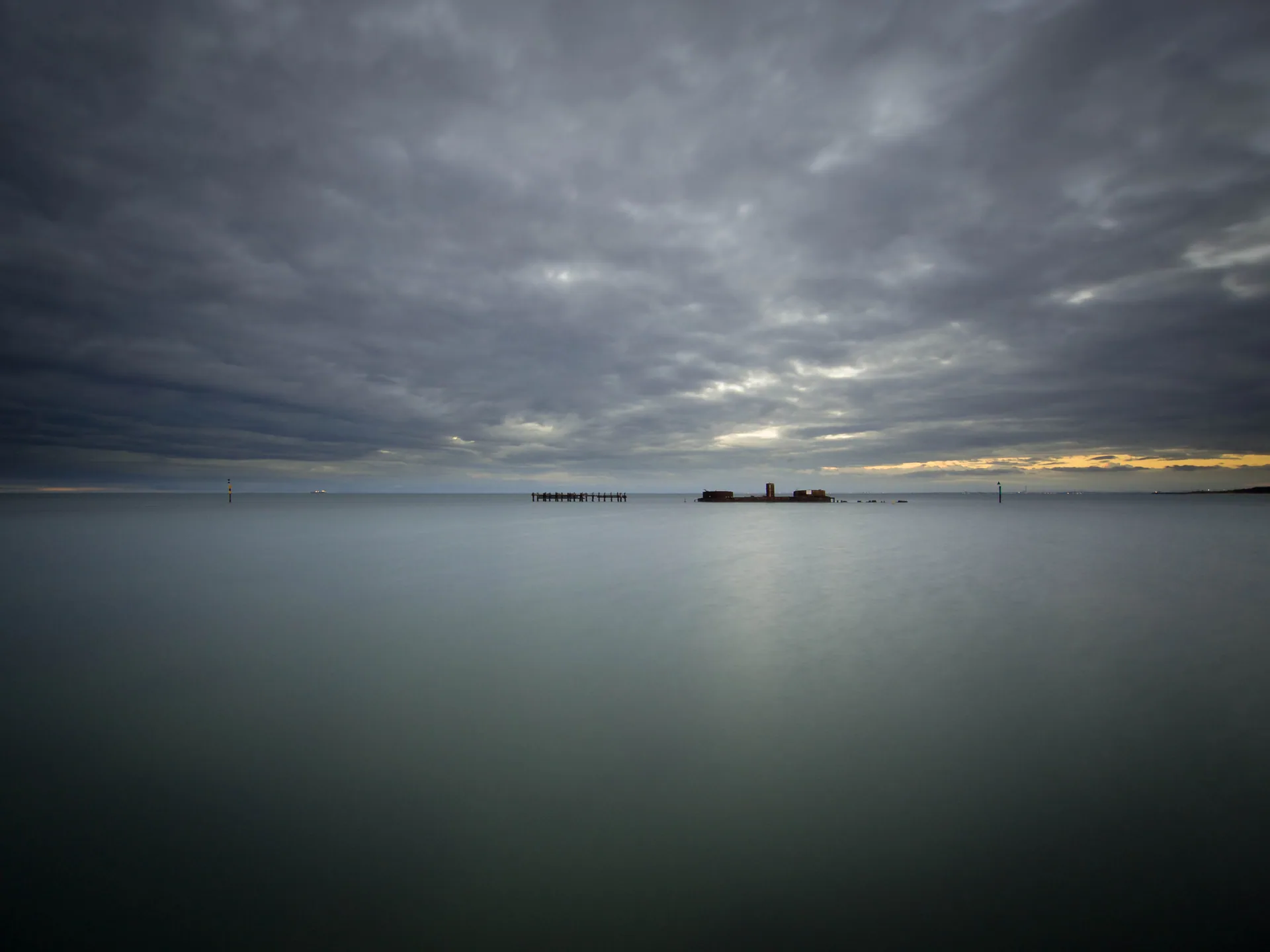
Half Moon Bay in Black Rock is one of the most distinctive dive sites accessible from Melbourne. Its centrepiece — the red-hulled wreck of the HMAS Cerberus, Australia's oldest surviving warship — rises from the water just offshore, creating an instantly recognisable landmark and an underwater world worth exploring.
But there's more here than the famous wreck. Rocky reef, seagrass beds, nudibranchs, anemones, sea urchins, and — for the alert observer — blue-ringed octopus in the crevices. Half Moon Bay rewards the careful snorkeler with a lot to see across a manageable area, all within 30 minutes of the Melbourne CBD.
Overview
Half Moon Bay Reserve sits in the suburb of Black Rock on Melbourne's Bayside, approximately 22km south-east of the CBD. The bay itself is a shallow, curved embayment sheltered from the south and south-west by the headland — making it relatively calm in typical Melbourne weather patterns, though exposed to northerly chop when strong north winds blow down the bay.
The site attracts a mix of snorkelers drawn to the Cerberus wreck, scuba divers exploring the deeper reef, and freedivers using the rocky terrain for skills practice. Families with children visit for the shallow, interesting snorkeling around the wreck. Macro photographers come for the nudibranchs and crustaceans on the reef.
The HMAS Cerberus
The HMAS Cerberus is not just a dive site attraction — it is a piece of Australian maritime history. Launched in 1868 in Birmingham, England, she was Australia's first purpose-built naval vessel and the first warship in the southern hemisphere fitted with a revolving gun turret. She served with the Victorian Colonial Navy until 1924, when she was decommissioned and eventually scuttled as a breakwater at Half Moon Bay in 1926.
Today, almost a century after she was sunk, the Cerberus remains partially above water. Her distinctive red-painted hull — maintained by volunteers from the Save the Cerberus organisation — is visible from the shore and from the beach. The ship is listed on the Victorian Heritage Register and is a nationally significant heritage site.
Underwater, the Cerberus's hull and submerged sections have become an artificial reef, colonised by sponges, ascidians, tube worms, anemones, and the fish and invertebrates that depend on them. The structure sits in 1–4 metres of water, making it accessible to snorkelers and beginner freedivers — an unusual combination of historical significance and accessible marine exploration.
Important: Do not attempt to enter any enclosed spaces in the wreck. Penetration diving on the Cerberus is extremely hazardous, the structure is unstable and corroded in places, and penetration without proper training and equipment is illegal. Stay external to the hull and enjoy the accessible sections safely.
Location and Getting There
- Address: Half Moon Bay Reserve, Bluff Road, Black Rock VIC 3193
- Drive from Melbourne CBD: ~30 minutes via Nepean Highway, exit at Bluff Road
- Public transport: Bus routes 703 and 707 serve Black Rock from Mordialloc and Cheltenham train stations
- GPS for the reserve car park: approximately -38.000°S, 145.035°E
Bluff Road leads directly to the foreshore reserve. The reserve has a car park, a cafe (The Half Moon), and a playground — making it a genuine family destination as well as a dive site.
Site Layout
The dive site has three main areas, each with distinct character:
The HMAS Cerberus Wreck
The wreck lies approximately 30–50 metres offshore from the main beach entry, in 1–4 metres of water. At low tide, the upper hull is partially exposed. At high tide, the entire accessible section is submerged. The best snorkeling is along the submerged hull sides, where sponges, tube worms, and fish concentrate. Swim slowly along the hull and look into crevices for invertebrates.
Rocky Reef
Extending south from the main beach entry is a rocky reef platform in 2–6 metres of water. This is where the nudibranchs, sea urchins, anemones, and blue-ringed octopus concentrate. The reef is low profile — flat rock with crevices and small overhangs rather than dramatic walls — but the density of invertebrate life is impressive. Take your time here.
Seagrass Beds
The northern section of the bay has seagrass beds in 1–3 metres of water. Seahorses and pipefish are occasionally found here, along with flathead resting on the sandy margin. Less spectacular than the reef, but worth including in a thorough circuit of the site.
Marine Life
Half Moon Bay punches above its weight for marine life. The combination of reef, wreck substrate, and seagrass creates habitat diversity that supports a wide range of species:
- Nudibranchs: Various species on the rocky reef, most visible in spring and summer. Look on the undersides of rocks and on encrusting sponges.
- Sea urchins: Purple sea urchins (Heliocidaris erythrogramma) are abundant on the reef, their spines a navigation hazard for bare hands and knees — another reason to hover rather than touch.
- Anemones: Several species of anemone colonise both the reef and the wreck hull, providing shelter for small shrimp.
- Sweep and wrasse: Schools of sweep often hang around the wreck structure. Blue-throated wrasse and senator wrasse are common on the reef.
- Leatherjackets: Multiple species, often curious and willing to approach divers.
- Seahorses: Occasional sightings in the seagrass — look carefully and slowly.
- Cephalopods: Cuttlefish visit in autumn and winter. Octopus — including the blue-ringed variety — inhabit the rocky areas year-round.
- Port Jackson sharks: Occasionally seen resting under reef overhangs, particularly in winter.
Blue-Ringed Octopus — Safety Note
Half Moon Bay's rocky reef habitat makes it prime territory for blue-ringed octopus (Hapalochlaena sp.). These animals are present year-round and can be encountered by snorkelers and divers.
The blue-ringed octopus is one of the world's most venomous animals. Its bite is painless — which makes it more dangerous, because the victim may not realise they have been bitten until symptoms (paralysis, respiratory failure) appear 10–15 minutes later. There is no antivenom. Treatment is prolonged artificial respiration.
The risk is almost entirely avoidable:
- Never pick up any octopus — ever. Blue-rings are often mistaken for common octopus.
- Never put your hands into crevices or under rocks.
- If you find a shell or interesting object on the bottom, do not pick it up — blue-rings shelter inside shells.
- Teach children this rule absolutely before entering the water.
Blue-ringed octopus are beautiful and fascinating animals. They are not aggressive — they only bite if touched or cornered. Observe them from a respectful distance, never touch, and the risk is negligible.
Freediving at Half Moon Bay
Half Moon Bay offers a good range of depths for freediving practice. The wreck section at 1–4 metres is ideal for new freedivers building confidence and bottom time. The reef plateau reaches 6 metres at its deeper edge, and the sandy bottom beyond the reef slopes to 8–10 metres — accessible to intermediate freedivers.
The wreck structure makes for interesting freediving — descending alongside the hull, swimming along the submerged keel, and exploring the colonised surfaces creates a more engaging experience than open sand. Practice your horizontal position and avoid sculling with your hands to prevent disturbing sediment around the wreck.
For those looking to combine Half Moon Bay with wreck-specific training, see our wreck diving Melbourne guide for context on Victoria's wider wreck diving scene.
Snorkeling at Half Moon Bay
The main entry is via a concrete ramp and steps on the southern end of the beach. Entry is straightforward in calm conditions — wade to knee depth, then fin out to the wreck. In choppier conditions, time your entry between sets and move quickly past the surge zone.
Suggested snorkel circuit (approximately 45–60 minutes):
- Enter from the ramp and swim directly to the HMAS Cerberus (approximately 40 metres)
- Spend 15–20 minutes exploring along the hull, looking for fish schools, anemones, and tube worms
- Swim south from the wreck to the rocky reef edge
- Work slowly along the reef edge looking for nudibranchs, sea urchins, and cephalopods
- Head north through the seagrass beds scanning for seahorses and flathead
- Return to entry point
Best Conditions
- Best visibility: Autumn and winter (March–August) — 3–8 metres typical, up to 10m in ideal conditions
- Summer: Warmer water (19–22°C) but visibility drops to 1–4m
- Wind: Site is sheltered from southerly and south-westerly winds. Northerlies can create chop. Check BOM marine forecasts before going.
- Tides: High tide gives more water over the wreck and makes entry easier. Low tide exposes more of the wreck above water, which is interesting visually but limits underwater access.
- Avoid: After heavy rain (stormwater runoff from Beaumaris area), days with more than 15 knots from the north
Parking and Facilities
- Car park: Free at Half Moon Bay Reserve, Bluff Road. Time-limited in summer — arrive early on weekends.
- Toilets: Public toilets in the reserve
- Cafe: The Half Moon cafe at the reserve — coffee, food, views of the Cerberus
- Playground: Adjacent to the reserve — good for families
- Shower: Cold outdoor shower near the beach
Tips
- Wear booties. The entry ramp and reef sections have rocks — bare feet will be uncomfortable. Standard freediving socks or 3mm booties are ideal.
- 5mm wetsuit minimum in winter. Water drops to 13°C in July–August. A hood significantly extends comfort in cold water.
- Bring a buddy. This applies everywhere, but particularly at a site with blue-ringed octopus. Never snorkel or freedive alone.
- Use a dive flag. Recreational boat traffic passes through the bay — a float and flag makes you visible.
- Visit the Cerberus above water. Walk along the beach for the best view of the wreck hull above water — the scale of the ship is more apparent from the shore than from the water.
For more Melbourne dive sites, see our best snorkeling spots guide and seasonal dive guide.