Monofin vs Bifins for Freediving
Performance comparison, use cases, costs, and which fin type to start with — a practical guide for Melbourne freedivers.
Last updated:
Every freediver eventually faces the monofin question. Is a monofin faster? Should I use one for competitions? Do I need one at all? The answer depends almost entirely on what you want to do underwater and how much pool time you have for technique development.
This guide cuts through the hype with a practical comparison focused on what actually matters for Melbourne freedivers — open-water diving in Port Phillip Bay and pool training.
The Core Difference
Bifins are two independent fins, one on each foot. The freediving kick with bifins is similar to a flutter kick — alternating leg movement, relatively natural and intuitive.
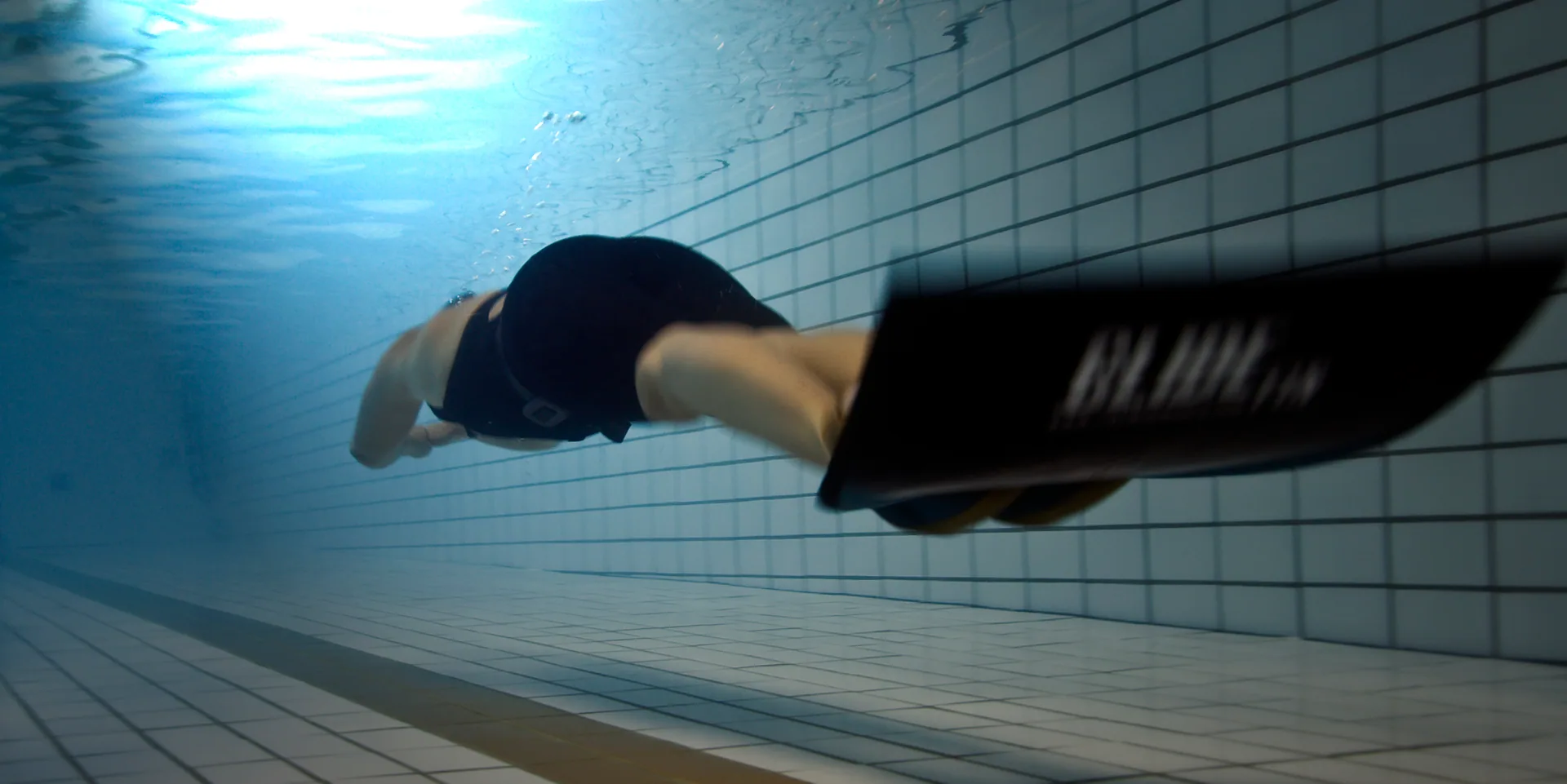
A monofin connects both feet to a single wide blade. The movement is an undulating dolphin kick — both feet together, driven from the hips and core. It is a fundamentally different movement pattern that takes significant time to develop efficiently.
Neither is universally "better." Each is better for specific purposes.
Bifins — Two Fins
Bifins are the most common fin type for open-water recreational and technical freediving worldwide. They allow:
- Independent leg movement for steering and manoeuvring around reef, kelp, and underwater obstacles
- A flutter kick that is natural and easy to learn
- Easier entry and exit from rocky shores
- More comfortable walking to the water entry point
- Simpler buddy rescue procedures (no need to remove a monofin to assist a buddy)
For open-water freediving in Melbourne — pier diving, marine sanctuaries, reef snorkeling — bifins are the practical choice of the vast majority of experienced divers.
Bifins are available in three blade materials: plastic, fibreglass, and carbon fibre. The material significantly affects performance — see the blade materials section below.
Monofin — One Fin
A monofin connects both feet via foot pockets to a single large blade, typically 60–80cm wide. The dolphin kick propels the body in an undulating wave motion, using the entire body from shoulders to toes.
When executed well, the monofin is significantly more efficient than bifins for straight-line horizontal swimming (dynamic apnea). All world records in dynamic apnea with fins (DYN) are set using monofins.
Monofins have significant limitations for open-water diving:
- Cannot steer laterally without significant technique
- Difficult to manoeuvre around reef, pylons, and kelp
- Awkward to walk with — typically removed and carried to the water
- More challenging for a buddy to assist an incapacitated diver
- Requires significant technique development before performance advantage is realised
Most open-water freedivers who own a monofin use it exclusively for pool training and pool competitions.
Performance Comparison
Pool Dynamic Apnea
For horizontal pool swimming, monofin wins — but only with good technique. The typical progression:
- Beginner with bifins: 50–80m dynamic apnea
- Beginner with monofin (poor technique): 30–60m — often worse than bifins
- Intermediate bifin diver: 100–150m
- Intermediate monofin diver (developing technique): 120–175m
- Advanced bifin diver: 150–200m+
- Advanced monofin diver: 200–250m+
The monofin performance advantage becomes clear only at intermediate level and above — and requires pool-specific dolphin kick training to develop.
Open-Water Depth Diving
For constant weight depth diving (CWT), the performance difference between monofin and bifins is smaller than for pool dynamic. World records in CWT use monofin, but many serious depth divers prefer bifins for greater control during the dive, particularly on the ascent. At recreational diving depths (15–30m), the equipment makes less difference than technique and equalisation.
Efficiency (Energy Per Metre)
A well-executed monofin dolphin kick is more efficient than bifin flutter kick — it uses the larger muscle groups of the hips and core more effectively, reducing the energy expended per metre of distance. This efficiency advantage matters most at competition level, where every metre of oxygen consumption counts.
When Each Fin Type Excels
Choose bifins for:
- All open-water recreational freediving in Melbourne (pier diving, reef, marine sanctuaries)
- Beginners learning freediving technique
- Spearfishing (requires independent leg movement for tracking fish and manoeuvring)
- Snorkeling
- Diving in kelp forests or complex reef environments
- When practical walking to shore and buddy assistance matters
Choose monofin for:
- Competitive pool dynamic apnea (DYN)
- Maximising pool performance when you have time for dedicated technique training
- As a supplementary fin alongside bifins (many serious freedivers own both)
- Open-water deep diving when depth efficiency is the priority over manoeuvrability
Blade Materials
Plastic / Rubber
Entry-level fins with plastic or rubber blades. Flexible, durable, and cheap ($50–150 for a pair). Appropriate for snorkeling, beginner freediving courses, and testing whether freediving suits you before investing more. Not recommended once you commit to developing as a freediver.
Fibreglass
Mid-range fins with fibreglass blades. Stiffer and more efficient than plastic, with a defined blade stiffness range. Price: $150–400 for a pair of quality bifins. The most popular blade type among recreational freedivers in Melbourne. Brands: Alchemy, Salvimar, Specialfins, Cetma.
Carbon Fibre
High-performance fins for experienced divers and competition use. Lightest and most efficient blade material. Price: $400–1000+ for a pair of bifins, higher for monofins. The performance advantage over fibreglass is real but requires technique to realise. Not appropriate for beginners.
Monofin Materials
Competition-grade monofins are almost exclusively carbon fibre. Good carbon monofins from Cressy, Molchanovs, or Leaderfins range from $600–1500+. Budget fibreglass monofins exist ($150–300) and are appropriate for learning dolphin kick technique without the full investment.
Cost Comparison
- Plastic bifins: $50–150
- Fibreglass bifins: $150–400
- Carbon bifins: $400–1000+
- Budget fibreglass monofin: $150–300
- Mid-range carbon monofin: $600–1000
- Competition carbon monofin: $1000–1500+
The pragmatic starting point for a Melbourne freediver: fibreglass bifins ($200–350). Add a monofin later if you develop a serious interest in pool competition. Our freediving gear guide covers the full equipment picture including where to buy in Melbourne.
For Melbourne Conditions Specifically
Melbourne's primary open-water freediving happens in Port Phillip Bay — around piers, rocky reef, and marine sanctuaries. These environments heavily favour bifins:
- Pier pylons require lateral manoeuvring — a monofin is impractical
- Kelp forest diving (Flinders, Portsea) requires the ability to change direction quickly
- Rocky reef snorkeling with a monofin risks damage to the environment
- Shore entry from rocky coastline is significantly easier with bifins
Melbourne's pool scene — where a monofin would excel — is primarily at the MSAC and club pool nights, but these are training environments rather than competition events for most divers.
The conclusion for most Melbourne freedivers: buy good fibreglass bifins first. If you enter pool competitions and develop a serious interest in dynamic apnea performance, add a monofin as a secondary fin.
Which to Choose
- New to freediving: Fibreglass bifins. Learn technique and determine your focus before spending more.
- Primarily open-water diver: Bifins (fibreglass or carbon depending on budget and commitment level).
- Primarily pool-focused or competitive: Both — bifins for open-water sessions, monofin for pool training and competition.
- Spearfisher: Bifins only. Monofins are incompatible with spearfishing.
- Snorkeler: Any fins — comfort and float-ability matter more than performance.
For full gear recommendations including wetsuits and masks for Melbourne conditions, see our freediving gear guide and wetsuit guide.