Portarlington Diving & Snorkeling
Bellarine Peninsula pier diving, rocky reef, seahorses, and nudibranch — a quieter alternative to the crowded Mornington Peninsula sites.
Last updated:
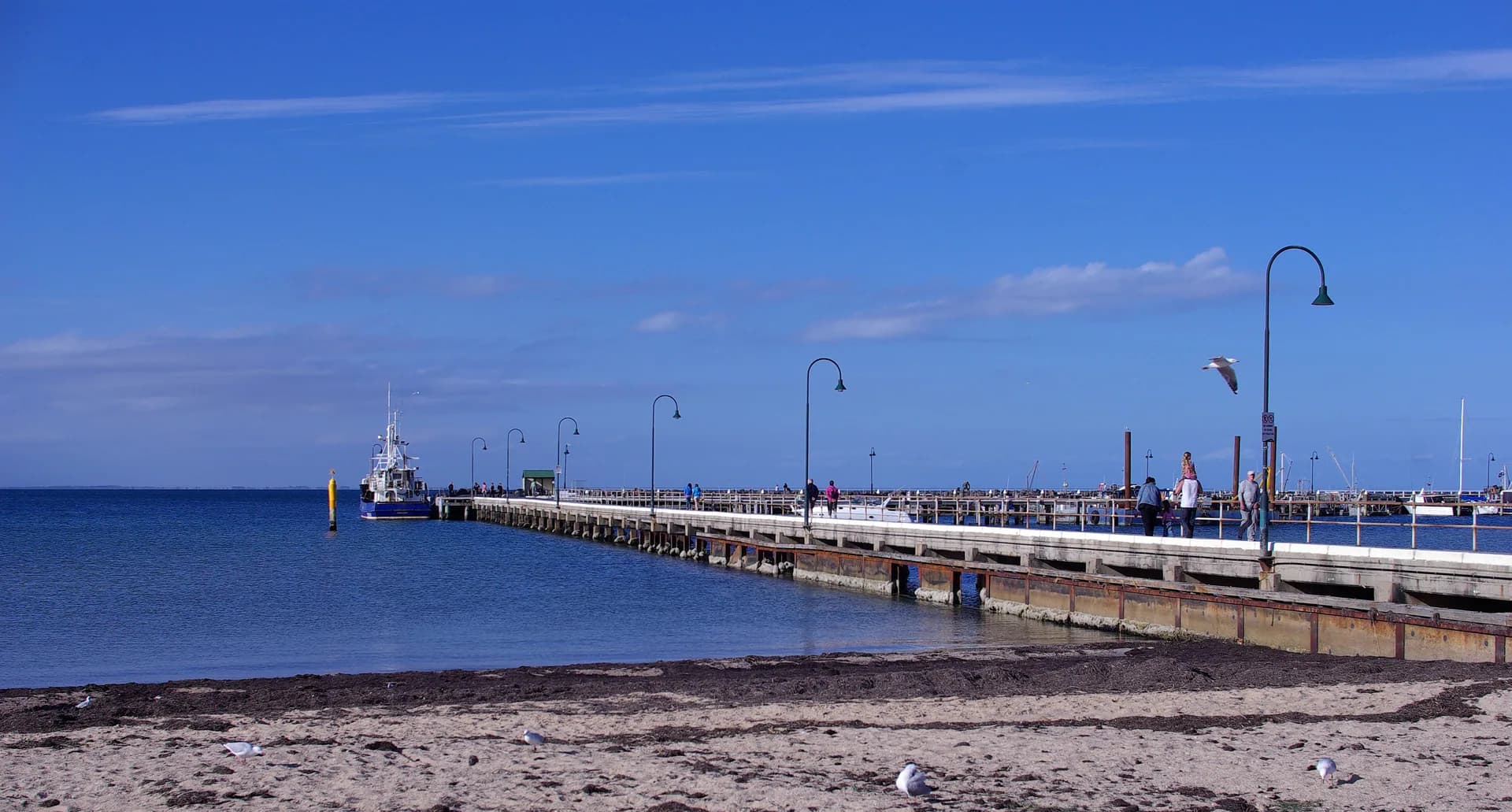
Portarlington sits on the northern coast of the Bellarine Peninsula, facing across Port Phillip Bay toward the Mornington Peninsula. While sites like Flinders and Blairgowrie dominate the Melbourne diving conversation, Portarlington offers comparable pier diving without the crowds — and a scenic ferry commute from the CBD as an alternative to driving.
The pier is the main attraction: a long jetty over sandy and rocky substrate with resident seahorses and nudibranchs. The rocky foreshore extending east of the pier adds another dimension. And if you're combining a trip with other Bellarine sites, Portarlington fits neatly alongside Indented Head and St Leonards in a day.
Portarlington Overview
Portarlington is a small coastal town of about 4,000 people, primarily known as a summer holiday destination and for its mussel farms — Port Phillip Bay's mussel industry is centred here, and the annual Mussel Festival draws visitors from Melbourne. The marine environment reflects the mussel farming influence: rich in filter feeders, invertebrates, and the fish that feed on them.
The town's main diving infrastructure is the pier. There is no dive shop in Portarlington itself — bring all your gear. The nearest dive shops are in Geelong (approximately 20 minutes south). The ferry terminal is a short walk from the pier.
Portarlington Pier
Portarlington Pier is approximately 300m long, extending north over sandy substrate. It is an active fishing pier with regular use, so be aware of lines in the water when snorkeling or diving. Entry is from the pier steps or the beach adjacent to the pier.
The pier pylons are the primary interest for divers. Dense encrustation of sponges, ascidians, and bryozoans provides habitat for nudibranchs, flatworms, and sea spiders. Look carefully along each pylon — nudibranchs are often only a centimetre long. Seahorses are present year-round but easier to find in winter when there is less boat traffic disturbing the seagrass.
Depth profile under the pier: 0–2m near the beach, reaching 4–5m at the pier end. The sandy bottom between pylons has flathead, which lie motionless and are easily missed. Look for their eyes and outline against the sand.
Fishing competition: Weekend mornings can see significant fishing activity on the pier, particularly for squid and garfish. Divers are welcome but should enter away from active fishing and be visible via surface marker buoy.
Rocky Reef & Foreshore
The rocky foreshore east of the pier — extending toward the caravan park — provides a different habitat from the sandy pier environment. Rocky reef in 1–3m depth supports sea urchins, sea stars, wrasse, old wives, and in winter, the occasional wobbegong shark tucked under ledges.
Entry from the rocky foreshore requires care over barnacled rocks — booties essential. The reef extends parallel to the shore for several hundred metres. The substrate transitions from rocky to sandy around the point, where seagrass takes over. Both habitats are worth exploring in a single session.
The western side of the pier, toward the ferry terminal, has a more sheltered sandy bay. Snorkeling conditions here are very calm — this is a good area for absolute beginners or children.
Marine Life
Portarlington's location in the inner bay gives it a distinct species mix. The mussel farming activity in the surrounding area means rich nutrient flow — filter feeders are abundant, and so are the animals that eat them.
- Seahorses: White's seahorses present around the pier year-round, most reliably winter–spring
- Nudibranchs: Multiple species on the pylons — look for dendronotids, chromodorids, and aeolids
- Cuttlefish: Common in autumn–winter, often hovering near the pier ends
- Blue-ringed octopus: Present in rocky areas — do not touch any octopus
- Flathead: Common on sandy substrate, masters of camouflage
- Leatherjackets: Schools around the pylons, curious and approachable
- Wrasse: Multiple species on the rocky reef east of the pier
- Sea stars: Multiple species on both reef and sand
- Sponges: Rich pylon encrustation, including some large specimens near the pier end
Conditions & Visibility
Portarlington faces north, which means it is sheltered from the prevailing south-westerly winds. Conditions are generally calm:
- Wave/swell: Minimal — inner bay, sheltered from Bass Strait. Only northerly wind creates meaningful chop.
- Visibility: Winter/spring (June–October): 4–8m typical. Summer (December–February): 2–5m, lower near storm drains.
- Current: Minimal tidal current at the pier. The open bay east of the pier can have stronger movement — note conditions before extended swims.
- Rain impact: Stormwater drains south of town can reduce visibility after heavy rain. Allow 48 hours after significant rainfall.
Best diving is on calm mornings before afternoon north-westerlies develop in summer. In winter, conditions remain stable throughout the day.
Getting There
By Car
From Melbourne CBD: Take the Princes Freeway west then the Geelong Ring Road, exit at Jetty Road/Portarlington Road north toward the Bellarine Peninsula. Drive north through Drysdale and Leopold to Portarlington. Approximately 1.5 hours (90km).
Free parking is available at the foreshore reserve adjacent to the pier. Toilets and change facilities nearby.
By Ferry
The Portarlington Ferry operates seasonally between Docklands (Melbourne CBD) and Portarlington. Journey time is approximately 75 minutes. This is an excellent option for a day trip — walk straight from the ferry terminal to the pier. Check the ferry operator's website for current timetable and bookings, as seasonal schedules vary.
Public Transport (Land)
There is no convenient direct public transport from Melbourne. Train to Geelong (Geelong line, approximately 60 minutes), then connecting bus to the Bellarine Peninsula. The bus journey adds significant time — a car or ferry is the practical option.
Best Time to Dive
- Best visibility: June–September (winter). Cold — 5mm wetsuit with hood required (water 13–15°C).
- Best for nudibranchs: May–August (peak activity in colder water)
- Best for cuttlefish: April–June (breeding behaviour, curious individuals)
- Most comfortable: November–January (water 18–21°C, 3mm wetsuit)
- Quietest crowds: Weekday mornings year-round
- Avoid: After heavy rain, during northerly winds, busy summer weekends when pier fishing activity peaks
Portarlington vs Other Bellarine Sites
The Bellarine Peninsula has several dive sites worth comparing:
- St Leonards Pier: The Bellarine's best-known dive site. F-shaped pier, excellent macro life, seahorses, dumpling squid at night. More dedicated dive infrastructure. Approximately 15 minutes north of Portarlington.
- Indented Head: Rocky reef with better hard coral and reef fish diversity. More varied topography. Approximately 10 minutes east of Portarlington.
- Portarlington: Good all-rounder, ferry access option, less crowded, excellent for beginners. The mussel farm influence creates rich invertebrate life.
- Queenscliff: Best for boat dives to Lonsdale Wall and Pope's Eye. Shore diving at Queenscliff Pier.
If combining sites in one day, Portarlington and Indented Head work well together — different habitats, 10 minutes apart. See our broader Bellarine Peninsula diving guide for the full picture.
Tips for Diving Portarlington
- Go slow at the pylons. Nudibranch spotting is a slow-speed activity. Float against a pylon and systematically scan from waterline to seabed before moving.
- Bring a torch. Even during the day, the shadowed areas beneath the pier and on the underside of ledges have different fauna. A small dive light reveals colours that ambient light washes out.
- Use a SMB. The pier sees boat traffic. A surface marker buoy makes you visible to boat operators and pier fishers.
- Arrive before 9am on weekends. Fishing activity on the pier increases significantly mid-morning on weekends, particularly in summer squid season.
- Combine with the ferry. If you can, book the ferry from Docklands. The journey is pleasant, and you arrive at the site with no driving fatigue and no need to manage a car park.
- Check mussel farm boundaries. Mussel farm lines extend offshore north of the pier. Stay within the foreshore area and do not enter the farm lines.
For the broader Bellarine Peninsula context, see our Bellarine Peninsula diving guide. For comparison with Mornington Peninsula pier sites, see our best freediving spots Melbourne guide.