Ricketts Point Snorkeling & Marine Sanctuary Guide
Melbourne's most accessible marine sanctuary — just 20km from the CBD, with shallow protected waters, abundant marine life, and free guided snorkels every Saturday in summer.
Last updated:
Ricketts Point Marine Sanctuary is the southern suburbs' best-kept secret for snorkeling — and one of the most accessible quality dive sites in Melbourne.
Twenty kilometres from the CBD, Ricketts Point sits on Beaumaris's foreshore between Black Rock and Mentone. The 115-hectare no-take marine sanctuary has been protected since 2002, giving marine life nearly a quarter-century to recover and flourish. The result is a shallow, sheltered snorkeling site with sandstone reef walls, sea caves, seagrass meadows, and over 51 species of fish — all accessible from the beach.
You don't need a boat. You don't need deep-water experience. You can catch public transport to get here. On a calm summer morning, you can walk down from the car park, wade into chest-deep water, and within minutes be face-to-face with Port Jackson sharks, smooth rays, and schools of silver fish gliding through the kelp.
This guide covers everything you need to know to make the most of Ricketts Point Marine Sanctuary.
Location & Getting There
Ricketts Point is located in Beaumaris, a bayside suburb in Melbourne's south-east. The marine sanctuary extends along the rocky foreshore from Table Rock Point in the south to just north of the historic tea house building — a distance of roughly 1.5 kilometres.
Access is straightforward. Beach Road runs along the foreshore, and there are multiple entry points via wooden staircases and ramps leading down to the rock platforms and sandy patches. The most popular entry point is near the Ricketts Point Marine Discovery Centre, where the volunteer-led guided snorkels also begin.
- Address: 225 Beaumaris Concourse, Beaumaris VIC 3193 (Marine Discovery Centre)
- Distance from Melbourne CBD: ~20km (25-35 minutes' drive depending on traffic)
- Public transport: Catch the Frankston line train to Sandringham Station, then bus 828 towards Mentone Station. Get off at Balcombe Road/Beach Road and walk 5 minutes to the foreshore. Alternatively, catch the Frankston line train to Mentone Station and take bus 822 or 828 towards Black Rock. Get off at Beach Road/Cromer Road.
- Parking: Free street parking along Beach Road and the Beaumaris Concourse. On weekends and public holidays, parking can fill up quickly in summer — arrive early.
- GPS coordinates: -37.9881°S, 145.0395°E
About the Marine Sanctuary
Ricketts Point Marine Sanctuary was established in 2002 as part of Victoria's network of protected marine areas. It covers 115 hectares of subtidal and intertidal habitat, extending from the low-tide mark out to a depth of around 6 metres.
As a no-take sanctuary, all fishing, collecting, and removal of marine life is prohibited. This protection has allowed fish populations to recover, invertebrate communities to thrive, and the reef ecosystem to regenerate. The result is noticeably healthier and more abundant marine life compared to nearby unprotected areas.
Marine Sanctuary Rules
- No fishing or collecting of any kind
- No removal of rocks, shells, or marine life (alive or dead)
- Dogs must be on-leash
- Look but don't touch — leave marine life undisturbed
- Take only photos, leave only bubbles
The sanctuary encompasses three main habitat types: sandstone reefs with vertical walls and overhangs, seagrass meadows (mostly Amphibolis and Zostera species), and sandy patches between reef structures. Each supports different marine communities, and snorkeling through all three gives you a complete picture of the ecosystem.
Best Snorkeling Spots
The entire sanctuary is snorkelable, but three areas stand out for marine life, ease of access, and variety of habitat.
McGregors Rock
Just south of the Ricketts Point tea house, McGregors Rock is a series of sandstone reef platforms and gullies running perpendicular to the shore. This is the heart of the sanctuary and the best spot for first-time visitors. The reef walls are covered in encrusting algae, sponges, and invertebrates. Seagrass grows between the rock structures, creating sheltered microhabitats for juvenile fish, crabs, and rays.
Depth ranges from knee-deep at the rock platforms to 2-3 metres in the channels between the reef. On a calm day, visibility can reach 5-8 metres, and you'll often see schools of yellowtail scad, silver sweep, and zebra fish circling the reef edges.
- Depth: 0.5-3m
- Entry: Via wooden stairs near the tea house, then walk across the rock platforms
- Best for: Beginners, families, photographers
- Highlights: Accessible shallow reef, abundant fish schools, good visibility
Teahouse Reef
Directly offshore from the historic Ricketts Point tea house (now a café), Teahouse Reef is a low-profile sandstone reef with overhangs, small caves, and crevices. This area is particularly good for spotting Port Jackson sharks resting under ledges during winter and spring. The reef walls are covered in jewel anemones, sea stars, and algae-grazing snails.
The reef runs roughly parallel to the shore, so you can snorkel along its length and explore the overhangs without needing to swim far from the beach. Depth averages 2-3 metres, with slightly deeper sections (3-4 metres) further offshore.
- Depth: 2-4m
- Entry: Beach access near the tea house
- Best for: Intermediate snorkelers comfortable in slightly deeper water
- Highlights: Port Jackson sharks, reef overhangs, jewel anemones
Table Rock Point
At the southern boundary of the sanctuary, Table Rock Point is named for the flat sandstone platforms exposed at low tide. The underwater topography here is more complex, with vertical walls, surge channels, and deeper gullies reaching 4-5 metres. This is the most exposed part of the sanctuary and best visited on calm days with minimal swell.
Marine life is diverse — look for weedy seadragons clinging to kelp fronds, blue-throated wrasse, old wives, leatherjackets, and the occasional smooth ray cruising over the sand. The deeper sections attract larger fish and occasionally pelagic visitors like Australian salmon.
- Depth: 2-5m
- Entry: Rock platform access at the southern end of the sanctuary
- Best for: Confident snorkelers on calm days
- Highlights: Weedy seadragons, vertical reef walls, deeper habitat
Marine Life
Ricketts Point Marine Sanctuary is home to over 51 recorded fish species, along with a rich diversity of invertebrates, algae, and seagrass. The protected status means marine life is generally less skittish than at unprotected sites, and you'll often find yourself surrounded by curious fish.
Fish
The most commonly seen fish are yellowtail scad, silver sweep, and zebrafish (also called old wives), which form large schools around the reef edges. Southern hulafish, leatherjackets, and six-spined leatherjackets are abundant on the reef walls, grazing on algae and picking at invertebrates. Blue-throated wrasse, senator wrasse, and southern maori wrasse patrol the reef looking for prey.
In the seagrass beds, look for King George whiting, flathead, and juvenile snapper hiding among the fronds. Smooth rays (also called smooth stingrays) are common, often partially buried in the sand with only their eyes and spiracles visible. They're harmless unless stepped on — shuffle your feet when wading to avoid accidentally standing on one.
Port Jackson Sharks
One of Ricketts Point's biggest drawcards is the population of Port Jackson sharks that visit the sanctuary during winter and spring. These docile, bottom-dwelling sharks have blunt heads, distinctive harness-like markings, and feed on shellfish and crustaceans. They spend most of the day resting under rock ledges and in caves, making them easy to approach for photos.
Port Jackson sharks are completely harmless to humans. They have small mouths designed for crushing shells, not biting swimmers. You can snorkel right up to them (though give them space — don't crowd or touch them), and they'll usually remain still unless disturbed.
Peak season for Port Jackson sharks at Ricketts Point is June to October, though some individuals are present year-round.
Weedy Seadragons
Victoria's marine emblem can be found at Ricketts Point, though they're less common here than at the Mornington Peninsula piers. Weedy seadragons prefer slightly deeper water with kelp cover, so your best chance of spotting one is at Table Rock Point or along the offshore edges of Teahouse Reef. They're slow-moving and well-camouflaged, so look carefully among the kelp fronds and seaweed.
Invertebrates
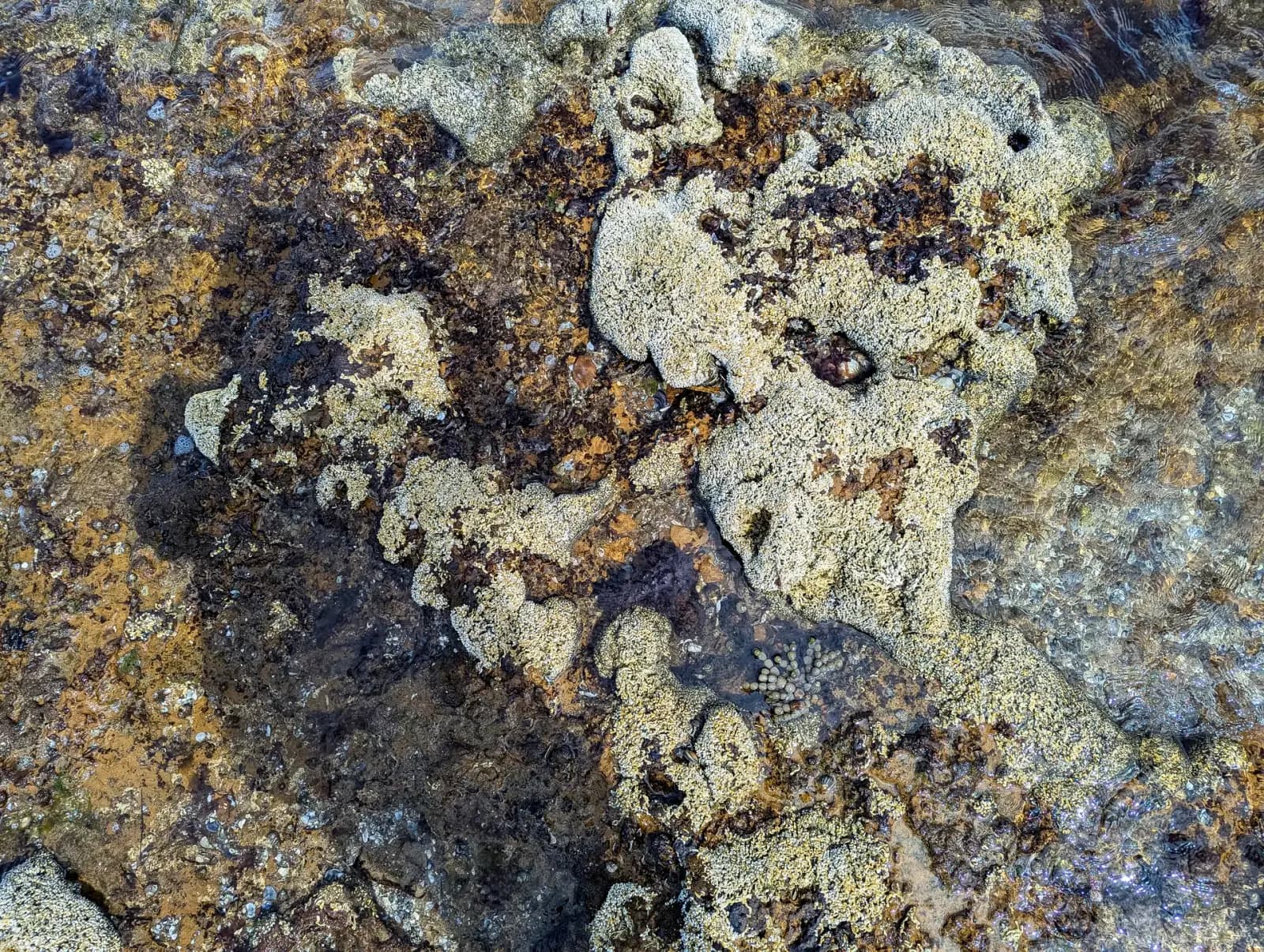
The sandstone reef walls are covered in invertebrate life. Common sea stars (eleven-armed sea stars) blanket the rock surfaces, often in extraordinary densities. Jewel anemones (small, colourful anemones) cluster in shaded areas under overhangs. Mussels, barnacles, and tube worms cover the rocks, creating habitat for smaller creatures.
Nudibranchs (sea slugs) can be found if you look closely — the most common species at Ricketts Point are Hypselodoris jacksoni (white with purple spots), Chromodoris westraliensis (white with orange markings), and various Doris species. They're small (1-3cm), so you'll need to slow down and scan the reef carefully.
Blue-ringed octopus are present at Ricketts Point, as they are at all rocky reef sites in Port Phillip Bay. They're small, cryptic, and rarely seen unless you're actively searching under rocks and in crevices. If you do spot one, observe from a distance and do not touch — their venom is potentially fatal.
Blue-Ringed Octopus Safety
Blue-ringed octopus are present at Ricketts Point and all rocky reef sites in Melbourne. They are small (golf ball-sized), usually well-camouflaged, and only display their bright blue rings when threatened or stressed.
Their bite contains a neurotoxin that can cause paralysis and respiratory failure. There is no antivenom. Never pick up shells, rocks, or marine life. Never put your hands into crevices or under ledges. If you see a blue-ringed octopus, admire it from a safe distance and move on.
Guided Saturday Snorkels
One of the best things about Ricketts Point is the Marine Care Ricketts Point community group, which runs free volunteer-led guided snorkels most Saturdays from November to March (and occasionally into April depending on conditions).
These guided snorkels are open to everyone — families, beginners, experienced snorkelers, locals, and visitors. The volunteer guides are knowledgeable about the marine life and will point out species you might otherwise miss. It's also a great way to meet other snorkelers and learn about the sanctuary from people who know it intimately.
What to Know
- When: Most Saturdays from November to March, starting at 11:00 AM. Check the Marine Care Ricketts Point Facebook page for the current schedule — events are posted a few days in advance.
- Meeting point: Ricketts Point Marine Discovery Centre, 225 Beaumaris Concourse
- Cost: Free (donations to Marine Care Ricketts Point are appreciated)
- Gear: BYO — you must bring your own mask, snorkel, fins, and wetsuit. No gear hire is available.
- Duration: Around 1-1.5 hours in the water, plus briefing time
- Conditions: Snorkels are subject to weather and water conditions. If conditions are unsafe, the event will be cancelled on the day.
The guided snorkels are run entirely by volunteers, so be patient, follow instructions, and be respectful of the sanctuary rules. These events are a community effort to connect people with the marine environment — treat them accordingly.
Best Conditions & When to Visit
Ricketts Point faces south-west into Port Phillip Bay and is exposed to southerly and westerly winds. The best conditions occur on calm days with light northerly or north-easterly winds, flat seas, and high tide.
Wind
Northerly winds are ideal — they blow offshore and keep the water flat. Light easterly winds are also fine. Avoid southerly, south-westerly, and westerly winds, which blow onshore and create choppy conditions with poor visibility. Strong winds (over 15 knots) from any direction will make snorkeling uncomfortable.
Tide
High tide offers the best snorkeling at Ricketts Point. The shallow reef platforms are submerged, giving you more room to move and explore. At low tide, much of the reef is exposed or in water too shallow to snorkel comfortably, and you'll be limited to the deeper channels between the rocks.
Check the Port Phillip Heads tide chart (Ricketts Point follows the same tide as Portsea and Queenscliff). Aim to visit within 2 hours of either side of high tide for the best experience.
Time of Day
Morning snorkels (before midday) generally offer better visibility, as afternoon sea breezes haven't yet stirred up the bay. Early morning also means fewer people on the beach and in the water. If you're visiting on a weekend in summer, arrive early to secure parking and avoid the crowds.
Water Temperature & Visibility
Water temperature at Ricketts Point follows the typical Port Phillip Bay pattern:
- Summer (Dec-Feb): 18-22°C
- Autumn (Mar-May): 16-19°C
- Winter (Jun-Aug): 10-14°C
- Spring (Sep-Nov): 13-17°C
Visibility ranges from 3-5 metres on average days to 8-10 metres on excellent days. Visibility is best after a period of calm weather with no recent rain. Heavy rain causes stormwater runoff from the Beaumaris stormwater drains, which significantly reduces visibility for 2-3 days after the rain stops.
Gear Needed
You'll need basic snorkeling gear to explore Ricketts Point. A wetsuit is non-negotiable — even in summer, Port Phillip Bay water is cold enough to quickly sap your body heat without neoprene.
Essential Gear
- Mask: A well-fitting low-volume mask with tempered glass. Avoid cheap masks with plastic lenses — they fog easily and scratch quickly.
- Snorkel: A simple J-tube snorkel or semi-dry snorkel. Full-face snorkel masks are not recommended — they fog easily, restrict breathing, and can be dangerous if you need to freedive.
- Fins: Open-heel fins with neoprene booties (for warmth) or closed-heel fins. Shorter fins are easier for snorkeling in shallow water.
- Wetsuit: 3mm minimum for summer (Dec-Feb), 5mm for autumn, winter, and spring. A 5mm wetsuit with integrated hood is ideal for year-round use. Add gloves and booties for extra warmth in winter.
- Booties: Neoprene booties (3mm or 5mm) protect your feet from sharp rocks when entering and exiting over the rock platforms. They also provide warmth.
Optional But Recommended
- Weight belt: 1-2kg helps you stay slightly negatively buoyant instead of floating high on the surface. This makes it easier to duck-dive to the bottom and stay stable in surge.
- Rash vest or wetsuit hood: Extra sun protection and warmth.
- Dive flag or surface marker buoy: Makes you visible to kayakers, paddleboarders, and boats (though Ricketts Point has no motorised vessels inside the sanctuary).
- Underwater camera: Ricketts Point is a fantastic site for underwater photography. Even a waterproof phone case or GoPro will capture great footage.
No gear hire is available at Ricketts Point, so you must bring your own or borrow from a friend. For advice on buying your first snorkeling or freediving gear, see our freediving gear guide.
Seasonal Tips
Ricketts Point can be snorkeled year-round, but each season brings different marine life, water conditions, and visitor numbers.
Summer (December — February)
The warmest and busiest season. Water temperature peaks at 18-22°C, making 3mm wetsuits comfortable for extended snorkeling sessions. Visibility is generally good (5-8 metres), though afternoon sea breezes can stir up the bay. Fish activity is high, with large schools of yellowtail scad and silver sweep circling the reefs. This is also the peak season for the Marine Care Ricketts Point guided snorkels.
Summer weekends are crowded — expect to share the water with other snorkelers, swimmers, and paddleboarders. Arrive early (before 9:00 AM) for parking and calmer conditions.
Autumn (March — May)
Autumn is the sweet spot for snorkeling at Ricketts Point. Water temperature remains relatively warm (16-19°C) into April, and crowds thin out as schools return and the weather cools. Visibility is often excellent after the summer plankton blooms subside. Marine life remains abundant, and you'll have more space to explore without bumping into other snorkelers.
Port Jackson sharks begin arriving in late autumn, and you may spot early arrivals under the rock ledges at Teahouse Reef.
Winter (June — August)
The coldest season, with water temperatures dropping to 10-14°C. A 5mm wetsuit with hood, gloves, and booties is essential — anything less and you'll be uncomfortable within 10-15 minutes. Visibility is often at its best in winter (8-10 metres on calm days), as there's less plankton and stormwater runoff.
This is the peak season for Port Jackson sharks. Dozens of sharks rest under ledges and in the reef caves, making Ricketts Point one of the best sites near Melbourne to see these harmless, photogenic sharks. Weedy seadragon males carry eggs during winter (the breeding season), so if you spot a seadragon, look closely at the underside of the tail — you may see a cluster of pink or purple eggs.
Winter snorkeling at Ricketts Point is magical but requires preparation. Check the weather forecast, choose a calm day, and don't push your limits in cold water. Have warm clothes and a hot drink ready for after the snorkel.
Spring (September — November)
Water temperature gradually warms from 13°C in early September to 17°C by late November. Visibility remains good as the water warms, and marine life becomes more active. Port Jackson sharks are still present early in the season but gradually move offshore as the water warms.
Spring is a good season for weedy seadragons, as the eggs carried by males begin hatching and tiny juvenile seadragons emerge. Fish spawning activity increases, and you may see schools of squid moving through the sanctuary in late spring.
Nearby Alternatives
If conditions at Ricketts Point are poor, or if you want to explore other nearby snorkeling sites, the Beaumaris and Mentone coast offers several alternatives.
Half Moon Bay (Black Rock)
Just north of Ricketts Point, Half Moon Bay is a sheltered sandy beach backed by the iconic HMVS Cerberus shipwreck — a 19th-century warship sunk in the bay as a breakwater. The wreck is exposed at low tide and surrounded by shallow seagrass beds and sandy patches. Marine life is less diverse than Ricketts Point (it's not a marine sanctuary), but it's a calm, beginner-friendly spot with historical interest.
- Depth: 1-2m
- Distance from Ricketts Point: 2km north
- Best for: Beginners, families, calm-water snorkeling
Mentone Beach
South of Ricketts Point, Mentone Beach is a long sandy beach with patches of low reef and seagrass. It's less interesting than Ricketts Point for marine life, but it's a good alternative if you want calmer water and don't mind sacrificing reef habitat. The beach is popular with swimmers and families, so expect company.
- Depth: 1-3m
- Distance from Ricketts Point: 1.5km south
- Best for: Beginners, calm-water snorkeling, swimming
Mordialloc Creek and Aspendale
Further south, Mordialloc Creek mouth and Aspendale Beach offer sandy, shallow snorkeling with occasional reef patches. These sites are less diverse than Ricketts Point but can be worth exploring if you're in the area. Visibility is often poor due to sandy substrate and stormwater outflows.
For a full list of Melbourne's best snorkeling sites, including the Mornington Peninsula piers and other marine sanctuaries, see our guide to the best snorkeling spots in Melbourne.
Tips for the Best Experience
- Go slow: Marine life at Ricketts Point is small and well-camouflaged. Snorkel slowly, scan the reef carefully, and spend time in each spot rather than rushing through.
- Look under ledges: Port Jackson sharks, octopus, and other cryptic species shelter under rock overhangs. Bring a dive torch (even during the day) to illuminate shaded areas.
- Check the seagrass: Juvenile fish, rays, and seahorses hide among the seagrass fronds. Move slowly and peer into the seagrass beds — you'll be surprised what you find.
- Snorkel the gullies: The channels between reef platforms funnel fish and create sheltered habitat. Drift along the gullies and watch for fish schools and rays cruising through.
- Bring a friend: Never snorkel alone. Buddy up for safety and to share the experience.
- Respect the sanctuary: No fishing, no collecting, no touching marine life. Leave everything as you found it.
- Take photos, not specimens: An underwater camera or phone in a waterproof case will capture your experience without disturbing the ecosystem.
Safety
- Never snorkel alone: Always go with a buddy and stay within sight of each other.
- Check conditions before you enter: If the water looks rough, choppy, or murky, don't go in. There will be another day.
- Watch for blue-ringed octopus: Do not put your hands under rocks or into crevices. Do not pick up shells or marine life.
- Be aware of smooth rays: Shuffle your feet when wading to avoid stepping on rays buried in the sand. Their barb is venomous and can cause a painful injury.
- Wear a wetsuit: Cold water increases the risk of hypothermia. If you start shivering, get out immediately and warm up.
- Entry and exit carefully: The rock platforms can be slippery with algae and sharp with barnacles. Wear booties and take your time.
- Know your limits: Ricketts Point is shallow and sheltered, but all ocean snorkeling carries risk. If you're unsure, stick to the shallowest areas near shore.
From Snorkeling to Freediving
Many freedivers in Melbourne started their journey at Ricketts Point. The shallow, protected environment is perfect for learning to duck-dive, practicing equalisation, and building comfort underwater. If you find yourself wanting to explore deeper or stay down longer, a freediving course will teach you the skills to do so safely.
With a Level 1 freediving course, you'll learn breath-hold techniques, equalisation (clearing your ears as you descend), and the buddy safety protocols that make deeper dives possible. Ricketts Point is shallow enough that you don't need freediving certification to explore it, but the skills you learn in a course will make every snorkel more comfortable, efficient, and enjoyable.
For more on the progression from snorkeling to freediving, and how to choose a course, see our guide to choosing a freediving course in Melbourne.
Frequently Asked Questions
Is Ricketts Point good for snorkeling?
Yes, Ricketts Point Marine Sanctuary is excellent for snorkeling, especially for beginners and families. The shallow, protected waters (1-4 metres deep) offer diverse marine life in a no-take sanctuary. The sandstone reefs, sea caves, and seagrass beds make it one of the most accessible quality snorkeling sites near Melbourne's CBD.
What marine life can you see at Ricketts Point?
Ricketts Point is home to over 51 fish species, including Port Jackson sharks (especially in winter), smooth rays, leatherjackets, zebrafish, and schools of yellowtail scad. You'll also see weedy seadragons, nudibranchs, sea anemones, sea stars, crabs, mussels, and abundant invertebrate life on the reef walls. The seagrass beds shelter juvenile fish and rays.
Are there guided snorkels at Ricketts Point?
Yes. Marine Care Ricketts Point runs free volunteer-led guided snorkels most Saturdays from November to March. These community snorkels are open to all ages and experience levels. Check the Marine Care Ricketts Point Facebook page for the current schedule. All gear must be BYO.
Do you need a wetsuit to snorkel at Ricketts Point?
Yes, even in summer. Water temperatures at Ricketts Point range from 18-22°C in summer and 10-14°C in winter. A 3mm wetsuit is the minimum for summer snorkeling, while a 5mm wetsuit with hood and gloves is strongly recommended for autumn, winter, and spring. Without a wetsuit, you won't last long in the water.
Can you freedive at Ricketts Point?
Yes. The shallow depth (1-4 metres) makes Ricketts Point ideal for beginner freedivers and snorkelers practicing duck-dives. You don't need any freediving certification or training to explore the sanctuary, though basic freediving skills will make the experience more enjoyable.
Is there parking at Ricketts Point?
Yes. Free street parking is available along Beach Road and the Beaumaris Concourse. On summer weekends and public holidays, parking fills up quickly — arrive early (before 9:00 AM) to secure a spot.
What's the best time of year to snorkel at Ricketts Point?
Ricketts Point can be snorkeled year-round. Summer (December-February) offers the warmest water and best conditions for beginners. Winter (June-August) brings the best visibility and peak season for Port Jackson sharks. Autumn (March-May) is the sweet spot — warm water, good visibility, and fewer crowds.