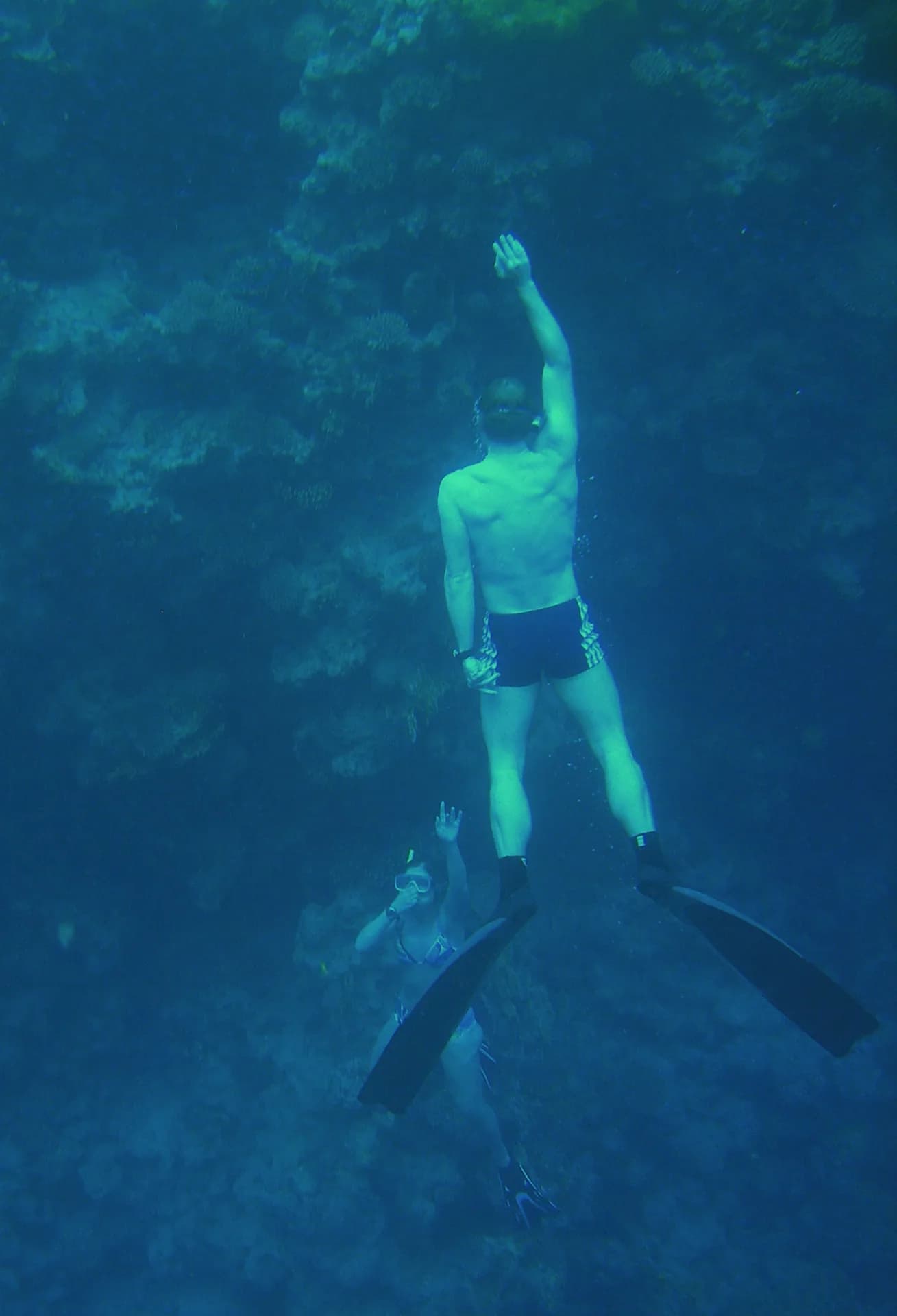
Freediving Depth Training Melbourne
How deep can you freedive in Melbourne? A complete guide to depth progression, training locations, course requirements, equalization techniques, physiological adaptations, and safety protocols for depth freediving.
Last updated:
Depth is the defining metric of freediving. How deep you can dive reflects the convergence of every skill you develop — breath-hold capacity, equalization technique, relaxation under pressure, finning efficiency, psychological comfort, and physiological adaptation.
For freedivers in Melbourne, depth training presents unique challenges and opportunities. Port Phillip Bay offers accessible depths up to around 24 metres, suitable for most recreational and intermediate training. Beyond that, Melbourne's freedivers often travel to South Australia's Kilsby Sinkhole or further afield for deeper training environments. But regardless of where you train, the principles of safe, progressive depth development remain constant.
This guide covers everything you need to know about depth training as a Melbourne-based freediver — realistic depth progression timelines, where to access depth, what each certification level requires, the equalization and physiological challenges that emerge at depth, and the safety protocols that keep depth training from becoming depth risk. If you're new to freediving, begin with our complete guide to freediving in Melbourne for foundational context.
Depth Progression Overview
How deep can you freedive? The answer depends on training, technique, physiology, and time invested. Here's what realistic depth progression looks like for most people:
First Session (Untrained Beginner)
Most people attending their first pool or open water freediving session reach depths of 5-6 metres. This is typically limited by equalization rather than breath-hold — the Valsalva technique that beginners instinctively use begins to fail around this depth, and the psychological discomfort of being upside-down underwater creates tension that shortens breath-hold times.
Some individuals reach 8-10 metres on their first attempt, usually those with scuba diving experience (who are already comfortable with equalization and being underwater) or naturally relaxed individuals with good equalization anatomy. Others plateau at 3-4 metres and need several sessions to progress beyond this point. Both are completely normal.
Level 1 Certification (10-16 metres)
A Level 1 freediving course (AIDA 2, Molchanovs Wave 1, PADI Freediver) targets depths of 10-16 metres depending on the certifying agency. Most students achieve this comfortably by the end of the course, typically spanning 2-3 days of training.
The primary technical milestone at this stage is mastering Frenzel equalization. The Valsalva technique used by most beginners becomes ineffective and uncomfortable below 10-15 metres due to lung compression. Frenzel, which uses the tongue as a piston instead of the diaphragm, works reliably to around 30-40 metres and is taught as the standard technique in all credible courses. Our detailed guide on how to equalize for freediving covers this technique in depth.
Level 2 Certification (16-24 metres)
Level 2 courses (AIDA 3, Molchanovs Wave 2, PADI Advanced Freediver) target 16-24 metres. This range is achievable for most people within 6-12 months of beginning freediving, assuming regular training — at least one pool session per week and monthly open water depth sessions.
At this depth range, equalization becomes more challenging. The pressure at 20 metres is three times surface pressure, meaning the air in your middle ear is compressed to one-third of its original volume. Frenzel must be performed more frequently — often every half-metre — and with more precision. Head position, relaxation, and pre-equalization at the surface become critical.
Physiologically, most people begin to experience noticeable lung compression at this depth. The sensation of pressure on the chest, the reduced buoyancy (you become negatively buoyant around 12-18 metres depending on body composition and wetsuit), and the increased workload on ascent all require adaptation.
Level 3 and Master Certification (24-40 metres)
Level 3 courses (AIDA 4, Molchanovs Wave 3) and Master-level certifications target depths of 24-40 metres. Reaching this range typically requires 1-3 years of consistent training, regular access to depth, and often travel to deeper training sites like Kilsby Sinkhole.
At these depths, mouthfill equalization becomes necessary for most divers. Mouthfill is an extension of Frenzel where the mouth is filled with as much air as possible at around 20-30 metres, then tiny tongue movements meter out that air for multiple equalisations during the remainder of the descent. This technique is complex and requires solid Frenzel fundamentals before attempting.
Physiological adaptations become pronounced. Lung volume at 30 metres is compressed to roughly one-quarter of surface volume. Blood shift — the body's response to protect the lungs by moving blood from the extremities into the thoracic cavity — becomes noticeable. Narcosis, a mild euphoria caused by nitrogen absorption at pressure, may begin to appear in some individuals, though it's more common below 40 metres.
Beyond 40 Metres (Competitive and Advanced Depth)
Depths beyond 40 metres are the realm of competitive freedivers and dedicated depth specialists. These depths require years of training, advanced mouthfill technique, significant physiological adaptation, and access to purpose-built depth training environments.
Current world records in Constant Weight (freediving with fins, no assistance) exceed 130 metres for men and 105 metres for women. These are outlier performances by elite athletes. For context, most recreational freedivers plateau between 20-40 metres, and that's more than sufficient for extraordinary underwater experiences. Melbourne's best dive sites rarely exceed 30 metres, so chasing extreme depth is more about personal challenge than practical diving need.
Safety First
Depth training carries serious risks. Blackout, lung squeeze, equalization injury, and disorientation can all occur at depth. Never train depth alone. Always use the one-up-one-down protocol (one diver descends while a trained buddy remains at the surface watching, then they swap). Depth progression must be gradual, supervised, and conservative. Pushing limits without proper training, buddy support, and safety protocols is how accidents happen.
Where Depth Training Happens in Melbourne
Melbourne's depth training options are geographically split: shallow to intermediate depths (up to 24 metres) are accessible locally in Port Phillip Bay, while deeper training typically requires travel to South Australia or interstate.
Port Phillip Bay: 10-24 Metres
The most accessible depth training for Melbourne freedivers happens via boat dives departing from Queenscliff and Portsea. These boat charters take divers to sites in Port Phillip Heads, the narrow entrance to the bay where depths range from 10 to 24 metres over sand, reef, and shipwreck sites.
Conditions at the Heads can be challenging — strong currents, surge, and visibility that varies from 3 to 15+ metres depending on tides and weather. But when conditions align, the Heads offer excellent depth training in a real ocean environment with interesting topography and marine life.
Most freediving schools in Melbourne run boat trips to these sites as part of Level 1 and Level 2 courses, and many continue to offer regular depth training sessions for certified divers. Charter operators familiar with freedivers include several based at Queenscliff and Sorrento.
Pier Sites: Practice and Progression
While the pier sites around Melbourne (Rye Pier, Blairgowrie Pier, Flinders Pier) max out at around 6-8 metres, they serve an important role in depth training progression. Piers offer calm, controlled environments to practise equalization, work on technique, and build comfort before attempting deeper boat dives.
Many divers use piers for technique refinement — perfecting duck dives, streamlining, equalization frequency, and relaxation in a low-stress environment. Our guide to the best freediving spots in Melbourne details these locations and what each offers.
Kilsby Sinkhole: 40+ Metres
For depths beyond what Port Phillip Bay offers, most Melbourne freedivers travel to Kilsby Sinkhole in South Australia. Kilsby is a flooded limestone cave system located near Mount Gambier, roughly 450 kilometres west of Melbourne (about 5 hours by car). It's one of Australia's premier freshwater depth training sites.
Kilsby offers depths exceeding 40 metres, crystal-clear visibility often exceeding 60 metres, stable conditions (no waves, no currents), and year-round accessibility. The water is cold — typically 12-15°C — requiring a 5-7mm wetsuit or drysuit, but the visibility and depth make it an unparalleled training environment.
Several freediving schools and instructors run annual or semi-annual depth camps at Kilsby, typically in a retreat format over 3-5 days. These camps offer structured depth progression under instructor supervision, video analysis, and the camaraderie of training with a group of freedivers at a similar level.
Access to Kilsby requires prior arrangement with the landowner. Most freedivers visit as part of an organized course or camp rather than attempting independent access. For more on Kilsby as a Melbourne-linked training destination, see the dedicated section below.
Beyond Melbourne: Interstate and International Options
Freedivers seeking depth beyond 40 metres or more varied environments often travel further. Popular Australian destinations include:
- Julian Rocks, Byron Bay (NSW) — 20-30 metres, excellent visibility, warm water, abundant marine life
- SS Yongala Wreck, Queensland — 15-28 metres, one of the world's best wreck dives
- The Great Barrier Reef — Numerous sites with depths of 15-40+ metres
- Dean's Blue Hole, Bahamas — The world's deepest known saltwater blue hole (202 metres), a mecca for competitive depth training
- Dahab, Egypt — Warm water, accessible depth, and a vibrant freediving community; many freedivers spend weeks or months training here
These destinations offer depth, but they also require significant travel investment. For most Melbourne freedivers, the combination of Port Phillip Bay for regular training and occasional trips to Kilsby provides sufficient depth access for progression through intermediate and advanced levels.
Course Depth Requirements by Level
Certification agencies have specific depth performance requirements for each course level. Here's what the major agencies require:
PADI Freediver Levels
- PADI Freediver (Level 1) — 10 metres minimum, 16 metres recommended
- PADI Advanced Freediver (Level 2) — 16 metres minimum, 20-24 metres typical
- PADI Master Freediver (Level 3) — 24 metres minimum, 27-30 metres typical
Molchanovs Wave Levels
- Wave 1 (Level 1) — 12-20 metres (depth performance is graded on a scale; higher depths earn higher marks)
- Wave 2 (Level 2) — 16-30 metres
- Wave 3 (Level 3) — 24-40 metres
Molchanovs emphasizes that deeper is not better — the goal is relaxed, efficient diving within your comfortable range, not maximizing numbers. The grading system rewards control and technique as much as absolute depth.
AIDA Levels
- AIDA 2 (Level 1) — 10-16 metres
- AIDA 3 (Level 2) — 20-24 metres
- AIDA 4 (Level 3) — 30-32 metres
- AIDA Master — 40 metres+
AIDA is the international certifying body founded in 1992 and used widely for competitive freediving. AIDA courses tend to have slightly more aggressive depth targets than PADI or Molchanovs, though individual instructors have flexibility within the standards.
SSI Freediving Levels
- SSI Basic Freediver — Introduction only; no open water depth requirement
- SSI Freediver (Level 1) — 10-20 metres
- SSI Advanced Freediver (Level 2) — 20-30 metres
- SSI Freediver Instructor — 30 metres+ (instructor-level training)
These are certification minimums — the depth you need to demonstrate to pass the course. Many students exceed these targets. What matters more than the number is that you reach the depth comfortably, with controlled equalization, relaxed technique, and awareness of your buddy and surroundings. A tense, forced dive to 20 metres is less valuable than a relaxed, confident dive to 15 metres.
Depth Is Not the Goal
Depth is a byproduct of good technique, not an end in itself. The freedivers who progress safely and enjoyably to significant depths are those who focus on mastering equalization, relaxation, efficient movement, and mental comfort at each stage before pushing deeper. Chasing numbers leads to injury, anxiety, and plateaus. Building skills leads to depth that feels easy.
Equalization for Depth
Equalization is the primary limiting factor for depth in freediving. Without reliable, effortless equalization, you cannot progress beyond shallow depths. As you go deeper, the challenges multiply.
Why Depth Makes Equalization Harder
Pressure increases linearly with depth — roughly one atmosphere (100 kPa) for every 10 metres. At 10 metres, you experience twice the pressure of the surface. At 20 metres, three times. At 30 metres, four times.
This increasing pressure compresses the air in your lungs, mouth, and throat — the air you need to send through the Eustachian tubes to equalize your middle ears. At 30 metres, your lung volume is compressed to about one-quarter of its surface volume. This means there's progressively less air available, and it's increasingly compressed (smaller volume, higher density), making it harder to move.
The Eustachian tubes themselves also become more resistant to opening under pressure, as the soft tissues around them compress. All of this explains why equalization that feels effortless at 5 metres can become challenging at 20 metres and impossible at 30 metres without advanced technique.
Frenzel: Essential from 10 Metres
The Valsalva technique — pinching the nose and blowing from the chest — becomes ineffective below about 10-15 metres for most people. The diaphragm and chest muscles cannot generate sufficient pressure once the lungs are significantly compressed, and the effort required creates tension that undermines relaxation.
Frenzel equalization, which uses the tongue as a piston to compress air trapped in the mouth and throat (with the glottis locked to seal it off from the lungs), works reliably to 30-40 metres. It requires no chest effort, uses only small volumes of air, and can be performed continuously without disrupting your descent or streamline.
Every credible freediving course teaches Frenzel as the standard technique. If you have not yet learned Frenzel, or if you are still struggling with it, that should be your immediate priority before attempting depths beyond 10 metres. Our comprehensive guide to equalization for freediving provides detailed instruction and troubleshooting.
Mouthfill: Required Beyond 30 Metres
Beyond about 30-40 metres, even Frenzel begins to fail for most divers. At these depths, the air in the mouth and throat is so compressed that there isn't enough volume left to perform effective Frenzel equalisations for the remainder of the descent.
Mouthfill technique solves this. At around 20-30 metres (before the air becomes too compressed), the diver fills the mouth with as much air as possible — cheeks fully puffed, tongue pulled back to create maximum volume. This air is then sealed off with the glottis. For the rest of the descent, tiny movements of the tongue meter out small amounts of this stored air for each equalisation.
Mouthfill is complex. It requires excellent Frenzel fundamentals, the ability to isolate and control the tongue, soft palate, and glottis independently, and significant practice to become reliable under pressure (both literal and psychological). It's typically taught in Level 3 courses and refined over months or years of depth training.
Most recreational freedivers never need mouthfill. If your depth goals are in the 20-30 metre range, solid Frenzel is sufficient. Mouthfill becomes necessary only when pushing toward 40+ metres.
Equalization Frequency Increases with Depth
At the surface and in the first few metres, equalizing every 1-2 metres is usually sufficient. As you descend, the rate of pressure change per metre increases (in absolute terms, the first 10 metres represents the largest proportional pressure change — from 1 to 2 atmospheres — while subsequent 10-metre increments add proportionally less). But the compressed air in your ears means the Eustachian tubes close more tightly between equalisations, requiring more frequent intervention.
By 20 metres, many divers need to equalize every half-metre. By 30 metres, continuous equalization — a gentle Frenzel or mouthfill every second or two — becomes necessary. This is one reason depth progression must be gradual: your equalization needs to become more automatic, more frequent, and more effortless as you go deeper.
Physiological Considerations
Depth freediving places unique demands on the body. Understanding these physiological responses helps you train safely and recognize when you're approaching limits.
Lung Compression and Residual Volume
As you descend, increasing water pressure compresses your lungs. At 10 metres (2 atmospheres absolute pressure), lung volume is halved. At 30 metres (4 atmospheres), it's one-quarter of surface volume.
Your lungs have a minimum volume called residual volume (RV) — the amount of air that remains in the lungs even after a full exhalation. For most people, RV is about 1-1.5 litres, or roughly 20-25% of total lung capacity. Once the lungs are compressed to residual volume, they cannot safely compress further. The depth at which your lungs reach RV is your theoretical depth limit before risking lung squeeze.
For someone with a 6-litre total lung capacity and 1.5-litre residual volume, the lungs can safely compress by a factor of 4:1, which corresponds to 30 metres depth (4 atmospheres). Below this, the body must adapt via blood shift (see below) to protect the lungs.
In practice, trained freedivers regularly exceed their calculated RV depth without injury, thanks to blood shift and the elasticity of the thoracic cavity. But RV depth is a useful reference point, and beginners should not approach or exceed it without experienced supervision and gradual adaptation.
Blood Shift
Blood shift is the body's protective mechanism to prevent lung collapse at depth. As the lungs compress toward residual volume, blood vessels in the thorax (chest cavity) dilate and engorge with blood. This blood — drawn primarily from the extremities — fills the space that would otherwise be empty as the lungs compress, preventing the lung tissue from collapsing or tearing.
Blood shift is involuntary and automatic. Most divers don't consciously feel it, though some report a sensation of fullness or warmth in the chest at depth. It's a normal, healthy response that allows freedivers to exceed their RV depth safely.
However, blood shift requires gradual adaptation. Pushing too deep too quickly, before the body has adapted to mobilizing blood efficiently, can lead to lung squeeze — bleeding in the lung tissue caused by over-compression. This is why depth progression must be slow and supervised: you are literally training your cardiovascular system to respond to pressure in new ways.
Thoracic Squeeze (Lung Squeeze)
Lung squeeze occurs when the lungs are compressed beyond their safe limit without adequate blood shift. The result is bleeding in the alveoli (air sacs) or lung tissue, presenting as blood in the mouth or sputum after surfacing, chest tightness, and a productive cough.
Mild lung squeeze (a small amount of blood-tinged sputum) can occur even in experienced divers who push their limits. It typically resolves within days to weeks with rest. Severe lung squeeze is rarer but can require medical intervention and extended recovery.
The best prevention is conservative depth progression — adding no more than 1-2 metres per session, ensuring full recovery between deep dives, and never forcing a dive when you feel physical discomfort or resistance in the chest during descent.
Nitrogen Narcosis
Nitrogen narcosis — a reversible alteration in consciousness caused by breathing nitrogen at elevated partial pressures — is typically associated with scuba diving, where it becomes noticeable below about 30 metres.
Freedivers generally experience less narcosis than scuba divers at equivalent depths, likely because the breath-hold limits nitrogen absorption and the descent is brief. However, some freedivers report mild euphoria, time distortion, or reduced decision-making capacity at depths beyond 40 metres. This is highly individual — some people are very susceptible, others feel nothing even at 60+ metres.
Narcosis is not dangerous in itself (it resolves immediately upon ascent), but it can impair judgment. A narcosed diver might forget to equalize, misjudge depth, or delay their ascent. This is another reason depth training must be supervised: your buddy and instructor are watching for behavioral changes you may not notice yourself.
Hypoxia and Shallow Water Blackout
Hypoxia — insufficient oxygen in the bloodstream — is the primary physiological risk in all breath-hold diving, not just depth. But depth training adds complexity because the ascent from depth involves a rapid drop in pressure, which reduces the partial pressure of oxygen in the blood and can trigger blackout in the final metres of ascent even if the diver felt fine at depth.
This phenomenon, called shallow water blackout, is the reason the one-up-one-down protocol is non-negotiable in depth training. A diver who blacks out at 5 metres during ascent from 25 metres looks identical to a diver who is simply ascending — until they stop moving. Only a watching buddy at the surface will recognize the problem and perform an immediate rescue.
For more on blackout risks and how to mitigate them, see our guide on whether freediving is dangerous.
Never Train Depth Alone
Depth training without a qualified buddy is not bold or independent — it's reckless. Blackout at depth is survivable if your buddy is watching and responds immediately. It's fatal if you are alone. No personal record, no Instagram post, no sense of self-reliance is worth dying for. Always, always, always use the one-up-one-down protocol. One diver descends. One diver watches from the surface, ready to descend for rescue if needed. Then swap. No exceptions.
Kilsby Sinkhole
Kilsby Sinkhole is the premier freshwater depth training site for Australian freedivers, and it holds a special place in the training progression of many Melbourne-based divers.
What Is Kilsby?
Kilsby is a flooded limestone cave system located on private farmland near Mount Gambier in South Australia's Limestone Coast region. It formed through the collapse of a subterranean cavern, creating a water-filled sinkhole with depths exceeding 80 metres (though most freediving training happens in the 20-40 metre range).
The water is crystal-clear freshwater fed by underground aquifers, with visibility regularly exceeding 60 metres — among the best visibility anywhere in Australia. The water temperature is a stable 12-15°C year-round, requiring a 5-7mm wetsuit or drysuit. The surface is calm (no waves, no wind), and there are no currents, making it an ideal controlled environment for depth training.
Why Melbourne Freedivers Go to Kilsby
Port Phillip Bay's maximum accessible depth for recreational freediving is around 24 metres. For freedivers progressing beyond this — working toward Level 3 certification, preparing for competitions, or simply seeking the experience of deeper diving — Kilsby is the closest high-quality depth training environment.
The combination of depth, visibility, stable conditions, and proximity to Melbourne (about 5 hours by car) makes it uniquely valuable. Other deep sites exist in Australia, but they typically require flights, boat access, or favourable ocean conditions. Kilsby is accessible by car and diveable in almost any weather.
How to Access Kilsby
Kilsby is on private property, and access is by prior arrangement only. The landowner hosts freediving groups and courses through collaboration with freediving schools and instructors.
Most Melbourne freedivers visit Kilsby as part of an organized depth camp or Level 3 course. These are typically multi-day retreats (3-5 days) that include accommodation, meals, instruction, depth training sessions, video analysis, and safety support. Several Melbourne-based freediving instructors and schools run Kilsby trips annually or semi-annually.
Costs vary but generally include the access fee, instruction, accommodation, and meals. Expect to budget $600-$1,200+ depending on the length and structure of the camp. Bring your own wetsuit, mask, fins, and weight system (the freshwater requires significantly more weight than saltwater — often 4-8kg more than your ocean weighting).
What to Expect at a Kilsby Depth Camp
A typical Kilsby camp involves morning and afternoon depth sessions, with rest and debriefing in between. Instructors set a depth line (a weighted rope descending from the surface to a target depth, often with markers every 5-10 metres), and divers descend one at a time using the one-up-one-down protocol.
The focus is on gradual progression — typically adding 1-2 metres per session. Video analysis (filmed from underwater or surface cameras) helps divers see and correct technique issues: inefficient finning, poor streamline, tense body position, late equalization. The visibility makes every movement visible, which is both revealing and instructive.
Evenings often involve theory sessions on mouthfill technique, physiology, mental training, and troubleshooting individual challenges. The retreat format fosters camaraderie and shared learning — you're training alongside a group of freedivers at a similar level, all working toward similar goals.
Alternatives to Kilsby
For those unable to travel to Kilsby, other Australian depth training destinations include:
- Piccaninnie Ponds (South Australia) — Another limestone sinkhole near Mount Gambier, with exceptional visibility and depths to 30+ metres
- Byron Bay (New South Wales) — Ocean depth training to 30 metres, warmer water, abundant marine life, but conditions-dependent
- Great Barrier Reef (Queensland) — Numerous sites with 20-40+ metre depths, warm water, but requires boat access and favourable weather
Internationally, freedivers serious about depth often travel to Dahab (Egypt), Roatan (Honduras), or Dean's Blue Hole (Bahamas) for extended training camps in warm water with professional coaching and deeper access. But for most Melbourne freedivers, Kilsby provides the depth needed for Level 3 progression without international travel.
Training Progression
Safe depth progression is slow, conservative, and incremental. Rushing leads to injury, anxiety, and long-term plateaus. Here's how to progress intelligently.
The 1-Metre Rule
Add no more than 1-2 metres to your maximum comfortable depth per session. If your previous deepest relaxed dive was 18 metres, target 19-20 metres in your next session, not 25 metres. This applies whether you're diving once per week or once per month.
Why so conservative? Because every additional metre at depth requires physiological adaptation (blood shift, lung compression, equalization), psychological adaptation (comfort and confidence), and technical refinement (equalization frequency, buoyancy changes, workload on ascent). Trying to skip steps overloads your system and leads to compensatory tension, forced dives, and increased injury risk.
Frequency and Consistency
Depth training once per month is sufficient for slow, steady progression through recreational depths (10-25 metres). More frequent training accelerates adaptation, but it also requires adequate recovery — depth diving is fatiguing in ways that shallow diving is not.
Weekly pool sessions focusing on breath-hold, equalization, and relaxation support depth progression by keeping the foundational skills sharp. For more on pool training, see our guide to pool training in Melbourne.
Recovery Between Deep Dives
Depth diving places significant stress on the cardiovascular system, the lungs, and the nervous system. After a session involving personal-best depths or repeated deep dives, allow at least 48-72 hours before training depth again. Light pool work and dynamic swimming are fine during recovery, but avoid pushing deep dives on consecutive days unless you are in a structured depth camp with professional supervision.
Depth Is Not Linear
You will not progress smoothly from 10 to 15 to 20 to 25 metres in neat increments. Some sessions you'll surprise yourself. Other sessions, depths that felt easy the previous month will feel difficult. Equalization troubles, lingering fatigue, psychological factors, water conditions, and dozens of other variables affect performance.
Do not chase numbers. Focus on how the dive feels. A relaxed, controlled dive to 15 metres is more valuable than a forced, anxious dive to 22 metres. Depth will come naturally as your skills develop and your body adapts. Forcing it achieves the opposite.
Video Analysis
If you have access to underwater video (many depth training sessions include GoPro footage from buddies or instructors), use it. Watching yourself dive reveals inefficiencies you cannot feel: excess leg kick, tense shoulders, head position that's blocking equalization, late finning on ascent. Correcting these issues improves comfort, efficiency, and depth capacity more than simply "trying harder."
Mental Training and Visualization
Much of depth progression is psychological. Fear, disorientation, and discomfort at depth are normal responses to an unfamiliar environment. Mental training — visualization of the dive, controlled breathing exercises, exposure to the sensations of depth in a controlled environment — accelerates adaptation.
Before a depth session, spend 10-15 minutes visualizing the dive: the duck dive, the descent, the equalization clicks, the moment of turning at depth, the ascent. Visualize it going perfectly. This primes the nervous system and reduces anxiety when the real dive begins.
Safety
Depth training is high-risk if done improperly, and low-risk if done correctly. The difference is discipline, training, and adherence to protocols.
One-Up-One-Down Protocol
The one-up-one-down protocol is the foundational safety rule for depth training. One diver descends. One diver remains at the surface, watching the descending diver and ready to perform a rescue if needed. When the descending diver surfaces and completes their surface protocol (breathe, OK sign, speak), the roles swap.
The surface diver must be trained in rescue skills, must maintain constant visual contact with the descending diver (or the depth line if visibility is limited), and must be prepared to descend immediately if the ascending diver shows signs of distress or blackout. This is not a casual role. The surface diver is actively working, not passively watching.
Buddy Skills and Rescue Training
Every freediver training depth must be trained in rescue skills: recognizing blackout, approaching an unconscious diver, bringing them to the surface, securing their airway, providing rescue breaths in the water if needed, and getting them onto a boat or shore.
These skills are taught in Level 1 and Level 2 courses and should be practised regularly. A rescue performed correctly is smooth, calm, and effective. A rescue performed by someone who has never practised is chaotic and dangerous. Do not skip rescue training. It is not optional.
Blackout Risks at Depth
Blackout can happen at any depth, but depth training increases the risk because:
- Longer breath-holds — Depth dives take longer than horizontal swims, giving hypoxia more time to develop
- Pressure changes on ascent — Oxygen partial pressure drops rapidly during ascent from depth, triggering blackout in the final metres even if the diver felt fine deeper
- Task loading — Managing equalization, buoyancy changes, and psychological stress at depth consumes mental resources and can mask the onset of hypoxia
Never skip surface intervals. Never hyperventilate before a dive. Never dive if you are fatigued, stressed, or recovering from illness. These are the margins that keep blackout from moving from "possible" to "likely."
Equalization Injuries
Forcing an equalization that is not working can rupture the eardrum (tympanic membrane perforation), damage the round or oval windows (the membranes separating the middle ear from the inner ear), or cause middle ear barotrauma (bleeding and swelling in the middle ear space).
If you cannot equalize, ascend. Do not force it. Do not "push through." Ascend 1-2 metres, equalize successfully, then continue. If equalization remains impossible, abort the dive. An aborted dive is inconvenient. An ear injury is weeks or months of recovery and potentially permanent damage.
Environmental Hazards
Depth training often happens in environments with additional hazards:
- Currents — Strong currents at depth sites like Port Phillip Heads can sweep divers off the line. Always use a buoy and float on the surface, and ensure the boat operator knows your location
- Boat traffic — Surface markers and dive flags (Alpha flag or diver-down flag) are essential when diving from a boat or in areas with boat traffic
- Entanglement — Depth lines, buoy lines, and equipment can entangle. Keep your setup clean and streamlined, and carry a line cutter
- Cold water — Hypothermia degrades judgment and performance. Wear adequate thermal protection and limit dive times in cold water environments like Kilsby
Know When to Stop
Recognizing when to call a session is a skill. If you are tired, if equalization is not working, if conditions are deteriorating, if you are feeling anxious or unwell — stop. There is no penalty for ending a training session early. There is a significant penalty for ignoring warning signs and pushing anyway.
Depth Training Is Not Solo Training
Training depth alone — whether at a pier, on a boat dive, or at an inland site like a quarry — is not a calculated risk. It is a preventable death waiting to happen. Blackout at depth looks like a normal ascent until the diver stops moving. Without a buddy at the surface watching, blackout is fatal. Always train depth under supervision with a qualified buddy or instructor. Always use the one-up-one-down protocol. No exceptions.
Frequently Asked Questions
How deep can a beginner freediver go?
Most beginners reach 5-6 metres on their first pool or open water session. A Level 1 freediving course targets 10-16 metres depending on the certification agency. With proper training, many divers reach 20 metres within their first year. Progression depends on equalization technique, relaxation, and consistent training.
Where can you do depth training in Melbourne?
Boat dives from Queenscliff and Portsea access depths of 10-24 metres in Port Phillip Bay. For deeper training (30m+), many Melbourne freedivers travel to Kilsby Sinkhole in South Australia, which offers 60m+ visibility and 40m+ depth. Freediving schools in Melbourne organize regular depth training sessions at both locations.
Is deep freediving dangerous?
Depth freediving carries risks including blackout, lung squeeze, and equalization injury. These risks are manageable with proper training, gradual progression, and always diving with a trained buddy using the one-up-one-down protocol. Never train depth alone. For a detailed risk analysis, see our guide on whether freediving is dangerous.
What equalization technique do I need for deep freediving?
Frenzel equalization is essential from about 10 metres. The Valsalva technique (pinching nose and blowing from the chest) becomes ineffective below 10-15 metres due to increasing pressure and lung compression. For depths beyond 30 metres, mouthfill technique is typically required. Learn Frenzel before attempting depths beyond 15 metres. See our complete guide to equalization for detailed instruction.
How long does it take to reach 20 metres?
Most people reach 20 metres within 6-12 months of beginning freediving, assuming regular training — at least one pool session per week and monthly open water depth sessions. Progression depends heavily on mastering Frenzel equalization and building psychological comfort at depth. Some people reach 20 metres within weeks; others take years. Both are normal.
Do I need a freediving course to train depth?
Yes. Depth training without proper instruction is dangerous. A credible freediving course teaches equalization techniques, physiological responses to depth, safety protocols, rescue skills, and provides supervised progression in a controlled environment. Self-taught depth diving skips critical skills and drastically increases injury and fatality risk. Invest in proper training. See our guide on how to choose a freediving course in Melbourne.
What is the deepest freedive ever recorded?
The current world record for Constant Weight freediving (descending and ascending under the diver's own power using fins) is 136 metres for men (Alexey Molchanov, 2023) and 105 metres for women (Alenka Artnik, 2024). These are outlier performances by elite athletes with years of training. Most recreational freedivers plateau between 20-40 metres, which is more than sufficient for extraordinary diving experiences.