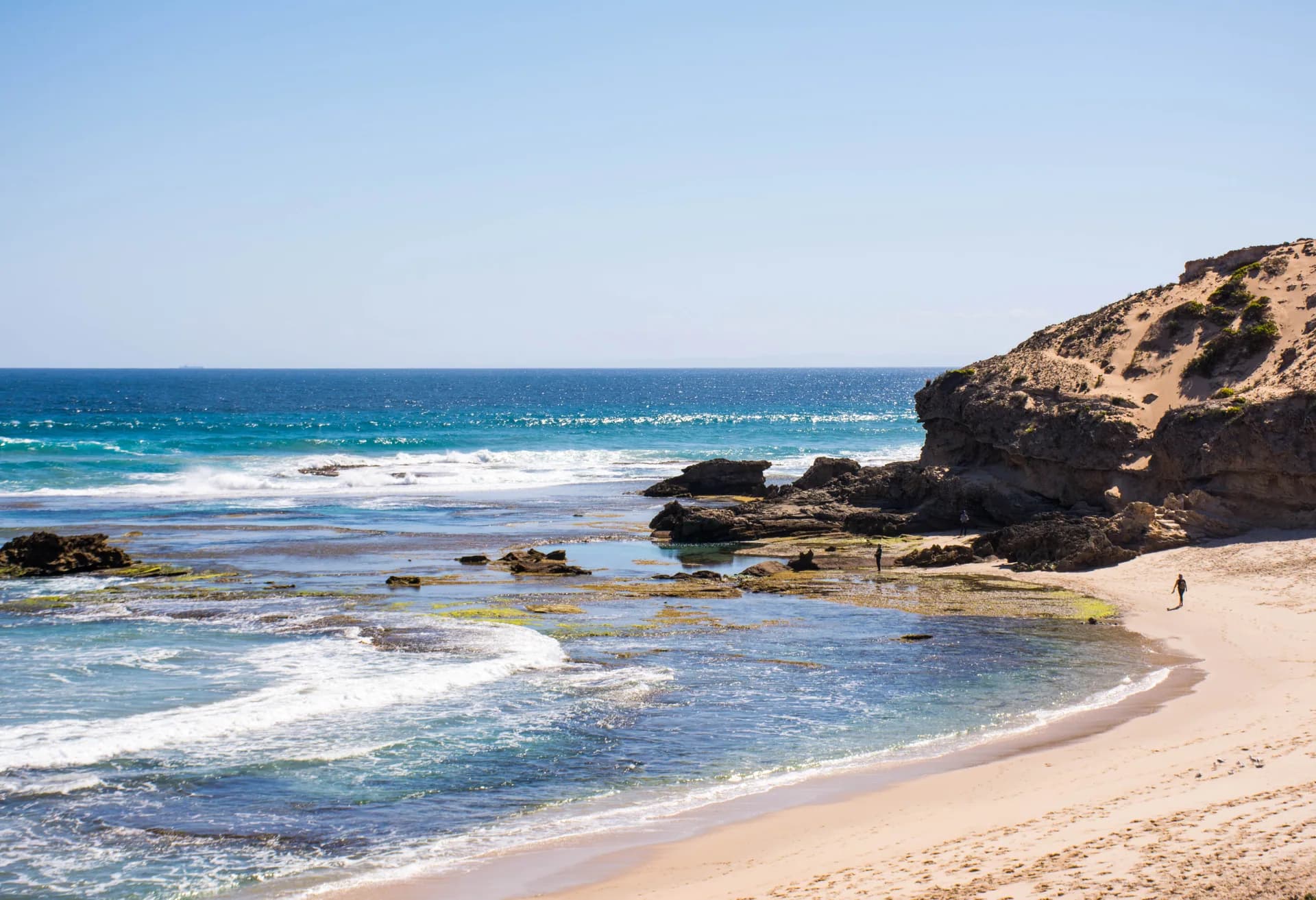
Back Beach Diving — Mornington Peninsula Ocean Side
Kelp forests, pelagics, and Victoria's most dramatic shore diving — exposed to Bass Strait from Point Nepean to Cape Schanck.
Last updated:
If you've only dived the sheltered bay-side piers of the Mornington Peninsula, the back beaches will feel like a different ocean entirely.
The back beaches — the ocean-facing coastline stretching from Point Nepean in the west to Cape Schanck and beyond in the east — are exposed to the full force of Bass Strait. The water is colder, the swells bigger, and the conditions far more demanding. But for experienced divers who catch the right weather window, the back beaches offer some of the most spectacular and rewarding shore diving in Victoria.
Towering kelp forests sway in the surge. Rocky reefs harbour crayfish the size of your forearm. Pelagic fish species that never venture into Port Phillip Bay patrol the deeper channels. Australian fur seals glide past with effortless grace. This is wild-water diving — raw, beautiful, and absolutely unforgettable when conditions align.
This guide covers what makes the back beaches different, where to dive, what you'll see, and — most importantly — how to stay safe on one of Victoria's most unforgiving stretches of coastline.
Overview
The Mornington Peninsula is a narrow finger of land separating Port Phillip Bay from Bass Strait and Western Port. While the northern bay-side coast is famous for its calm, sheltered pier dives, the southern ocean-side coast — known locally as the back beaches — faces directly into Bass Strait and the Southern Ocean beyond.
The back beaches run roughly 40 kilometres from Point Nepean at the western tip of the peninsula to Cape Schanck and Bushrangers Bay in the east. The coastline is rugged, rocky, and exposed. Ocean swells generated thousands of kilometres away in the Southern Ocean hit this coast with full force. On rough days, waves break over rocky platforms and surge channels, making entry and exit dangerous or impossible. On calm days, the water clears to brilliant blue-green, visibility can exceed 15 metres, and the underwater landscape reveals itself as one of the most spectacular diving environments within reach of Melbourne.
The back beaches are not beginner territory. These are advanced dive sites that demand experience with ocean conditions, good judgement, and conservative planning. But for divers who have the skills and patience to wait for the right conditions, the back beaches are absolutely worth the effort.
Why It's Different from Bay-Side
Most Melbourne divers start their journey on the bay side of the Mornington Peninsula — at Rye Pier, Blairgowrie, Flinders, or Portsea. The bay is sheltered, calm, and suitable for all levels. The back beaches are the complete opposite.
Exposure to Bass Strait
Port Phillip Bay is a massive, mostly enclosed body of water protected from ocean swells by the narrow entrance at the Heads. The back beaches have no such protection. They face directly into Bass Strait, which connects to the Southern Ocean and is one of the roughest stretches of water in the world. Ocean swells generated by storms hundreds or thousands of kilometres away arrive at the back beaches with all their accumulated energy. A day that looks calm in Melbourne can have 2-metre swells breaking on the back beaches.
Colder Water
The bay-side water is typically 2-4°C warmer than the ocean side, thanks to the enclosed environment and shallow depths. Back beach water temperatures sit closer to open-ocean averages — 10-12°C in winter, 16-19°C in summer. You'll need a thicker wetsuit, and cold-water acclimatisation becomes far more important.
Surge and Swell
Even when the surface looks relatively calm, underwater surge from passing swells moves water back and forth in powerful pulses. Surge makes it harder to maintain position, increases air consumption for scuba divers, and requires constant awareness of your surroundings to avoid being pushed into rock faces or kelp tangles. For freedivers, surge adds complexity to descents and ascents, and can make equalisation more difficult.
Different Marine Life
The exposed coastline supports a completely different ecosystem from the sheltered bay. Kelp forests dominate the rocky reefs. Larger pelagic species like kingfish, Australian salmon, and trevally patrol the drop-offs. Southern rock lobster (crayfish) are common in crevices and overhangs. Australian fur seals occasionally appear, especially near rocky headlands. You won't find weedy seadragons or seahorses here — they prefer the calm, seagrass-filled waters of the bay. Instead, you'll see blue devilfish, boarfish, old wives, wrasse, Port Jackson sharks, and the occasional school of pelagics sweeping through.
Limited Access and Exit Points
Bay-side piers have ladders, boat ramps, and easy entry points. The back beaches are often rocky, cliffy, and difficult to access. Entry might involve scrambling over rocks, timing your entry between sets of waves, and committing to a dive knowing that exiting in a hurry will be challenging. There are no lifeguards, no facilities, and — at some sites — no mobile phone coverage.
Advanced Divers Only
The back beaches are not suitable for beginners or inexperienced ocean divers. Before attempting any back beach dive, you should have significant experience with ocean swell, surge, rocky entries and exits, and open-water navigation. If you have only dived in the sheltered waters of Port Phillip Bay, build your skills gradually at easier ocean sites before attempting the back beaches.
For an overview of the full peninsula, see our complete guide to diving the Mornington Peninsula.
Key Dive Sites
There are several accessible back beach dive sites along the Mornington Peninsula. All require calm conditions, careful planning, and advanced diving skills.
Cheviot Beach (Point Nepean)
Cheviot Beach sits inside the Point Nepean section of the Mornington Peninsula National Park, near the very tip of the peninsula. It is a small, sheltered cove on the ocean side, tucked between rocky headlands that provide some protection from westerly swells. The beach is historically significant — Prime Minister Harold Holt famously disappeared here in 1967 while swimming, and was never found.
Underwater, Cheviot offers rocky reefs covered in kelp, sponges, and encrusting invertebrates. Southern rock lobster hide in crevices. Schools of old wives and boarfish are common. Visibility is often excellent on calm days, easily reaching 12-15 metres. The site is accessible via a walking track from the Point Nepean car park — roughly a 2-kilometre walk each way, which means you'll be carrying all your gear in and out.
- Depth: 2-12m
- Highlights: Rocky reefs, kelp forests, crayfish, good visibility, historical significance
- Conditions required: Swell under 1m, light winds, careful assessment of rips and currents
- Access: 2km walk from Point Nepean car park (within national park, entry fees apply)
- Caution: Strong currents and rips. This is where Harold Holt disappeared. Do not underestimate this site.
Gunnamatta Beach
Gunnamatta is one of the most famous surf beaches on the Mornington Peninsula, known for powerful waves and consistent surf breaks. As a dive site, it is extremely limited — Gunnamatta is rarely diveable due to the size and frequency of the surf. However, on the handful of calm days each year when the ocean goes completely flat, Gunnamatta reveals sandy channels, scattered rocky outcrops, and pelagic fish cruising the deeper water beyond the surf zone.
This is not a site for casual exploration. Gunnamatta is best suited to experienced freedivers and spearfishers who are comfortable in open water and can read surf conditions accurately. The beach has strong rips, and the ocean floor drops away quickly beyond the break zone.
- Depth: 3-15m+
- Highlights: Pelagic fish, clean water, solitude (when diveable)
- Conditions required: Swell under 0.5m, no surf, light offshore winds
- Access: Car park at Gunnamatta Beach, direct beach access
- Caution: Dangerous rips. Check surf lifesaving reports before entering. Not suitable for scuba diving due to changing conditions.
Cape Schanck
Cape Schanck is the southernmost point of the Mornington Peninsula, marked by a historic lighthouse perched on rocky cliffs. The coastline here is wild and rugged, with rocky platforms, surge channels, and deep kelp-filled gullies. On calm days, diving off the rocks near the cape offers access to some of the most dramatic underwater topography on the peninsula.
The site is best accessed from Boarsheed Beach or the rocky platforms near the lighthouse. Kelp forests dominate, with stalks reaching 10 metres tall swaying in the surge. Crayfish are common in the deeper crevices. Blue devilfish perch on ledges. Schools of pelagic fish occasionally sweep through the channels. Seals are sometimes encountered near the headland.
- Depth: 3-18m
- Highlights: Kelp forests, dramatic topography, crayfish, potential seal encounters
- Conditions required: Swell under 1m, light winds, no shore break
- Access: Rocky entry near Boarsheed Beach or lighthouse platforms
- Caution: Exposed site with surge and swell. Exit can be difficult if conditions change.
London Bridge (Portsea Ocean Beach)
London Bridge is a natural rock arch on the ocean side of Portsea, near the old Portsea Quarantine Station. The arch itself is above water at low tide and partially submerged at high tide. Underwater, the area around London Bridge offers rocky reef, kelp beds, and channels that funnel nutrients and attract fish. This site sits close to the Heads, so tidal currents are a factor — always check tide times and plan your dive for slack water.
Visibility is often better here than at other back beach sites due to the proximity to the bay entrance and the constant water exchange through the Heads. Marine life includes wrasse, leatherjackets, crayfish, and occasional larger species like kingfish.
- Depth: 2-10m
- Highlights: Natural rock arch, good visibility, crayfish, tidal exchange brings clean water
- Conditions required: Swell under 1m, slack tide (avoid tidal flow periods)
- Access: Walk from Portsea Ocean Beach car park, rocky entry
- Caution: Tidal currents near the Heads. Plan dives for slack water only.
Bushrangers Bay
Bushrangers Bay is a remote, cliff-lined cove east of Cape Schanck. It is accessible via a steep walking track from the Cape Schanck car park — roughly 1.5 kilometres each way down (and back up) a cliff path. The effort is rewarded with one of the most pristine and least-dived sections of coastline on the Mornington Peninsula.
The bay is surrounded by towering cliffs and rocky headlands. Underwater, the site features kelp forests, rocky reefs, and sandy channels. Crayfish are abundant. Seals occasionally visit from nearby haul-out sites. The isolation means you're unlikely to see other divers, but it also means there is no help nearby if things go wrong.
- Depth: 2-15m
- Highlights: Remote location, abundant crayfish, kelp forests, potential seal encounters
- Conditions required: Swell under 1m, calm conditions, light winds
- Access: 1.5km steep walking track from Cape Schanck car park
- Caution: Remote site with limited exit options. Mobile phone coverage is unreliable. Not recommended for solo diving.
Marine Life
The marine life on the back beaches is shaped by exposure to Bass Strait and the cold, nutrient-rich waters of the Southern Ocean. The ecosystem is different from the sheltered bay in almost every way.
Kelp Forests
Giant kelp (Macrocystis pyrifera) and bull kelp (Durvillaea potatorum) dominate the rocky reefs. Kelp forests are among the most productive ecosystems on Earth, and they provide habitat for an extraordinary diversity of species. Swimming through a kelp forest on a calm day — with sunlight filtering down through the canopy and fish darting between the stalks — is one of the most beautiful experiences in temperate diving.
Southern Rock Lobster (Crayfish)
Crayfish are common on the back beaches, particularly around rocky reefs and overhangs where they shelter during the day. These are large, long-lived animals — some individuals exceed 5 kilograms and may be decades old. Under Victorian law, recreational divers may take crayfish during the open season (subject to size and bag limits), but many divers choose to simply observe and photograph them. The presence of large, healthy crayfish is a good indicator of a thriving reef ecosystem.
Pelagic Fish
The open-water species rarely seen in Port Phillip Bay are common visitors to the back beaches. Australian salmon, kingfish, trevally, and yellowtail kingfish patrol the drop-offs and kelp edges. These fish are fast, powerful, and beautiful to watch. They are often curious about divers and may circle at a distance before moving on.
Blue Devilfish
Blue devilfish (Paraplesiops bleekeri) are striking, deep-bodied fish with vivid blue markings and a habit of perching motionless on ledges and rock faces. They are ambush predators, waiting for small fish and crustaceans to pass within striking range. Blue devilfish are common on the back beaches but rare on the bay side.
Australian Fur Seals
Australian fur seals occasionally visit the back beaches, particularly around rocky headlands like Cape Schanck. These animals are curious, playful, and utterly graceful underwater. Encounters are unpredictable and usually brief, but unforgettable when they happen. Seals are protected — do not chase, touch, or corner them. Let them approach on their own terms.
Port Jackson Sharks
Port Jackson sharks are common in the cooler months (May-September). These harmless bottom-dwellers are easily recognised by their blunt heads and distinctive harness-like markings. They feed on molluscs, crustaceans, and sea urchins, crushing them with powerful jaws.
Wrasse, Boarfish, and Old Wives
Various species of wrasse, boarfish, and old wives are common reef residents. These fish are often bold and curious, approaching divers closely. They add colour and movement to the underwater landscape and are excellent subjects for underwater photography.
For a broader comparison of marine life around Melbourne, see our guide to the best freediving spots in Melbourne.
Conditions Required
The back beaches are only diveable on calm days. Attempting to dive in marginal conditions is dangerous and foolish. Here's what to check before committing to a back beach dive.
Swell Height
Swell should be under 1 metre — ideally under 0.5 metres. Swell is not the same as wind waves. Swell is generated by distant storms and can arrive even when local conditions are calm. Check the Bureau of Meteorology marine forecast and wave observations for the closest offshore buoy (Cape Sorell or Point Lonsdale). A swell of 1.5 metres or more makes most back beach sites undiveable.
Wind Direction and Strength
Light offshore winds (northerly to north-westerly) are ideal — they push surface chop away from shore and improve visibility. Onshore winds (southerly to south-westerly) drive waves into the coast and stir up sediment. Winds above 15 knots make conditions marginal regardless of direction.
Tide
Tide affects access and exit points, particularly at rocky sites. Check tide times before heading out. Mid to high tide usually provides the easiest entry and exit, as rocks that are exposed at low tide are submerged and easier to swim over.
Recent Weather
Even if the current forecast looks good, recent storms can leave residual swell that takes days to settle. Check the swell period — longer swell periods (above 10 seconds) indicate cleaner, more organised waves that are safer to dive in. Short, choppy swells with periods below 7 seconds are messy and unpredictable.
Local Knowledge
If you're unfamiliar with a site, ask local divers or spearfishers for advice. Conditions that look fine from the car park can reveal themselves to be dangerous once you're in the water. If you arrive and the site looks rougher than expected, don't dive. There will be another day.
For more on reading conditions and seasonal patterns, see our guide to the best time to dive in Melbourne.
Safety Considerations
The back beaches are unforgiving. Conditions can change rapidly. Exit points can become dangerous or impossible to reach if swell increases. There are no lifeguards, limited mobile phone coverage, and — in many cases — no one around to help if something goes wrong.
Critical Safety Warning
Back beach diving has resulted in fatalities. Do not dive alone. Do not dive in marginal conditions. Do not attempt a back beach dive without significant prior experience in ocean environments. If conditions deteriorate while you are in the water, exit immediately, even if it means cutting your dive short.
Never Dive Alone
Solo diving is dangerous everywhere, but it is especially dangerous on the back beaches. Always dive with a buddy. For freediving, ensure your buddy is trained in rescue and understands proper surface watch protocols. For scuba diving, stay within visual range of your buddy at all times.
Plan Your Exit Before Entering
Before you enter the water, identify your exit point and have a backup exit in mind. If your primary exit becomes unsafe due to changing conditions, you need to know where else you can get out. Look for areas with gentler rocks, deeper water channels, or calmer sections of coastline. Never assume you'll be able to exit where you entered.
Watch for Rips
Rip currents are common on the back beaches, particularly after periods of large swell. Rips are powerful, narrow currents that flow away from shore, capable of carrying swimmers and divers out to sea. If you are caught in a rip, do not try to swim directly against it. Swim parallel to the beach until you are out of the rip channel, then swim back to shore at an angle.
Surge and Rock Hazards
Underwater surge can push you into rock faces, kelp tangles, or shallow reefs. Maintain neutral buoyancy, keep your hands away from rocks (to avoid cuts and sea urchins), and stay aware of your surroundings. Use your fins to maintain position — do not grab onto rocks or kelp unless absolutely necessary.
Crayfish and Dive Knives
If you are crayfish hunting, carry a dive knife or line cutter in case you become entangled in kelp or your catch bag snags on the reef. Crayfish can be surprisingly strong and may pull you into awkward positions if not handled carefully.
Tell Someone Your Plan
Always let someone know where you are diving, when you expect to be back, and what to do if you do not return. Mobile phone coverage is unreliable at many back beach sites, so do not rely on your phone as your only communication method.
Carry a Safety Sausage or Float
A brightly coloured inflatable safety sausage or dive float makes you visible from shore and can be used to signal for help if needed. This is particularly important at exposed sites where there is boat traffic or if you are swept offshore by a current.
Freediving Considerations
Freediving on the back beaches is significantly more challenging than freediving in the sheltered bay. Surge, swell, and limited exit points all add complexity. Only experienced freedivers should attempt back beach diving.
Surface Intervals and Surge
Surface intervals between dives need to be longer when diving in surge, as the constant movement increases your workload and oxygen consumption. A dive that would feel easy in flat bay water becomes far more tiring when surge is pushing you around. Increase your surface rest time by at least 50% compared to your normal bay dives.
Descents and Ascents in Swell
Swell creates vertical movement in the water column. You may begin your descent at one depth and find yourself several metres higher or lower a few seconds later as a swell pulse passes through. Equalization becomes more difficult when the pressure changes are not smooth and predictable. Go slowly, equalize frequently, and be prepared to abort the dive if equalization becomes difficult or painful.
Kelp Entanglement
Kelp can wrap around fins, arms, or your neck during ascents. If you become entangled, stop, assess the situation calmly, and remove the kelp carefully. Do not thrash or panic — this will only tighten the kelp around you. Carry a small dive knife or line cutter and know how to use it. Consider using a kelp-cutting fin design if you are diving in thick kelp regularly.
Duck Dives in Surf Zones
Getting out through the surf zone requires efficient duck dives and good timing. Wait for a lull between sets, swim hard, and dive under any breaking waves. Do not try to swim over a breaking wave — you will be pushed back toward shore. If you are caught inside a breaking wave, tuck into a ball, protect your head, and let the turbulence pass before continuing.
Weight and Buoyancy
You will need more weight on the back beaches due to the thicker wetsuit required for colder water. Test your weighting in shallow water before committing to deeper dives. Proper weighting makes descents and ascents easier and reduces the effort required to stay submerged while exploring the reef.
For more on freediving gear suited to ocean conditions, see our freediving gear guide for Melbourne.
When to Go
The back beaches are diveable year-round, but the best conditions occur in summer and early autumn. Calm days in winter and spring are rare but offer exceptional visibility.
Summer (December-February)
Summer offers the most frequent weather windows, with periods of light winds and small swell. Water temperature peaks at 16-19°C, making it more comfortable for longer dives. Morning sessions are best, as the afternoon sea breeze (the “Fremantle Doctor”) often kicks in after midday and increases surface chop.
Autumn (March-May)
Early autumn is arguably the best time for back beach diving. The water is still relatively warm, and calm conditions are common. Visibility is often at its best as summer plankton blooms settle. This is also prime time for crayfish as they move into shallower water during the cooler months.
Winter (June-August)
Winter brings the coldest water (10-13°C) and frequent storms, but calm days between weather systems can offer the clearest visibility of the year. A 7mm wetsuit or thicker is essential. Winter diving is for experienced cold-water divers only.
Spring (September-November)
Spring is unpredictable. Some weeks bring settled, calm conditions, while others see frequent cold fronts and large swells. Water temperature begins to climb in late spring. Port Jackson sharks are still common early in the season.
Time of Day
Mornings are almost always better than afternoons. The sea breeze on the Mornington Peninsula typically builds after midday, especially in summer and autumn. Early morning conditions are often glassy and calm, while the same site may be rough and choppy by 2pm. Aim to be in the water by 8am or 9am at the latest.
Check the Forecast Every Day
The back beaches are opportunity diving — you go when the conditions are right, not when your calendar is free. Check the Bureau of Meteorology marine forecast daily. Look for days with swell under 1 metre, light winds, and a long swell period. When the forecast aligns, go. Weather windows on the back beaches are precious and should not be wasted.
Gear Requirements
Back beach diving requires more robust gear than bay-side diving. The colder water, rougher conditions, and more demanding environments mean your equipment needs to be reliable and appropriate for the task.
Wetsuit
A 5mm wetsuit is the minimum. Many divers prefer a 7mm suit, or a 5mm suit with a hooded vest or shorty worn over the top. In winter, consider a semi-dry suit or a 7mm two-piece system. Cold water increases the risk of hypothermia, reduces your ability to think clearly, and shortens your safe dive time. Invest in good thermal protection.
Fins
Long, stiff freediving fins or powerful scuba fins are essential for dealing with surge, currents, and getting through the surf zone. Shorter, softer snorkeling fins are not adequate for back beach diving. If you are diving in thick kelp, consider fins with cutting edges or kelp guards.
Weight Belt
Use a quick-release weight belt with enough weight to achieve neutral buoyancy at your target depth. You will need more weight in a thicker wetsuit, particularly if you are diving in cold water where the neoprene compresses more at depth. Test your weighting in shallow water before heading out to deeper sites.
Dive Knife or Line Cutter
Carry a small dive knife or line cutter strapped to your leg or BCD. Kelp entanglement is a real risk, and having a cutting tool accessible can make the difference between a minor inconvenience and a life-threatening situation. Make sure you know how to reach and use your knife while wearing gloves.
Gloves and Booties
Protect your hands and feet. The back beaches are rocky, and barnacles, sea urchins, and sharp reef edges are common. Five-millimetre neoprene gloves and booties provide warmth and protection. Gloves also make it easier to grip rocks during entries and exits.
Dive Float or Safety Sausage
A brightly coloured dive float or inflatable safety sausage makes you visible from shore. This is critical if you are swept offshore or need to signal for help. For freedivers, tether your float to a waist belt or tow it on a line. For scuba divers, carry a deployable surface marker buoy (DSMB).
Dive Watch or Computer
Track your time underwater and your surface intervals. Dive computers are particularly useful for scuba divers navigating deeper sites and multi-level profiles. For freedivers, a simple dive watch with countdown timer is sufficient.
Whistle
A small whistle attached to your BCD or float can be used to attract attention in an emergency. Whistles are far more effective than shouting, particularly in wind and surf.
Frequently Asked Questions
Is back beach diving on the Mornington Peninsula safe?
Back beach diving is for experienced divers only. The ocean side is exposed to Bass Strait with surge, currents, and limited exit points. It requires careful planning, calm conditions (swell under 1m), and experience with ocean diving. If you have only dived in sheltered bay environments, do not attempt the back beaches without building your skills at easier ocean sites first.
What's the difference between bay-side and back beach diving?
Bay-side (Port Phillip Bay) is sheltered, calm, and suitable for all levels. Back beaches face Bass Strait with larger swells, stronger currents, colder water, and more dramatic underwater terrain including kelp forests and rocky reefs. The marine life is also different — larger pelagic species, crayfish, and seals are common on the back beaches, while seadragons and seahorses are found only in the bay.
What marine life can you see on the back beaches?
Kelp forests, southern rock lobster (crayfish), large schools of pelagic fish including kingfish and Australian salmon, Australian fur seals, Port Jackson sharks, blue devilfish, wrasse, boarfish, and old wives. Occasionally larger species like dolphins pass through. The exposed coastline supports a different ecosystem from the sheltered bay, with species adapted to colder water and stronger currents.
When is the best time for back beach diving?
Summer (December-February) and early autumn (March-May) offer the calmest conditions and most frequent weather windows. Check swell forecasts and wait for days with swell under 1m and light winds. Morning sessions are best before the afternoon sea breeze kicks in. Calm days in winter offer exceptional visibility but require cold-water experience and a 7mm wetsuit.