Diving the Mornington Peninsula
Pier dives, shore dives, weedy seadragons, and world-class marine life — Melbourne's premier dive region is just over an hour from the CBD.
Last updated:
The Mornington Peninsula is the single best diving region within reach of Melbourne. No contest.
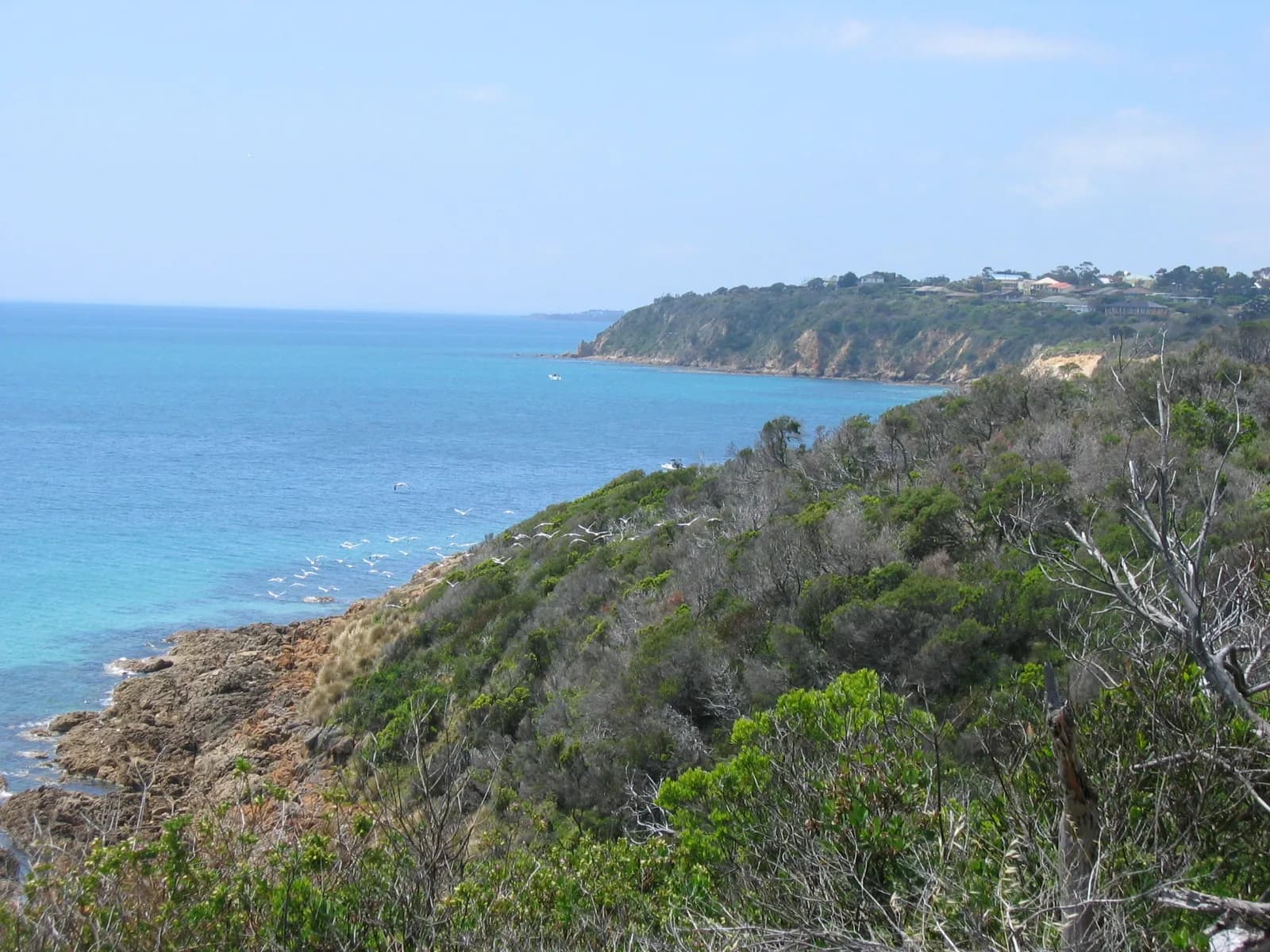
A narrow finger of land stretching south between Port Phillip Bay and Western Port, the peninsula offers an extraordinary concentration of dive sites within a short drive of each other. On the bay side, sheltered piers host some of the most biodiverse temperate marine environments on Earth. On the ocean side, exposed reefs and rocky coastline attract pelagic species and kelp-forest ecosystems that feel a world apart from the calm bay waters.
Whether you're a freediver, snorkeler, or scuba diver, the Mornington Peninsula has something exceptional to offer. This guide covers the key sites, what you'll see, when to go, and how to make the most of every dive.
The Peninsula's Two Coasts
Understanding the Mornington Peninsula's geography is the first step to planning a dive trip. The peninsula has two fundamentally different coastlines, and the diving experience on each is completely distinct.
Port Phillip Bay Side (North)
The northern coast faces into Port Phillip Bay — a massive, sheltered body of water covering nearly 2,000 square kilometres. This side is home to the famous pier dive sites: Portsea, Sorrento, Blairgowrie, Rye, and others. The water is calm, depths are manageable (typically 2-10 metres at the piers), and visibility ranges from 3-5 metres on average to 10+ metres on excellent days. Tidal influence increases as you move west towards the Heads — the narrow entrance to Port Phillip Bay between Point Lonsdale and Point Nepean.
Ocean Side (South)
The southern coast faces Bass Strait and the open ocean. Conditions here are more demanding — swells, surge, and currents are all factors. But the payoff is different marine life, cleaner water, and the chance to explore rugged reef systems and kelp forests. Shore dives at Diamond Bay and Mushroom Reef, as well as boat dives to offshore reefs, are the main attractions on this side.
For a broader view of diving around Melbourne, see our guide to the best freediving spots in Melbourne.
Pier Dive Sites
The piers along the Mornington Peninsula's bay coast are the region's signature dive sites. Wooden pylons encrusted with sponges, ascidians, and bryozoans create artificial reef ecosystems that support an astonishing density of marine life. These are accessible, relatively shallow, and suitable for snorkelers, freedivers, and scuba divers alike.
Flinders Pier
Flinders Pier sits on the eastern tip of the Mornington Peninsula, just inside Western Port rather than Port Phillip Bay. It is widely considered the best pier dive in Victoria, and one of the best in Australia. The BBC featured Flinders Pier in Blue Planet II for its weedy seadragon population, and the site has been a pilgrimage for underwater photographers ever since.
The pier pylons are blanketed in colourful sponges, and the sandy bottom around them is home to weedy seadragons, big-belly seahorses, nudibranchs, anglerfish, octopus, and smooth rays. Maximum depth is around 7 metres, but the most interesting life sits between 1 and 5 metres — well within freediving and snorkeling range.
- Depth: 1-7m
- Highlights: Weedy seadragons, sponge gardens, nudibranchs, seahorses, anglerfish
- Best for: All levels — snorkelers, freedivers, and scuba divers
- Access: Free car park at the pier. Easy water entry from the boat ramp
- Drive from CBD: ~1 hour 20 minutes via M1 and Frankston-Flinders Road
For more on finding seadragons, see our guide to freediving with weedy seadragons in Melbourne. For the full site guide, see our Flinders Pier diving guide.
Portsea Pier
Located right at the tip of the peninsula where Port Phillip Bay meets the ocean, Portsea Pier benefits from cleaner water flushing through the Heads. Visibility is often better here than at the other bay-side piers, and the marine life reflects the influence of both bay and ocean environments.
Weedy seadragons are reliably found in the kelp beds around the pylons. Soft corals, pufferfish, stargazers, and large schools of fish are common. The depth around the pier reaches 8 metres, and there are areas of sand, reef, and seagrass to explore beyond the structure itself.
- Depth: 3-8m
- Highlights: Weedy seadragons, soft corals, pufferfish, stargazers, clean water
- Best for: Confident snorkelers and freedivers (slightly deeper, occasional tidal currents)
- Note: Check tide times — current can be noticeable near the Heads during tidal changes
- Drive from CBD: ~1 hour 30 minutes via M1 and Point Nepean Road
For the full site guide, see our Portsea Pier diving guide.
Rye Pier
Rye Pier is one of Melbourne's most popular and accessible underwater destinations. The L-shaped pier extends roughly 500 metres into the bay and has a signposted Underwater Exploration Trail — the Octopus Garden — that helps divers identify marine life along the pylons.
Seahorses, octopus, cuttlefish, smooth rays, and leatherjackets are regular residents. During the spider crab migration in autumn and early winter, thousands of crabs aggregate around the pier — a truly remarkable spectacle. Night diving at Rye is exceptional, with dumpling squid, blue-ringed octopus, and pajama squid all emerging after dark.
- Depth: 2-5m
- Highlights: Octopus Garden trail, seahorses, spider crabs (May-June), night diving
- Best for: All levels — particularly good for beginners and families
- Parking: Free parking along the foreshore
- Drive from CBD: ~1 hour 15 minutes
Read more about the spider crab phenomenon in our spider crab migration guide. For the full site guide, see our Rye Pier snorkeling and diving guide.
Blairgowrie Pier
Blairgowrie Pier, near the Blairgowrie Yacht Squadron, is a nudibranch paradise. More than 100 species of nudibranch have been recorded at this site alone, making it one of the most biodiverse nudibranch habitats in the temperate world. The pier pylons also host vibrant sponge communities, hermit crabs, flathead, rays, and stargazers.
Like Rye, Blairgowrie is a key gathering point during the annual spider crab migration. The crabs pile up in huge mounds around the base of the pier — a sight that draws divers from across Australia and beyond.
- Depth: 2-7m
- Highlights: Nudibranchs (100+ species), spider crab migration, dumpling squid, sponge gardens
- Best for: All levels — macro photography enthusiasts will love this site
- Caution: Active marina — stay aware of vessel traffic and observe no-go zones near the yacht club
- Drive from CBD: ~1 hour 15 minutes
For the full site guide, see our Blairgowrie Pier diving guide.
Sorrento Pier
Sorrento Pier sits in the charming seaside town of Sorrento, roughly midway between Portsea and Blairgowrie. The pier is shorter than some others on the peninsula but offers good diversity. Sponge-encrusted pylons host nudibranchs, seahorses, and the occasional weedy seadragon. The sandy areas around the pier are home to smooth rays and flathead.
Sorrento also serves as a departure point for the Queenscliff-Sorrento ferry, so boat traffic is a consideration. Diving is best done away from the ferry lane and during quieter periods.
- Depth: 2-6m
- Highlights: Seahorses, nudibranchs, smooth rays, convenient town amenities
- Best for: All levels
- Tip: Combine a dive with lunch in Sorrento — plenty of cafes and restaurants along Ocean Beach Road
- Drive from CBD: ~1 hour 25 minutes
Shore Dives
Beyond the piers, the Mornington Peninsula offers several shore dive sites that provide a different kind of experience — open reef systems, kelp forests, and ocean-influenced conditions.
Diamond Bay (Sorrento Ocean Beach)
Diamond Bay is a small, sheltered ocean beach tucked behind holiday homes on the ocean side of Sorrento. Rock ledges, overhangs, and kelp beds create a rich habitat for crayfish, old wives, boarfish, abalone, and schooling fish. On a calm day with no swell, the water clarity can be spectacular — far better than typical bay conditions.
This is an advanced site. It is exposed to Bass Strait swells and should only be dived when conditions are flat. Check the surf forecast and swell period before committing.
- Depth: 2-10m
- Highlights: Crayfish, kelp forests, boarfish, excellent visibility on calm days
- Best for: Experienced divers only — ocean swell and surge
- Conditions: Requires a flat ocean day with minimal swell
Mushroom Reef Marine Sanctuary (Flinders)
Mushroom Reef protects 80 hectares of rugged ocean coastline near Flinders. At low tide, the reef platform is exposed, revealing the mushroom-shaped rock formations the sanctuary is named for. At high tide, the reef is submerged and provides excellent diving through surge channels, overhangs, and kelp-covered boulders.
As a marine sanctuary, no fishing or collecting is allowed. This means healthy populations of abalone, crayfish, and reef fish that are far less wary of divers. The ocean-side location means conditions can be rough — this is strictly a calm-day site.
- Depth: 1-6m (over the reef), deeper off the edge
- Highlights: Protected reef ecosystem, abalone, crayfish, kelp forests, intertidal rock pools
- Best for: Experienced divers — exposed ocean site
- Access: Walk down from the car park at Mushroom Reef Road
Boat Dive Sites
The waters around the Mornington Peninsula offer a number of excellent boat dive sites that are inaccessible from shore. Several dive operators run charters from Sorrento, Portsea, and Flinders.
Popular boat dive locations include the reef systems outside the Heads, the Lonsdale Wall (a dramatic underwater cliff on the western side of the entrance to Port Phillip Bay), and various wrecks scattered along the coastline. The submarine canyon off Portsea — known as the Portsea Hole — drops to over 20 metres and attracts larger pelagic species, including banjo sharks, Port Jackson sharks, and schools of kingfish.
Boat diving opens up sites with better visibility and more dramatic topography than the pier sites, though it requires more planning and typically higher costs. For freedivers, the Portsea Hole and nearby reef systems offer opportunities for deeper training dives with interesting marine life along the way.
Marine Life
The Mornington Peninsula sits at the junction of three distinct marine environments — the sheltered bay, the exposed ocean coast, and the tidal channels of the Heads. This convergence creates conditions that support extraordinary biodiversity. Over 80% of the marine species found in Port Phillip Bay exist nowhere else on Earth.
- Weedy seadragons — Victoria's marine emblem. Found at Flinders Pier, Portsea Pier, and throughout the kelp beds. Males carry the eggs during breeding season (winter-spring)
- Giant spider crabs — Tens of thousands aggregate in shallow water around the piers during the annual migration (May-June). One of the natural world's great spectacles
- Nudibranchs — Over 100 species recorded at Blairgowrie Pier alone, ranging from microscopic to the size of your hand. A macro photographer's dream
- Smooth rays — Gentle giants with wingspans up to 2 metres, commonly seen resting on the sand beneath piers
- Seahorses — Big-belly seahorses cling to pylons and seagrass. Well-camouflaged and easy to miss unless you're looking carefully
- Octopus — Common at most pier sites, especially at night. Intelligent and curious — they'll often watch you as closely as you watch them
- Cuttlefish — Masters of camouflage, found among pier pylons and seagrass beds
- Port Jackson sharks — Harmless bottom-dwelling sharks with distinctive harness-like markings. Common in winter
- Anglerfish — Bizarre, well-camouflaged predators that sit motionless on the bottom. Flinders Pier is a reliable spot
- Blue-ringed octopus — Small and beautifully dangerous. Present at many sites — observe from a distance and never touch
Blue-Ringed Octopus Safety
Blue-ringed octopus are present at most Mornington Peninsula dive sites. They are small (12-20cm), usually well-camouflaged in brown or grey, and only flash their bright blue rings when threatened. Their bite delivers a potentially fatal neurotoxin. Never pick up shells, rocks, or any octopus. If you spot one, enjoy the sighting from a safe distance.
Seasonal Guide
Every season on the Mornington Peninsula offers something different. There is no bad time to dive here — only different experiences.
- Summer (Dec-Feb) — Warmest water (18-23°C). Longest daylight hours. Good visibility on calm days, though algal blooms can reduce it occasionally. Busiest period at popular sites. Best for snorkelers and those new to diving
- Autumn (Mar-May) — Water still warm early in the season, gradually cooling. Often the best visibility of the year as plankton blooms settle. Fewer crowds. Giant spider crabs begin arriving at the piers from late May
- Winter (Jun-Aug) — Coldest water (10-13°C) but frequently the clearest visibility. Spider crab migration in full swing. Seadragon breeding season — males carrying eggs. Port Jackson sharks at their most active. Fewer divers means more intimate wildlife encounters. A 5mm wetsuit with hood and gloves is essential
- Spring (Sep-Nov) — Water warming gradually. Seadragon eggs hatching. New nudibranch species appearing. Good all-round conditions and fewer crowds than summer
Getting There from Melbourne
The Mornington Peninsula is well-connected to Melbourne by road. All of the dive sites in this guide are between 75 and 100 kilometres from the CBD.
- Route: Take the M1 (Monash Freeway) south to the Mornington Peninsula Freeway, then follow the signs towards your chosen destination
- Flinders Pier: ~1 hour 20 minutes from CBD via Frankston-Flinders Road
- Rye / Blairgowrie: ~1 hour 15 minutes via Point Nepean Road
- Sorrento / Portsea: ~1 hour 25-30 minutes via Point Nepean Road
- Best time to leave: Early morning (before 7am) to avoid congestion on the M1, especially on weekends and public holidays in summer
- Fuel up: Fill your car before leaving Melbourne — fuel prices on the peninsula are typically higher
If you don't have a car, some dive clubs and operators offer transport from Melbourne as part of their trips. Check with local freediving groups for organised outings.
Freediving vs Scuba on the Peninsula
Both freediving and scuba diving work well on the Mornington Peninsula, but they offer distinctly different experiences.
Freediving is ideal for the pier sites. Most pier dives are 2-8 metres deep — well within the range of a trained freediver. Freediving is silent and bubble-free, which makes a noticeable difference with shy species like weedy seadragons and seahorses. These animals tend to be more relaxed and natural around freedivers than scuba divers, where the noise and bubbles from regulators can make them skittish. Freediving also requires far less gear — a mask, fins, wetsuit, and weight belt are all you need.
Scuba diving allows longer bottom time and is better suited to deeper boat dives, sites with current (where surface intervals are impractical), and detailed macro photography where you need to remain stationary for extended periods.
Many divers on the peninsula do both — freediving the shallow pier sites and scuba diving the deeper boat sites and ocean-side reefs. The two disciplines complement each other well.
If you're interested in getting started with freediving, see our snorkeling spots guide for entry-level sites, or check out the freediving gear guide to understand what equipment you'll need.
Safety Considerations
The Mornington Peninsula is generally a safe diving environment, but there are specific hazards to be aware of.
Tidal Currents Near the Heads
The Heads — the narrow entrance to Port Phillip Bay between Point Lonsdale and Point Nepean — funnels enormous volumes of water in and out of the bay with each tide change. Currents through the Heads can exceed 6 knots during peak flow, which is far beyond what any diver can swim against. Even sites near the Heads, like Portsea Pier, can experience moderate tidal currents.
Always check tide tables before diving near the western end of the peninsula. Plan dives for slack water periods — the brief window between tidal flows when current is minimal. If in doubt, choose a pier further east (Rye, Blairgowrie, or Flinders) where tidal influence is weaker.
Boat Traffic
Several of the pier sites are active marinas. Blairgowrie, Sorrento, and Portsea all have regular boat traffic, including the Queenscliff-Sorrento ferry. Use a brightly coloured dive float or surface marker buoy to make yourself visible. Stay clear of marked boat channels and no-swim zones. Be especially cautious during summer weekends and public holidays when recreational boat traffic peaks.
Ocean-Side Conditions
Shore dives on the ocean side (Diamond Bay, Mushroom Reef) are exposed to Bass Strait swells and can change rapidly. Only dive these sites on calm, flat days. Check the Bureau of Meteorology marine forecast and swell predictions before heading out. If conditions deteriorate while you're in the water, exit immediately.
General Dive Safety
- Never dive alone — Always dive with a buddy. For freediving, a trained buddy watching from the surface is essential
- Carry a float — A dive flag or bright inflatable buoy makes you visible to boats
- Know your limits — If conditions look marginal, choose an easier site or reschedule
- Don't touch marine life — Blue-ringed octopus, stonefish, and other venomous species are present at most sites
- Check entry and exit points — Pier ladders and boat ramps can be slippery with algae
- Tell someone your plan — Let a non-diver know where you're diving and when you expect to be back
Frequently Asked Questions
What are the best dive sites on the Mornington Peninsula?
The best dive sites are Flinders Pier, Portsea Pier, Rye Pier, Blairgowrie Pier, and Sorrento Pier. Flinders is widely regarded as the top site, with weedy seadragons, nudibranchs, and stunning sponge gardens. For shore dives, Diamond Bay and Mushroom Reef offer ocean-side experiences on calm days. Each site has its own character and speciality — ideally, you'll visit them all over time.
Can you freedive at the Mornington Peninsula piers?
Yes. The piers are excellent for freediving. Most range from 2 to 8 metres deep, making them accessible on a single breath for trained freedivers. Freediving allows quiet, bubble-free encounters with marine life — weedy seadragons and seahorses tend to be noticeably more relaxed around breath-hold divers than scuba divers. A Level 1 freediving certification is sufficient for all pier sites on the peninsula.
How far is the Mornington Peninsula from Melbourne CBD?
The dive sites are 75-100 kilometres from the CBD, translating to roughly 1 hour 15 minutes to 1 hour 30 minutes of driving depending on the specific site and traffic. Take the M1 south and then the Mornington Peninsula Freeway. Leave early on weekends to avoid congestion.
Is it safe to dive near the Heads?
Diving near the Heads requires careful planning around tidal flows. Currents through the entrance to Port Phillip Bay can exceed 6 knots during peak tidal changes, which is extremely dangerous. Sites like Portsea Pier can experience moderate currents during tide changes. Always check tide tables and plan for slack water. If you're unsure, dive at sites further from the Heads — Rye, Blairgowrie, and Flinders are all excellent options with minimal tidal influence.