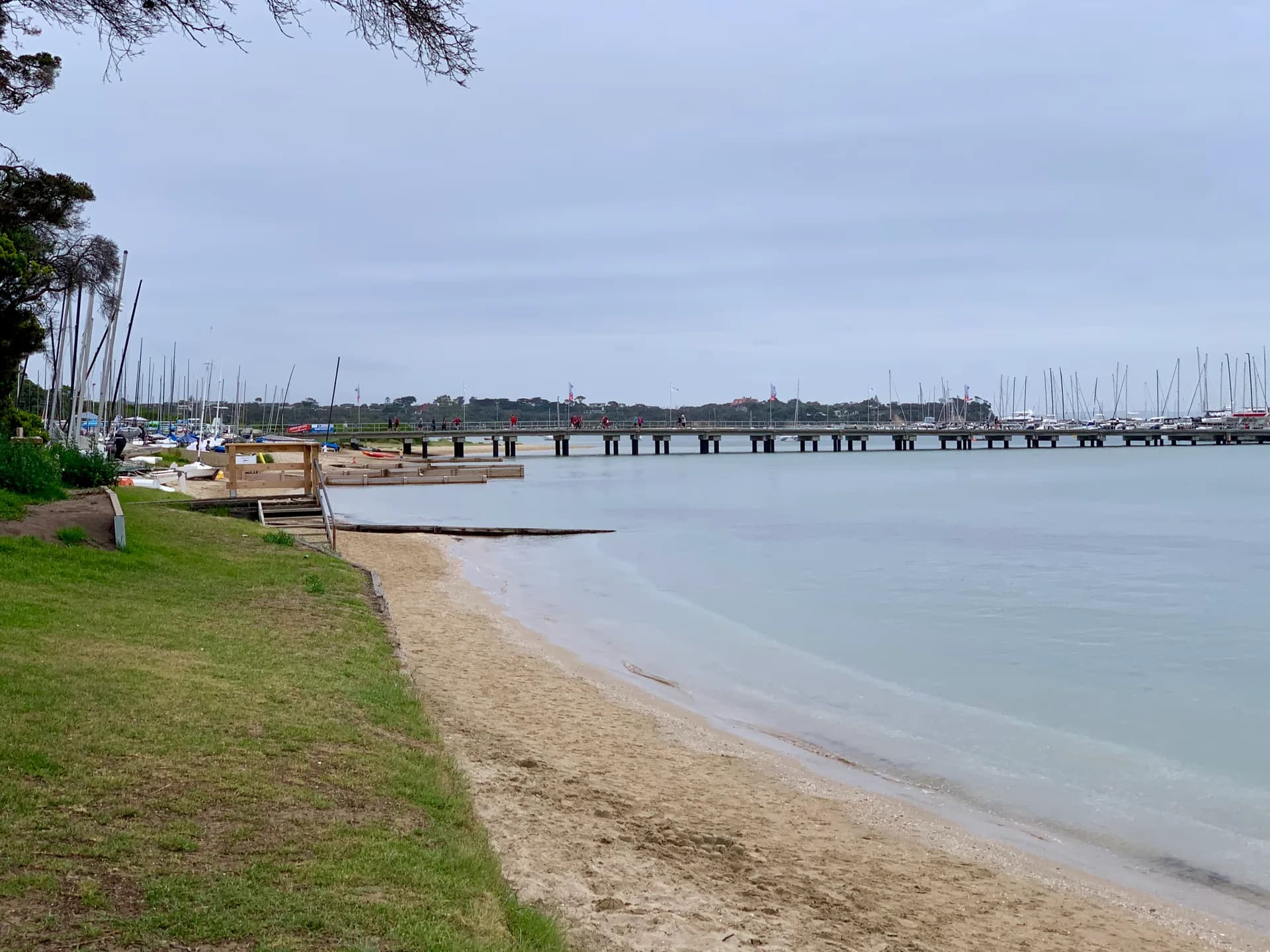
Blairgowrie Pier Diving Guide
Melbourne's nudibranch capital — a macro photographer's paradise with over 100 species of nudibranch, sponge gardens, and some of the richest pier diving in Victoria.
Last updated:
If you want to see nudibranchs in Melbourne, Blairgowrie Pier is where you go.
Tucked beside the Blairgowrie Yacht Squadron on the southern shore of Port Phillip Bay, this unassuming pier is home to one of the most concentrated collections of macro marine life in Victoria. Over 100 species of nudibranch have been recorded here — tiny, impossibly colourful creatures that cling to the sponge-encrusted pylons in every shape and pattern imaginable. Add seahorses, decorator crabs, dumpling squid, octopus, and the annual giant spider crab migration, and you have a site that punches well above its weight.
Blairgowrie is not the biggest pier dive on the Mornington Peninsula, and it won't give you the dramatic kelp forests of Portsea or the seadragon encounters of Flinders. What it will give you is a masterclass in looking small — the kind of dive where every centimetre of pylon reveals something new, and where a single hour underwater can yield dozens of species if you know where to look.
Location and Getting There
Blairgowrie Pier is located on the Mornington Peninsula, approximately 1 hour and 15 minutes from Melbourne's CBD via the Mornington Peninsula Freeway and Point Nepean Road. The pier sits adjacent to the Blairgowrie Yacht Squadron at the end of Hughes Road in Blairgowrie.
From Melbourne, head south on the Mornington Peninsula Freeway, continue through Rosebud and Rye along Point Nepean Road, and turn left onto Hughes Road to reach the yacht squadron car park. The drive is straightforward, and on weekdays you'll have the pier largely to yourself.
The pier is one of several excellent dive sites along the southern shore of Port Phillip Bay. It sits between Rye Pier to the east and Portsea Pier to the west, making it easy to combine with other sites if conditions suit.
Site Layout and Structure
Blairgowrie Pier is a timber-pylon structure that extends into Port Phillip Bay from the grounds of the Blairgowrie Yacht Squadron. The pier itself is relatively modest in length compared to Rye or Flinders, but what it lacks in size it makes up for in density of life.
The main features of the site include:
- The pier pylons — Timber pylons encrusted with a thick layer of sponges, ascidians, and bryozoans. These living walls are the primary habitat for nudibranchs, seahorses, and other macro life
- The yacht squadron area — Marina berths with floating pontoons. Vessel traffic is common here, and some areas are off-limits to divers. Pay attention to signage and stay clear of the main boat channel
- Sandy bottom — A flat, sandy seabed between and around the pylons. Home to flathead, smooth rays, stargazers, and the occasional decorator crab carrying its camouflage of sponge and algae
- Sponge gardens — Dense colonies of colourful sponges coat the pylons from the waterline down. These sponge gardens are the foundation of the ecosystem that makes Blairgowrie special, providing food and shelter for the nudibranch populations
Depth
Depths at Blairgowrie Pier range from 2 to 7 metres, depending on tide and how far out along the pier you go. The shallower sections close to shore (2-4m) are where many of the nudibranchs and macro creatures concentrate, making this an accessible site for snorkelers, freedivers, and scuba divers alike. The deeper sections towards the end of the pier (5-7m) tend to have larger sponge coverage and are worth exploring on a calm day with good visibility.
Marine Life
Blairgowrie Pier is not a site you visit for big encounters. It is a site you visit to slow down, look closely, and discover a world of miniature creatures that most divers swim right past. The marine life here is overwhelmingly macro — small, detailed, and endlessly diverse.
Nudibranchs — The Main Attraction
Blairgowrie Pier is widely regarded as the nudibranch capital of Melbourne, and with good reason. Over 100 species have been documented here, ranging from tiny aeolids barely a centimetre long to larger chromodoris species with striking colour patterns. On a single dive, it's common to spot a dozen or more species if you take your time and look carefully.
What makes Blairgowrie so productive for nudibranchs is the sponge ecosystem on the pylons. Nudibranchs are specialist feeders — each species feeds on specific sponges, hydroids, or bryozoans. The rich diversity of encrusting organisms on Blairgowrie's pylons supports a correspondingly rich diversity of nudibranchs. You'll find them on the pylons themselves, on the crossbeams, on ropes, and occasionally on the sandy bottom as they move between feeding sites.
Look for the bright orange Ceratosoma brevicaudatum, the delicate blue-and-white Chromodoris westraliensis, the tiny translucent aeolids with cerata like miniature forests, and the large Spanish dancer (Hexabranchus sanguineus) that occasionally appears on night dives. A macro lens and a good eye are essential equipment here.
Other Marine Life
While nudibranchs are the headline act, Blairgowrie Pier supports a wide cast of supporting characters:
- Seahorses — Short-snouted seahorses cling to the pylons and ropes, well-camouflaged against the sponge growth. Patient searching is rewarded
- Octopus — Common throughout the site, both during the day (tucked into crevices) and at night (actively hunting across the sand)
- Decorator crabs — Masters of disguise, these crabs cover themselves with sponge, algae, and hydroids. Finding one is a genuine puzzle
- Hermit crabs — Abundant on the sandy bottom, shuffling between pylons in borrowed shells
- Flathead — Lie motionless on the sand, waiting for prey. Easy to miss until they dart away
- Smooth rays — Large, gentle rays with wingspans up to 1.5 metres rest on the sand between pylons
- Stargazers — Buried in the sand with only their eyes visible, these ambush predators are a favourite find for photographers
- Dumpling squid — Round, stubby little squid that bury themselves in the sand during the day and emerge at night. One of the most endearing creatures in Port Phillip Bay
- Sponges and ascidians — The living wallpaper of Blairgowrie. Vibrant reds, oranges, purples, and yellows cover every surface, creating one of the most colourful underwater environments in the bay
The Spider Crab Migration
Every year between May and June, thousands of giant spider crabs (Leptomithrax gaimardii) congregate in the shallow waters of Port Phillip Bay to moult their shells. Blairgowrie Pier is one of the key sites for this extraordinary event, alongside Rye Pier and other southern bay locations.
During the migration, the sandy seabed between the pylons can be carpeted with spider crabs — sometimes stacked two or three deep. The crabs gather in shallow water because the warmer temperatures speed up the moulting process, and there is safety in numbers against predators like smooth rays and eleven-arm sea stars.
The timing is unpredictable — the crabs may arrive in late May or early June, and the peak aggregation can last anywhere from a few days to a couple of weeks. Local diving communities and social media groups are the best way to track sightings. For a full guide to the migration, see our spider crab migration guide.
Freediving at Blairgowrie
Blairgowrie Pier is an outstanding freediving site. The 2-7 metre depth range means that even a beginner freediver with basic breath-hold ability can spend meaningful time at the bottom, and the rich pylon life rewards the kind of slow, close observation that freediving excels at.
Scuba divers at Blairgowrie often move along the pylons at speed, ticking off species as they go. Freedivers, by contrast, tend to focus on a smaller area — dropping down to a single pylon, scanning the sponge gardens at eye level, and surfacing with a mental inventory of what they've found before descending again. This approach is perfectly suited to the macro-rich environment here.
The pylons are close enough together that you can work your way along the pier in a series of short dives, spending 30-60 seconds at depth on each descent. A comfortable 10-15 metre breath-hold depth gives you more than enough range to explore every part of the site, but even a confident 5-metre dive will put you in the heart of the action.
If you're new to freediving and want to build towards diving sites like Blairgowrie, check out our guide to the best freediving spots in Melbourne for a full overview of dive sites graded by difficulty.
If you're looking for local instruction, Marlon Quinn (WaterMaarq) is a PADI Master Freediving Instructor Trainer based in Blairgowrie who runs courses at the pier and nearby Mornington Peninsula sites. See our guide to freediving schools in Melbourne for the full picture.
Night Diving
Blairgowrie Pier truly comes alive after dark. Night diving here is exceptional — arguably the best night dive on the Mornington Peninsula for macro life.
Species that hide during the day emerge in force at night:
- Dumpling squid — Emerge from the sand to hover in the open, their round bodies glowing in your torchlight
- Bobtail squid — Tiny, jewel-like squid that are almost impossible to find during the day
- Hunting octopus — Move boldly across the sand and pylons, their skin flashing with colour changes as they stalk prey
- Decorator crabs — More active at night, often seen wandering across the sand
- Cuttlefish — Mesmerising colour displays as they hunt among the pylons
- Nocturnal nudibranchs — Some species that are hidden during the day become more visible and active at night
A quality underwater torch is essential. A focused beam is better than a wide flood for spotting small creatures against the sand and pylon surfaces. Many photographers use a combination of a spotting torch and a separate macro light or strobe for photos.
Night Diving Safety
Night diving at Blairgowrie requires extra caution due to boat traffic. The yacht squadron marina is active, and vessels may be moving in and out after dark. Always carry a torch, use a surface marker or dive float with a light, and avoid surfacing in the boat channel. Never night dive alone — a buddy is essential.
Best Conditions
Blairgowrie Pier can be dived year-round, but conditions vary significantly with weather and tide.
- Wind — Calm days with winds under 10 knots give the best visibility. North or north-east winds are ideal as they blow offshore at Blairgowrie. Southerly and westerly winds push water and sediment into the site, reducing visibility
- Visibility — Ranges from 1-2 metres on poor days to 5-8 metres on good days. Autumn and winter tend to produce the clearest water. After heavy rain, runoff can reduce visibility for several days
- Tide — A rising tide generally brings cleaner water into the bay. Slack water (the period around high or low tide) often provides the calmest conditions. Strong tidal flow can create a gentle current along the pier, which is manageable but worth being aware of
- Season — Summer brings warmer water (18-23°C) and busier conditions. Winter water (10-13°C) is cold but often clearer, with fewer people and excellent nudibranch activity. The spider crab migration peaks in May-June
Parking and Facilities
Parking is available at the Blairgowrie Yacht Squadron car park at the end of Hughes Road. The car park is free and generally has spaces available on weekdays, though it can fill up on summer weekends when the yacht squadron is busy.
Facilities in the area include:
- Public toilets near the foreshore
- Shower and rinse facilities — check current availability at the yacht squadron
- Grassy area for gear setup
- Blairgowrie village with cafes, a general store, and fish-and-chip shops — a short drive along Point Nepean Road
Entry to the water is typically via the boat ramp or beach adjacent to the pier. The boat ramp offers easy access but be mindful of vessels launching and retrieving. The beach entry requires a short walk but avoids the boat ramp traffic.
Safety
Blairgowrie is a relatively safe dive site — sheltered, shallow, and with minimal current. However, the main hazard is one that not all dive sites share: active boat traffic.
- Boat traffic — The Blairgowrie Yacht Squadron operates an active marina. Boats move in and out regularly, especially on weekends, holidays, and summer evenings. Always be aware of vessel movements and never surface in or cross the designated boat channel
- No-go zones — Some areas around the yacht squadron berths are off-limits to divers. Respect signage and stay clear of moored vessels and the main channel
- Dive float — A bright dive float or surface marker buoy is strongly recommended. It makes you visible to boat operators and gives you a reference point on the surface
- Blue-ringed octopus — Present at Blairgowrie, as at most Port Phillip Bay sites. Small, well-camouflaged, and potentially fatal if handled. Never pick up octopus or shells
- Buddy system — Never dive alone. A buddy is essential for both safety and for spotting marine life you might miss
- Entry and exit — Boat ramps and pier ladders can be slippery. Take your time getting in and out, especially when wearing fins
For comprehensive safety information and gear recommendations, see our freediving gear guide.
Photography Tips
Blairgowrie Pier is a macro photographer's paradise. The site rewards preparation and patience more than any other pier on the Mornington Peninsula.
- Macro lens is essential — The stars of Blairgowrie are small. A dedicated macro lens (or macro wet lens for compact cameras) is the single most important piece of equipment you can bring. Without it, most nudibranchs will be indistinct blobs in your photos
- Lighting — The sponge-encrusted pylons are colourful, but at depth the colours wash out without artificial light. A video light or strobe brings the reds, oranges, and purples back to life
- Stability — Macro photography demands stillness. Freedivers can use a brief rest against the sandy bottom (being careful not to disturb life) to steady their shot. Scuba divers should use good buoyancy control
- Shoot the pylons at eye level — Instead of looking down at the pylons, get alongside them. The sponge gardens and their inhabitants look best when photographed from the side or slightly below
- Night sessions — Some of the best macro photography at Blairgowrie happens at night. Dumpling squid, bobtail squid, and hunting octopus are photogenic subjects that are far easier to approach after dark
- Be patient — The best finds at Blairgowrie require patience. Spend time on a single pylon rather than rushing along the pier. The longer you look, the more you see
Combining Blairgowrie with Other Sites
Blairgowrie sits in the heart of the Mornington Peninsula's dive trail. If you're making the drive from Melbourne, it's worth planning a day that includes more than one site.
- Rye Pier — 10 minutes east along Point Nepean Road. More open structure, the Octopus Garden trail, and often better visibility. Good contrast to Blairgowrie's tight, macro-focused diving
- Portsea Pier — 15 minutes west. Deeper, with kelp forests and weedy seadragons. A bigger, more dramatic dive that pairs well with Blairgowrie's intimate macro experience
- Flinders Pier — 40 minutes south-east via Western Port. The premier pier dive in Victoria, with seadragons, sponge gardens, and the richest fish life of any local pier
For a full overview of all the Mornington Peninsula dive sites, see our guide to diving the Mornington Peninsula. You can also browse our snorkeling spots guide and our freediving spots guide.
Frequently Asked Questions
What marine life can you see at Blairgowrie Pier?
Blairgowrie Pier is famous for its nudibranchs — over 100 species have been recorded here. You'll also find vibrant sponge gardens, hermit crabs, flathead, smooth rays, stargazers, dumpling squid, decorator crabs, octopus, and seahorses. During May-June, thousands of giant spider crabs congregate around the pier as part of their annual moulting migration. Night dives add bobtail squid, hunting octopus, and cuttlefish to the list.
Is Blairgowrie Pier good for freediving?
Yes. Blairgowrie Pier is excellent for freediving. Depths of 2-7 metres mean the richest marine life is easily accessible on a single breath. The sponge-covered pylons are packed with nudibranchs, seahorses, and other macro life that rewards slow, close-up observation — exactly what freediving allows. Even beginner freedivers with a comfortable 5-metre depth can explore the best parts of the site.
When is the best time to dive Blairgowrie Pier?
Blairgowrie Pier can be dived year-round. Calm days with light winds (under 10 knots) from the north or north-east give the best visibility. Autumn and winter often produce the clearest water. May-June brings the annual spider crab migration. Night diving is exceptional in any season for macro life like dumpling squid and hunting octopus.
Is Blairgowrie Pier safe for diving?
Blairgowrie Pier is generally a safe dive site with sheltered, shallow water. The main hazard is boat traffic — the pier is adjacent to the Blairgowrie Yacht Squadron, and vessels regularly move in and out of the marina. Stay close to the pylons, use a dive float for visibility, be aware of designated no-go zones near the marina channel, and never surface in the boat channel.