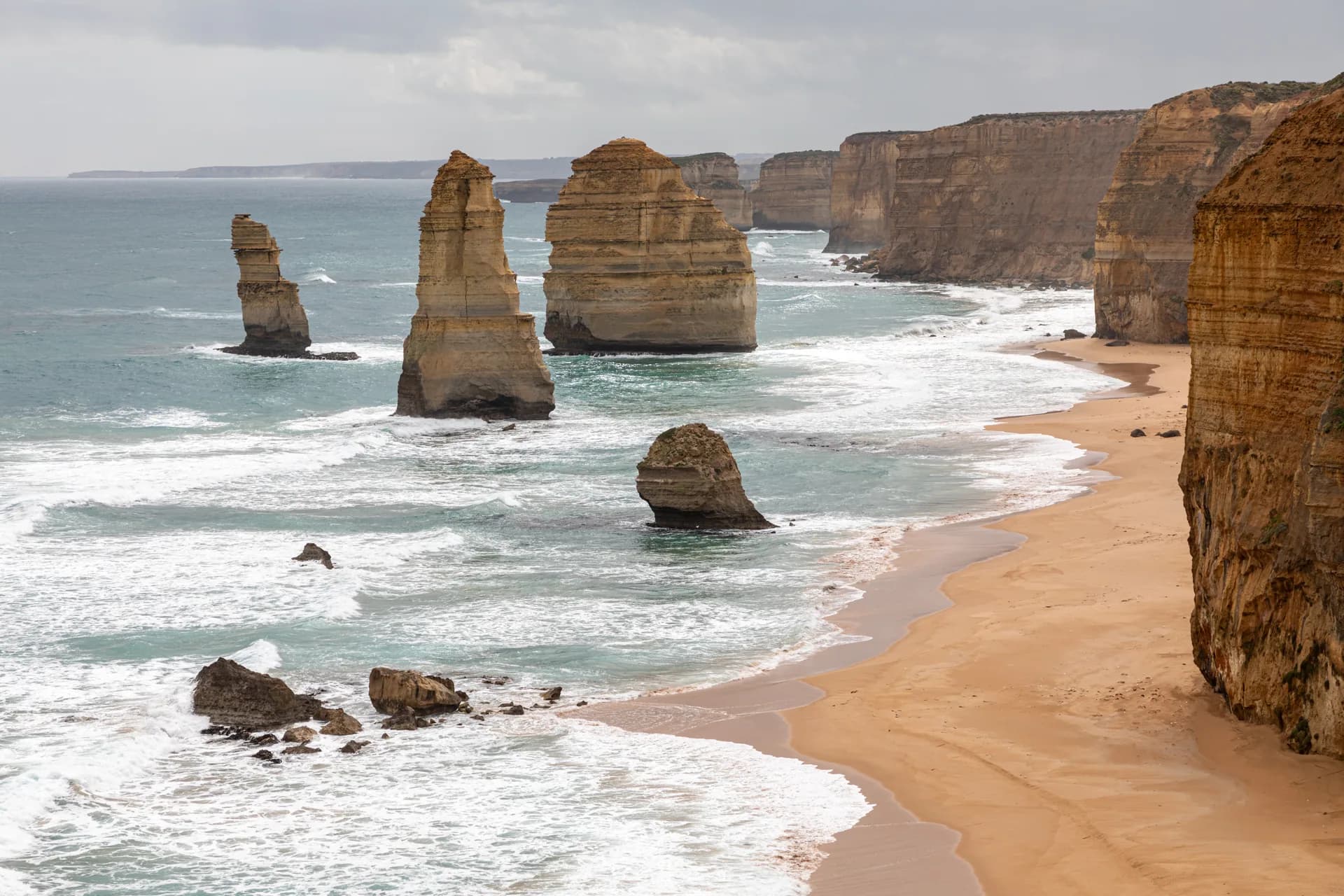
Great Ocean Road Diving & Snorkeling Guide
The ultimate road trip dive guide — Point Addis, Eagle Rock, Marengo Reefs, shipwrecks, seal colonies, and every underwater stop from Torquay to Portland.
Last updated:
The Great Ocean Road is one of Australia's most iconic coastal drives — and it is not just for tourists taking photos of the Twelve Apostles. Stretching 250 kilometres from Torquay to Portland, this dramatic coastline is home to some of Victoria's most spectacular underwater environments: marine sanctuaries with seadragons and cuttlefish, accessible shipwrecks sitting in shallow water, seal colonies you can snorkel with, kelp forests, rock platforms, and some of the clearest ocean water you will find anywhere near Melbourne.
This guide is designed as a road trip dive planner. Whether you are a freediver, scuba diver, or snorkeler, whether you have a weekend or a week, we will walk through every major dive and snorkel site along the Great Ocean Road from east to west. We will cover what makes each site unique, how to access it, what conditions to expect, the best time of year to visit, and how to combine multiple sites into a coherent itinerary. By the end, you will have a complete map of where to dive, when to dive, and what to expect when you get there.
Overview
The Great Ocean Road coastline is unlike Port Phillip Bay. This is the Southern Ocean — exposed, wild, and powerful. The water is colder, the swell is larger, and the conditions are more variable. But with that exposure comes clarity, biodiversity, and dramatic underwater landscapes that sheltered bay environments simply cannot match. When conditions are good — and they frequently are, especially in summer — the Great Ocean Road offers some of the best temperate water diving in Australia.
The region is home to multiple Marine National Parks and Marine Sanctuaries, which means fishing is banned and marine life is abundant and approachable. You will see species here that are rare or absent in Port Phillip Bay: weedy seadragons, Port Jackson sharks, giant cuttlefish, colourful sponges and soft corals, and vast kelp forests that sway in the swell like an underwater rainforest.
The dive sites range from beginner-friendly snorkeling spots accessible from shore to advanced open-ocean shipwrecks that require boat access and experience. Most sites are suitable for freedivers with intermediate skills — comfortable duck-diving to 5-15 metres and confidence in mild to moderate ocean conditions. Scuba divers will also find plenty to explore, though the majority of interesting shallow reefs and wrecks are well within freediving range.
Planning Tip
The Great Ocean Road runs west from Torquay. Plan your trip to hit the major dive sites in order: Point Addis (Torquay), Eagle Rock (Aireys Inlet), Marengo Reefs (Apollo Bay), The Arches (Port Campbell), and seal colonies near Port Fairy and Portland. Allow 3-5 days for a comprehensive dive road trip. Book accommodation near Apollo Bay or Port Campbell to minimise driving between sites.
Key Regions
We can divide the Great Ocean Road dive sites into several geographic clusters:
- Torquay area (Point Addis): The easternmost and most accessible marine park. Reef diving with seadragons, cuttlefish, and colourful invertebrates. Shore access. 1.5 hours from Melbourne
- Aireys Inlet (Eagle Rock): Marine sanctuary with rock pools, reef, and good snorkeling. Shore access. 2 hours from Melbourne
- Apollo Bay (Marengo Reefs): The highlight for many divers. Accessible seal snorkeling, shallow reefs, and the SS Casino shipwreck. Shore and boat access. 2.5 hours from Melbourne
- Port Campbell (The Arches): Marine sanctuary with dramatic rock formations and kelp forests. Exposed but spectacular. Shore access. 3.5 hours from Melbourne
- Port Fairy and Portland (seal colonies): Lady Julia Percy Island and Cape Bridgewater offer world-class seal encounters. Boat access only. 4+ hours from Melbourne
Point Addis Marine National Park
Point Addis is the closest major Great Ocean Road dive site to Melbourne and one of the most accessible. This Marine National Park protects a stretch of rocky reef coastline just south of Torquay, the surfing capital of Australia. It is a favourite among Melbourne divers for good reason: diverse marine life, easy shore access, and relatively sheltered conditions compared to sites further west.
What You Will See
Point Addis is best known for weedy seadragons, Victoria's iconic marine emblem. These extraordinary fish — ornate, slow-moving, and perfectly camouflaged among kelp and seaweed — are reliably found in the shallows here, often in just 3-5 metres of water. Seadragons are the drawcard, but the reef is also home to giant cuttlefish (particularly during winter breeding aggregations), Port Jackson sharks, colourful sea stars, sponges, nudibranchs, and dense schools of bullseyes and old wives.
The underwater landscape is classic rocky reef with kelp and sponge gardens, gutters, boulders, and patches of sand. Visibility is typically 5-10 metres and can exceed 15 metres on excellent days. The reef is shallow — most of the interesting features are in 3-10 metres — making it ideal for freediving and snorkeling.
Access and Entry
Point Addis is shore-accessible. From the car park, a walking track leads down to the beach and rocky coastline. Entry is via rock platforms — wear sturdy boots to the entry point and change into fins once in the water. The best diving is around the rocky headland and along the reef that extends offshore. Be mindful of swell and surge, particularly on the outer reef.
Conditions: Point Addis is partially protected from southwesterly swell by the headland, making it diveable on days when more exposed sites are too rough. However, it is still open ocean and should be avoided in large swell or strong onshore winds. Best dived at slack tide or on the incoming tide.
Best Time
Point Addis can be dived year-round, but conditions and marine life vary seasonally. Summer (December-February) offers the warmest water (16-20°C) and calmest conditions. Winter (June-August) is cuttlefish breeding season — large aggregations gather to mate, change colour, and display, making for spectacular encounters. Seadragons are present year-round.
Facilities
Car park with toilets at the trailhead. No dive shop or air fills on-site. Nearest dive shops are in Torquay (15 minutes) and Geelong (45 minutes). Torquay is a well-serviced town with accommodation, cafes, and equipment shops.
Eagle Rock Marine Sanctuary
Eagle Rock Marine Sanctuary is a small but beautiful protected area near Aireys Inlet, about halfway between Torquay and Apollo Bay. This is a less-visited site compared to Point Addis or Marengo, but it offers excellent snorkeling, shallow reef diving, and some of the most accessible rock pool exploration on the Great Ocean Road.
What You Will See
Eagle Rock is a shallow reef system with kelp, boulders, gutters, and sand patches. Marine life includes seadragons (though less common than at Point Addis), cuttlefish, blue-ringed octopus (be careful), crabs, starfish, and abundant reef fish. The sanctuary is small and the underwater terrain is not as dramatic as larger sites, but it is protected, accessible, and ideal for beginner snorkelers and families.
The rock pools at low tide are excellent. You can explore shallow pools full of crabs, anemones, chitons, and small fish without even needing to get fully in the water. This makes Eagle Rock a good option for mixed groups where some people want to snorkel and others just want to explore tidepools.
Access and Entry
Shore access from the beach near Aireys Inlet. Park near the Split Point Lighthouse and walk down to the beach. The reef is accessible from the shore — entry is straightforward over sand and rocks. Conditions are generally calmer than more exposed sites, but still check the forecast and avoid large swell days.
Best Time
Summer (November-March) for calm conditions and warm water. Early morning or late afternoon for the best light and fewer people. Low tide is ideal for rock pool exploration. Mid to high tide is better for snorkeling over the reef.
Marengo Reefs Marine Sanctuary
Marengo Reefs at Apollo Bay is one of the most accessible and rewarding dive sites on the entire Great Ocean Road. It is the highlight for many visitors — and for good reason. This Marine Sanctuary offers shallow reefs, excellent visibility, diverse marine life, and the main attraction: Australian fur seals that you can snorkel and dive with from shore.
Swimming with Seals
A resident colony of Australian fur seals lives on the rocks around Marengo Reefs. These seals are habituated to humans and are curious, playful, and approachable. Juvenile seals in particular are incredibly interactive — they will swim up to you, circle around you, blow bubbles, and mimic your movements. It is one of the most joyful wildlife encounters you can have in Victoria, and it is accessible from shore without needing a boat or guided tour.
The seals are present year-round, with the highest numbers and most playful interactions during late spring and summer (November-February) when seal pups enter the water. Seal encounters at Marengo are reliably excellent, with success rates over 80% on calm days. For more on seal behaviour and interaction tips, see our guide to swimming with seals and dolphins.
The Reefs
Beyond the seals, the reefs themselves are beautiful. Shallow rocky platforms, kelp gardens, colourful sponges, starfish, cuttlefish, and abundant reef fish. Depths range from 1-10 metres, making this ideal for freedivers and snorkelers. Visibility is typically 8-12 metres and can exceed 15 metres after a period of calm weather.
Access and Entry
Marengo Reefs is accessed from Marengo Beach, about 5 kilometres east of Apollo Bay. Park at the Marengo Beach car park and walk down to the beach. Entry is over rocks and rock platforms — wear boots to the entry point. The seal colony is around the rocky headland to the west (left as you face the ocean). Swim out along the rocks and the seals will usually come to you.
Conditions: Marengo is partially sheltered but still exposed to southwesterly swell. Dive only on calm days with swell under 1 metre. The best conditions are in summer with light winds and clear skies. Slack tide or incoming tide is preferable — outgoing tide can create stronger currents around the headland.
Seal Interaction Tip
When swimming with seals at Marengo, try duck-diving to the bottom (5-8 metres) and looking up. Juvenile seals are incredibly curious and will often follow you down, circling and blowing bubbles. The more playful and relaxed you are, the longer they will stay and interact. Freedivers have a huge advantage over surface snorkelers for seal encounters.
SS Casino Shipwreck
Just offshore from Apollo Bay lies the wreck of the SS Casino, a passenger steamer that ran aground in 1932. The wreck sits in approximately 9 metres of water and is accessible to both freedivers and scuba divers. The Casino is broken up but still recognisable — boilers, engine parts, hull plates, and structure are scattered across the seabed. The wreck is heavily colonised by kelp, sponges, and invertebrates, and it attracts large schools of fish.
The Casino is one of the most accessible shipwrecks on the Great Ocean Road. Boat charters run from Apollo Bay, or experienced freedivers can attempt a long swim from shore (this is only advisable in very calm conditions and for strong, experienced ocean swimmers). For most people, a boat charter is the safer and more practical option. Local operators in Apollo Bay offer wreck dive trips — enquire at the Apollo Bay Dive Centre.
For more on Victoria's accessible shipwrecks, see our guide to wreck diving in Melbourne.
Facilities
Apollo Bay is a well-serviced regional town with accommodation, cafes, dive shops, and all the amenities you need for a multi-day dive trip. Apollo Bay Dive Centre offers equipment hire, air fills, boat charters, and local knowledge. This is the best base for exploring Marengo Reefs and the surrounding area.
The Arches Marine Sanctuary
The Arches Marine Sanctuary near Port Campbell is one of the most visually spectacular dive sites on the Great Ocean Road. The underwater landscape here mirrors the dramatic coastal scenery above water: towering rock arches, swim-throughs, caves, and sheer walls covered in kelp and invertebrates. It is remote, exposed, and challenging — but when conditions align, it is unforgettable.
What You Will See
The Arches is defined by its dramatic topography. Underwater rock arches and swim-throughs create cathedral-like spaces where kelp forests sway in the surge and shafts of sunlight penetrate from above. The reef supports dense invertebrate life: sponges, sea tulips, hydroids, and soft corals in shades of red, orange, and purple. Fish life includes large wrasse, morwong, leatherjackets, and schools of bullseyes. In deeper water (15-25 metres), you may encounter Port Jackson sharks resting on the sand.
Visibility here is often outstanding — 15-20 metres is common, and 25+ metres is possible after extended calm conditions. The water is also noticeably clearer and bluer than inshore sites, a result of direct Southern Ocean influence.
Access and Entry
The Arches is shore-accessible via a steep walking track from the cliff top down to the water. The entry is challenging — climbing over rocks and boulders while carrying dive gear. This site is for experienced, fit divers only. The shore access is only feasible in very calm conditions. On most days, boat access is the safer and more practical option. Local boat charters operate from Port Campbell when conditions allow.
Conditions and Difficulty
The Arches is one of the most exposed sites on the Great Ocean Road. It faces directly into the Southern Ocean and is fully exposed to southwesterly swell. Diveable conditions require swell under 1 metre, light winds, and good weather. These conditions typically occur in summer (December-February) and during high-pressure weather windows in autumn and spring. The site can go weeks without being diveable in winter.
This is an advanced site. Strong ocean swimming ability, comfort in surge and swell, and experience with ocean entries and exits are essential. Freedivers should be comfortable to at least 15 metres and confident managing buoyancy in kelp forests and around rock structures.
Best Time
Summer (December-February) offers the best chance of calm conditions and warm water. Autumn (March-April) can also deliver excellent weather windows with crystal-clear visibility. Avoid winter unless you have local knowledge and are monitoring conditions closely.
Shipwreck Coast
The stretch of coastline from Port Campbell to Warrnambool is known as the Shipwreck Coast — a name earned by the dozens of ships that ran aground on these treacherous rocks and reefs during the 19th and early 20th centuries. Many of these wrecks are now accessible dive sites, offering a unique combination of history, marine life, and underwater archaeology.
SS Casino (Apollo Bay)
As covered earlier, the SS Casino is the most accessible wreck on the Great Ocean Road. Sitting in 9 metres of water just offshore from Apollo Bay, it is suitable for freedivers and beginner scuba divers. The wreck is broken up but substantial, with boilers, engine parts, and hull structure colonised by kelp and sponges.
Falls of Halladale (Peterborough)
The Falls of Halladale is a Scottish iron-hulled barque that ran aground near Peterborough in 1908. The wreck lies in 4-11 metres of water, scattered along a rocky reef. Parts of the hull, ribs, and ballast stones are visible, heavily encrusted with marine growth. This is a shallow, accessible wreck suitable for snorkeling and freediving, but it is exposed and requires calm conditions. Access is via boat or, in very calm conditions, a long swim from shore.
Loch Ard (Loch Ard Gorge)
The Loch Ard is the most famous shipwreck on the Great Ocean Road — the site of a tragic 1878 disaster in which only two of 54 passengers survived. The wreck itself is scattered across the seabed near Mutton Bird Island in 3-15 metres of water. Artefacts and ballast stones are visible, though much of the wreck has been salvaged or broken up over the years. The Loch Ard site is protected and diving is regulated — check with local authorities before attempting a dive.
The Loch Ard Gorge itself — the narrow inlet where the two survivors came ashore — is a spectacular coastal feature but not a dive site due to dangerous surf and currents.
Other Wrecks
Dozens of other wrecks lie along this coastline, ranging from shallow, accessible sites to deep, advanced wreck dives. The Fiji (Moonlight Head), Schomberg (Peterborough), and Newfield (Point Danger) are among the notable wrecks, though many require local knowledge, boat access, and advanced diving skills. For a comprehensive guide to Victoria's historic wrecks, see our guide to wreck diving in Melbourne.
Diving Historic Wrecks: Regulations and Ethics
Many Great Ocean Road shipwrecks are protected under the Heritage Act. It is illegal to remove artefacts, disturb the wreck, or dive on protected sites without a permit. Always check the legal status before diving a historic wreck. Respect the site as both a marine habitat and a historical monument. Photograph but do not touch or take.
Seal Colonies
Beyond Marengo Reefs, the Great Ocean Road region is home to several significant Australian fur seal colonies, two of which offer world-class seal swimming experiences: Lady Julia Percy Island near Port Fairy and Cape Bridgewater near Portland.
Lady Julia Percy Island (Port Fairy)
Lady Julia Percy Island, located 7 kilometres offshore from Port Fairy, is home to one of Australia's largest Australian fur seal colonies — over 10,000 seals haul out on this small volcanic island. The waters around the island are teeming with seals year-round, and the underwater encounters here are exceptional. Seals of all ages — pups, juveniles, adults — swim through kelp forests, rocky reefs, and open water, and they are famously curious and interactive.
Diving Lady Julia Percy Island is a bucket-list experience for many Australian divers. The island itself is a protected seabird rookery and you cannot land on it, but you can snorkel and dive the surrounding waters. Visibility is typically excellent (10-20 metres), and the combination of seals, kelp forests, and volcanic rock formations makes for spectacular diving.
Access: Boat access only. Several operators in Port Fairy run seal swim and dive charters to Lady Julia Percy Island. Trips are weather-dependent and typically run from November to April when conditions are calmest. Book in advance — this is a popular trip and boats fill quickly in summer.
Cape Bridgewater (Portland)
Cape Bridgewater, near Portland at the western end of the Great Ocean Road, is home to another large seal colony. The Cape Bridgewater Seal Colony Tours operate guided boat trips and in-water seal encounters. The experience is similar to Lady Julia Percy Island: playful juvenile seals, excellent visibility, and dramatic underwater scenery.
Cape Bridgewater is slightly more accessible than Lady Julia Percy — it is closer to shore and boat trips are shorter and more frequent. It is a good option if you are based in Portland or if Lady Julia Percy trips are fully booked or cancelled due to weather.
Seal Encounter Tips
Seal encounters are at their best when you engage with the animals on their terms. Here are some tips for maximising the experience:
- Duck-dive and look up. Seals are far more interested in divers who can move in three dimensions. If you float on the surface, they may lose interest quickly. If you dive to the bottom and look up, they will often follow you down and interact
- Be playful. Spin, roll, blow bubbles, and move around. Seals respond to energy and play
- Let them approach you. Do not chase seals. They are fast and you will never catch them. Instead, position yourself in the water, be calm and playful, and let them come to you
- Respect adult and bull seals. Juveniles are playful and safe to interact with. Adult females are generally indifferent. Large bull seals can be territorial and should be given space. If a bull seal is posturing or barking, calmly move away
- Freedivers have the advantage. Without the noise and bubbles of scuba gear, freedivers can move silently and naturally, resulting in longer and more interactive encounters
For a comprehensive guide to seal and dolphin encounters in Victoria, see our guide to swimming with seals and dolphins in Melbourne.
Best Time to Visit
The Great Ocean Road is a year-round destination, but diving and snorkeling conditions vary significantly across the seasons. Planning your trip for the right time of year will dramatically improve the quality of your experience.
Summer (December-February)
Summer is the best time for Great Ocean Road diving. Water temperatures are at their warmest (16-20°C in most locations, occasionally reaching 22°C during marine heatwaves). Southwesterly swell is typically smaller and less frequent, giving more diveable days. Weather is generally stable, and long daylight hours allow for early starts and full-day dive trips.
Seal encounters are outstanding in summer. Seal pups born in late spring enter the water during summer months and are at their most playful and curious. Juvenile seals in December-February are the highlight of any seal swim.
The downside of summer is crowds. Popular dive sites like Point Addis and Marengo Reefs can be busy on weekends and public holidays. Accommodation in Apollo Bay and Port Campbell books out well in advance. If you can travel mid-week or outside school holidays, you will have sites largely to yourself.
Autumn (March-May)
Autumn is the secret season for Great Ocean Road diving. Water is still relatively warm in March and early April (15-18°C). High-pressure systems often deliver extended periods of calm, clear weather with light winds and excellent visibility. Autumn is when you get those magical 20+ metre visibility days with glassy seas and perfect conditions.
Crowds thin out significantly after February, particularly mid-week. Accommodation is easier to find and cheaper. The only downside is shorter daylight hours as you move into late autumn — plan your diving for mid-morning to early afternoon when light is best.
Winter (June-August)
Winter is the off-season for Great Ocean Road diving, and for good reason. Water temperatures drop to 12-15°C, requiring a 7mm wetsuit or drysuit. Southwesterly swell is larger and more frequent, reducing the number of diveable days. Weather is often cold, windy, and wet.
That said, winter has its own appeal. Visibility can be excellent during high-pressure weather windows. Giant cuttlefish aggregate to breed during winter months (June-August), particularly at Point Addis and other rocky reef sites — the displays are spectacular. And if you are willing to brave the cold, you will have sites entirely to yourself.
Winter diving on the Great Ocean Road is for experienced, cold-tolerant divers only. Bring appropriate thermal protection and be prepared to call off dives if conditions deteriorate.
Spring (September-November)
Spring is transition season. Water is still cold in September (13-16°C) but begins to warm by November (15-18°C). Conditions are variable — some weeks deliver perfect calm seas, others bring large swells and strong winds. Spring is also the peak breeding season for Australian fur seals, so seal pups begin appearing in late October and November.
Spring wildflowers and coastal scenery are stunning along the Great Ocean Road, making it a great time for a combined dive and sightseeing trip.
Weather Windows and Swell Forecasting
Great Ocean Road diving is highly weather-dependent. You need to monitor the forecast closely and be prepared to adjust your plans. Key factors to watch:
- Swell: Check swell height, period, and direction. Most sites are diveable with swell under 1-1.5 metres. Above 2 metres, most sites are too rough. Look for long-period swell (12+ seconds) which is less chaotic than short-period wind swell
- Wind: Light winds (under 10 knots) are ideal. Onshore winds (southwesterly) create rough conditions and poor visibility. Offshore winds (northerly) can create calm surface conditions but may still coincide with swell
- Tide: Slack tide or incoming tide is generally preferable, particularly for shore entries. Outgoing tide can create stronger currents and surge at headlands and channels
- Visibility: After heavy rain or storms, wait 48-72 hours for river runoff to clear. Visibility is generally better during settled, high-pressure weather
Useful forecast tools: Bureau of Meteorology (BOM) marine forecasts, Willyweather, Swellnet, and local dive shop Facebook pages for real-time conditions.
Conditions & Safety
The Great Ocean Road is one of the most exposed stretches of coastline in southern Australia. It faces directly into the Southern Ocean, and conditions can change rapidly. Diving here requires a higher level of competence, preparation, and respect for the ocean than sheltered bay diving.
Southern Ocean Exposure
Unlike Port Phillip Bay, which is sheltered and relatively calm, the Great Ocean Road is exposed to open-ocean swell, wind, and weather. Swell can arrive from storms thousands of kilometres away in the Southern Ocean, and what looks calm from shore can be very different once you are in the water. Always check the swell forecast and marine weather before diving. If in doubt, do not dive.
Swell and Surge
Swell creates surge — the back-and-forth movement of water in shallow areas. Surge is most pronounced in depths less than 10 metres and near rock walls and reefs. It is disorienting, can push you into rocks or kelp, and makes buoyancy control more challenging. Freedivers and scuba divers need to be comfortable managing surge and maintaining position without panicking.
Safety Warning: Exposed Ocean Conditions
The Great Ocean Road is exposed Southern Ocean coastline with powerful swell, currents, and rapidly changing conditions. Many sites are suitable only for experienced ocean divers and freedivers. Always check swell and marine forecasts. Dive with a buddy. Carry a surface marker buoy. Tell someone your plans. If conditions look marginal, do not dive. There are no second chances in the Southern Ocean.
Rips and Currents
Rip currents are common along the Great Ocean Road, particularly near headlands, channels, and after periods of large swell. A rip is a narrow channel of water flowing out to sea, often at surprising speed. If you are caught in a rip, do not fight it. Swim parallel to the shore until you are out of the current, then swim back in. Freedivers should carry a surface marker buoy (SMB) to signal for help if swept offshore.
Kelp Forests
Kelp is abundant at most Great Ocean Road dive sites. It is beautiful and provides habitat for countless species, but it can also be hazardous if you become entangled. Move slowly and deliberately through kelp forests. If your gear catches, stop, untangle calmly, and proceed. Do not thrash or panic — this only makes entanglement worse. Freedivers have an advantage here due to their minimal gear and streamlined profile.
Cold Water
Water temperatures range from 12°C in winter to 20°C in summer. Hypothermia is a real risk, particularly in winter or during extended dives. Wear appropriate thermal protection — a 5mm wetsuit is the minimum for summer, a 7mm suit with hood and gloves for winter. Drysuits are ideal for year-round diving. Limit your time in the water and watch for signs of cold stress: shivering, confusion, loss of coordination. If you are too cold, get out and warm up. For gear recommendations, see our freediving gear guide.
Buddy Diving and Safety Equipment
Never dive alone on the Great Ocean Road. Always dive with a buddy and maintain visual contact. Carry a surface marker buoy (SMB) and dive flag to signal your position to boats. A whistle or air horn is useful for attracting attention in an emergency. A GPS or mobile phone in a waterproof case can help if you are swept offshore or need to call for help.
Marine Hazards
Blue-ringed octopus are present in rocky reef environments, particularly in shallow water and rock pools. They are small, well-camouflaged, and highly venomous. Never touch or harass them. Other hazards include sea urchins (painful spines), stonefish (venomous, well-camouaged), and the occasional Port Jackson shark (harmless but startling if you come across one resting on the sand). For more on marine hazards, see our seasonal diving guide.
Planning Your Trip
A Great Ocean Road dive trip is best done over multiple days. The distances are significant (250 kilometres from Torquay to Portland), and you want time to dive multiple sites without spending all day driving. Here are some suggested itineraries based on the time you have available.
Weekend Trip (2 Days)
If you only have a weekend, focus on one or two key sites rather than trying to cover the whole coast. Our recommendation: base yourself in Apollo Bay and dive Marengo Reefs.
- Day 1: Drive to Apollo Bay (2.5 hours from Melbourne). Afternoon dive at Marengo Reefs. Snorkel with seals, explore the shallow reef. Stay overnight in Apollo Bay
- Day 2: Morning dive at Marengo or a boat trip to the SS Casino wreck. Drive home via the Great Ocean Road, stopping at the Twelve Apostles and coastal lookouts
Alternative weekend trip: Base yourself in Torquay, dive Point Addis (seadragons and cuttlefish), and explore the Surf Coast beaches. This is closer to Melbourne (1.5 hours) and works well for a quick weekend.
Long Weekend (3 Days)
Add a third day and you can combine multiple sites. Suggested itinerary:
- Day 1: Drive to Torquay, dive Point Addis (seadragons). Continue to Apollo Bay, stay overnight
- Day 2: Dive Marengo Reefs (seals). Afternoon at leisure or second dive at Marengo. Stay in Apollo Bay
- Day 3: Drive west to Port Campbell, dive The Arches (if conditions allow). Scenic drive home via the Twelve Apostles and Loch Ard Gorge
Full Week (5-7 Days)
A week gives you time to properly explore the entire coast, dive the best sites, and include seal colony trips. Suggested itinerary:
- Day 1: Drive to Torquay, dive Point Addis. Stay overnight in Torquay or Lorne
- Day 2: Dive Eagle Rock (Aireys Inlet). Drive to Apollo Bay, afternoon dive at Marengo Reefs. Stay in Apollo Bay
- Day 3: Morning dive Marengo or SS Casino wreck (boat trip). Afternoon at leisure. Stay in Apollo Bay
- Day 4: Drive to Port Campbell, dive The Arches (conditions permitting). Stay in Port Campbell or Warrnambool
- Day 5: Drive to Port Fairy, boat trip to Lady Julia Percy Island (seal colony). Stay in Port Fairy
- Day 6: Drive to Portland, dive Cape Bridgewater (seals) or rest day and coastal sightseeing. Stay in Portland or begin drive home
- Day 7: Scenic drive home via inland route or return along the coast
Accommodation
Key towns with good accommodation options:
- Torquay: Close to Point Addis. Surf town with all amenities. Book ahead in summer
- Apollo Bay: The best base for diving the central Great Ocean Road. Marengo Reefs, SS Casino, and good access to sites west and east. Excellent cafes, dive shop, and accommodation options
- Port Campbell: Small town near The Arches and the Twelve Apostles. Limited accommodation — book ahead
- Port Fairy: Historic fishing town, departure point for Lady Julia Percy Island. Charming, good food, limited accommodation
- Portland: Larger regional town with more accommodation options. Base for Cape Bridgewater seal swims
Camping is also popular along the Great Ocean Road, with many excellent campgrounds near dive sites. Check availability and book ahead for peak periods.
Combining Diving with Sightseeing
One of the great advantages of a Great Ocean Road dive trip is that you can combine world-class diving with some of Australia's most iconic coastal scenery. Plan time to visit the Twelve Apostles, Loch Ard Gorge, London Arch, Gibson Steps, and the many coastal lookouts and walking tracks. The Great Ocean Walk is a multi-day hiking trail that follows much of the coast — sections of it make excellent half-day or day walks.
What to Bring
- Dive gear: Mask, snorkel, fins, wetsuit (5mm minimum, 7mm for winter), weight belt, dive computer or watch
- Safety equipment: Surface marker buoy, whistle, dive flag, first aid kit
- Clothing: Warm layers, waterproof jacket, beanie, gloves. The coast is windy and weather changes quickly
- Camera: GoPro or waterproof camera for seals and underwater photography
- Food and water: Many dive sites are remote with no facilities. Bring your own water, snacks, and lunch
- Towel, changing robe, thermos: For warming up after cold dives
- Maps and guidebooks: Offline maps are useful as mobile reception is patchy along much of the coast
Frequently Asked Questions
Can you snorkel on the Great Ocean Road?
Yes, several marine sanctuaries offer accessible snorkeling. Marengo Reefs at Apollo Bay is the most beginner-friendly, with sheltered rock platforms and seal encounters. Point Addis near Torquay has reef snorkeling with seadragons and cuttlefish.
What is the best dive site on the Great Ocean Road?
Point Addis Marine National Park near Torquay is the most accessible and diverse, with seadragons, cuttlefish, and colourful reef. For seal encounters, Marengo Reefs at Apollo Bay or Lady Julia Percy Island near Port Fairy are outstanding.
Can you see seals on the Great Ocean Road?
Yes, several locations. Marengo Reefs at Apollo Bay has a resident seal colony you can snorkel with. Lady Julia Percy Island near Port Fairy has a large colony accessible by boat. Cape Bridgewater near Portland also offers seal swims.
Are there shipwrecks to dive on the Great Ocean Road?
Yes, the Shipwreck Coast has several accessible wrecks. SS Casino at Apollo Bay sits in 9m and is the easiest to access. Falls of Halladale near Peterborough is in 4-11m. Many wrecks require experience due to exposed ocean conditions.