Swimming with Seals & Dolphins Melbourne
Where to find Australian fur seals and bottlenose dolphins in Port Phillip Bay — guided tours, freediving tips, best seasons, and everything you need to know.
Last updated:
Port Phillip Bay is home to two of Australia's most charismatic marine mammals — Australian fur seals and bottlenose dolphins. Swimming alongside these animals in their natural habitat is one of the most extraordinary wildlife experiences available anywhere near a major city. Melbourne is uniquely positioned for it: seal colonies sit just inside the bay entrance, and a resident pod of dolphins patrols the southern waters year-round.
Whether you join a guided tour or venture out independently, whether you snorkel on the surface or freedive below it, this guide covers everything you need to plan your encounter. We will walk through the best locations, the difference between guided and independent trips, why freedivers have a distinct advantage, the best seasons and conditions, what to realistically expect, safety considerations, and how to capture it all on camera.
Where to Find Seals
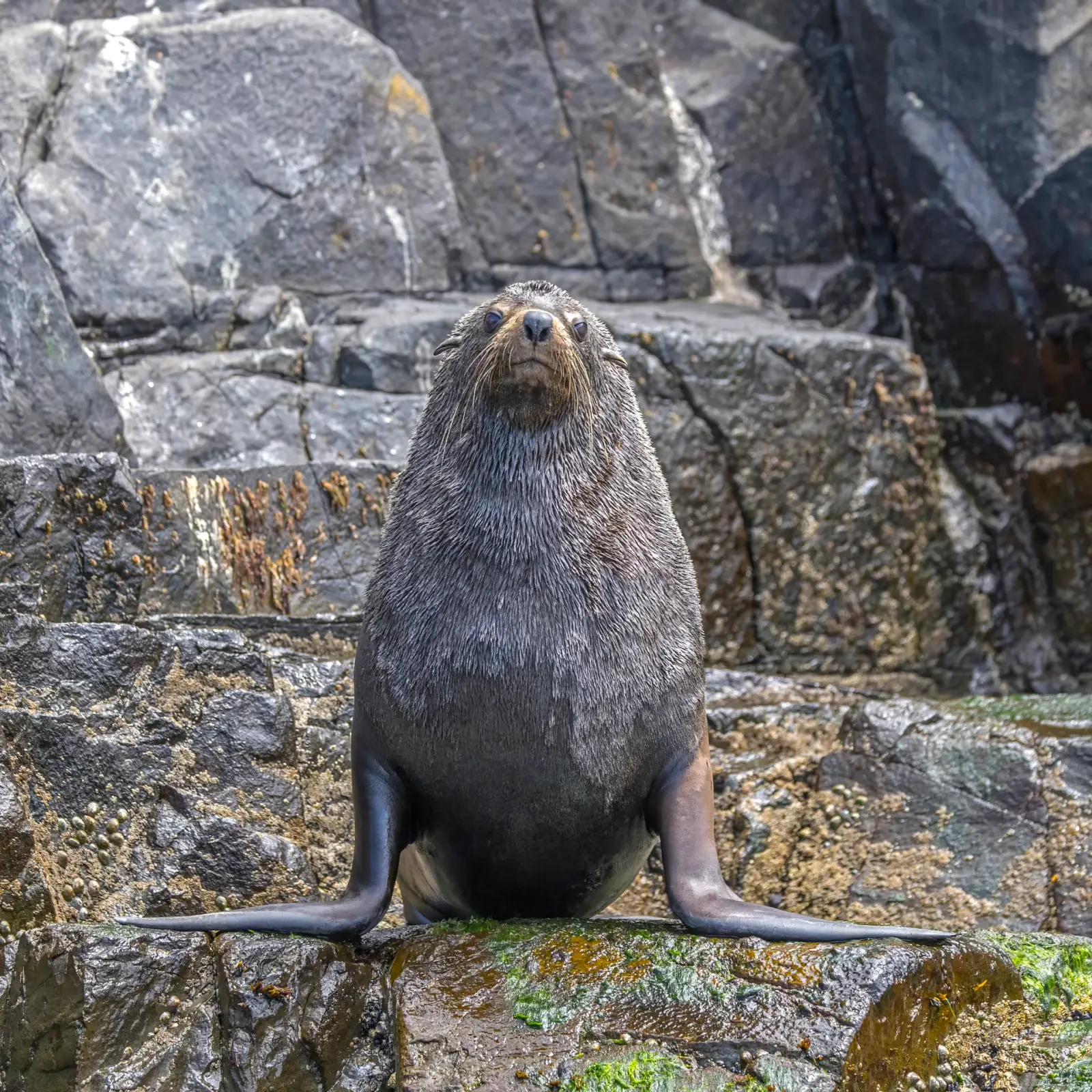
Australian fur seals (Arctocephalus pusillus doriferus) are the primary seal species in Port Phillip Bay. They are large, powerful animals — males can weigh over 300 kilograms — but in the water they are remarkably graceful, curious, and playful. Melbourne's seal population is concentrated around a handful of rocky outcrops near the entrance to Port Phillip Bay, where the bay meets Bass Strait at the Heads.
Chinaman's Hat
Chinaman's Hat is the largest and most famous seal colony in Port Phillip Bay. This rocky outcrop sits in the waters near Queenscliff, close to the Pope's Eye area just inside the Heads. Hundreds of Australian fur seals haul out on the rocks here year-round, and the surrounding water is teeming with seals at all times. Chinaman's Hat is boat-access only — there is no way to reach it from shore — and it is the primary destination for guided seal swim tours operating from Sorrento and Queenscliff.
The seals here are accustomed to boats and swimmers. Juveniles in particular are incredibly curious and playful. They will approach you in the water, circle around you, blow bubbles in your face, and mimic your movements. It is not unusual to have half a dozen young seals swirling around you during a single water entry. The adults tend to be more relaxed and indifferent, though large bull seals should always be given space.
Pope's Eye
Pope's Eye is an artificial reef structure — a ring of bluestone rocks originally built in the 1880s as a fortification — located near the Heads. Over the decades it has become a significant wildlife habitat. Seals regularly haul out on the rocks, and the structure attracts a dense concentration of marine life including fish, octopus, and seabirds. Most seal swim tours combine a visit to both Chinaman's Hat and Pope's Eye, giving you two distinct encounters in a single trip.
Queenscliff Area
Seals are occasionally spotted from shore around Queenscliff harbour and the Queenscliff pier. These are usually individual animals passing through rather than colonies, but if you are in the area it is worth keeping an eye on the water. Queenscliff is also the departure point for some seal swim operators.
Portsea Area
Individual seals are sometimes seen around Portsea Pier and nearby reefs. These are not colony sites, but the proximity to the Heads means seals pass through regularly. If you are diving at Portsea and a seal appears, consider it a bonus — they are curious and may stay to investigate you for several minutes.
Seal Behaviour in the Water
Australian fur seals are among the most interactive marine animals you can encounter. In the water they are fast, agile, and playful. Juveniles especially love to engage with swimmers — they will spiral around you, dart in close and then shoot away, blow bubbles, and even gently mouth your fins (this is play behaviour, not aggression). They respond to movement and seem to enjoy it when you duck-dive, spin, or change direction. The more relaxed and playful you are, the more they will engage. If you float motionless on the surface, they may lose interest quickly. If you dive down and interact, they can stay with you for extended periods.
Where to Find Dolphins
Bottlenose dolphins (Tursiops truncatus) are the dolphin species found in Port Phillip Bay. A resident pod of approximately 120 individuals lives in the bay year-round, with the highest concentration in the southern reaches near the Heads. These are wild dolphins — they are not fed, trained, or confined — and every encounter depends on the dolphins choosing to be near you.
Sorrento and Portsea
The waters between Sorrento and Portsea are the most reliable location for dolphin encounters in Melbourne. The resident pod frequents this area because of the rich feeding opportunities where bay water meets ocean water at the Heads. Guided dolphin swim tours operate from Sorrento Pier, and this is where the vast majority of successful dolphin swims take place.
The dolphins are often spotted from shore at Sorrento Front Beach and Portsea Front Beach, particularly in the early morning. Seeing them from the beach does not guarantee an in-water encounter — they move quickly and may be kilometres away by the time you get a boat out — but it is a good sign that they are in the area.
Broader Port Phillip Bay
Dolphins are spotted throughout Port Phillip Bay, from the southern reaches all the way up to areas near Williamstown and St Kilda. However, encounters in the northern bay are opportunistic and unpredictable. The southern bay near the Heads remains the only area where consistent, planned dolphin swims are practical.
Sighting Patterns
Dolphins in Port Phillip Bay tend to be most active in the early morning hours. Tour operators typically depart at first light for the best chance of finding the pod. On calm, clear days, dolphins can be spotted from elevated positions on shore by looking for splashes, fins, or the distinctive arching movement as they surface to breathe. They often travel in groups of 5-30 individuals, and when they are feeding or socialising, they tend to stay in one area for extended periods.
Dolphin Behaviour
Swimming with dolphins is fundamentally different from swimming with seals. Dolphins are wild, fast-moving, and cannot be corralled or predicted. An encounter depends entirely on the dolphins choosing to interact. Sometimes they will swim directly to you, circle beneath you, and stay for 20 minutes of breathtaking interaction. Other times they will pass by at speed without a second glance. This unpredictability is part of what makes a successful dolphin swim so special — it is a genuine wild encounter, not a performance.
Guided Tours vs Independent Trips
One of the first decisions you will need to make is whether to join a guided tour or attempt an independent trip. For most people, especially first-timers, guided tours are the clear recommendation. Here is why.
Guided Tours
Several licensed operators run seal and dolphin swim tours from Sorrento Pier. The most established include Moonraker Dolphin Swims and Polperro Dolphin Swims, both of which have been operating for years and have deep knowledge of the local dolphin and seal populations. Seal swim tours also operate from Queenscliff.
A typical guided tour costs $150-200 per person and includes boat transport, wetsuit hire, snorkel gear (mask, snorkel, fins), and a knowledgeable guide. Tours run for approximately 3-4 hours, during which the boat will locate the animals, position you in the water ahead of them (for dolphins) or take you directly to the colony (for seals), and manage multiple water entries and exits.
The key advantages of guided tours are significant. Operators know where the animals are — they have years of experience reading the bay and tracking the pod. They handle all the logistics of getting you safely to and from the encounter sites. They provide all the gear you need. They know the safe areas and will not take you into dangerous currents. And they are licensed, which means they follow strict codes of conduct that protect the animals while maximising your chance of a quality encounter.
For dolphin swims in particular, a guided tour is almost essential. Finding a pod of dolphins in open water, positioning a boat correctly, and getting swimmers in the water at the right moment requires skill and experience that is very difficult to replicate independently.
Independent Trips
Independent seal and dolphin encounters are possible but significantly more challenging. For seals, you need your own boat access — Chinaman's Hat and Pope's Eye are boat-access only, and the currents around the Heads make kayaking or paddling inadvisable for most people. If you own or can hire a boat and are comfortable navigating the Heads area, an independent seal swim is feasible, but you need to know the regulations and give the animals appropriate space.
For dolphins, independent encounters from shore are rare and unpredictable. Dolphins are occasionally seen close to shore at Sorrento and Portsea, and there are anecdotal reports of swimmers and divers encountering them at Portsea Pier, but you cannot plan around these sightings. They are happy accidents rather than reliable experiences.
Our recommendation: Book a guided tour, especially for your first time. The cost is reasonable for what you get, and the success rates are far higher than anything you can achieve independently. Once you have done a guided tour and understand the area, you can make an informed decision about whether independent trips make sense for you.
The Freediving Advantage
If there is one activity that pairs perfectly with marine mammal encounters, it is freediving. Freedivers consistently have the best, most interactive, and most memorable encounters with both seals and dolphins — and there are clear reasons why.
No bubbles, no noise. Scuba divers produce a constant stream of bubbles and the mechanical sound of a regulator with every breath. This is unnatural and can be off-putting to marine mammals. Freedivers are silent. They enter the water quietly and move through it without any artificial noise. Seals and dolphins are noticeably more relaxed around freedivers than around scuba divers.
Freedom of movement. A freediver can duck-dive to the bottom, spin, roll, change direction, and move in three dimensions just like the animals themselves. Scuba divers are weighted down with heavy equipment and restricted in their movement. Snorkelers are confined to the surface. Freedivers occupy the same space as the animals and can move in ways that invite interaction.
Dolphins respond to playful movement. Dolphins are intelligent and curious. They respond to energy and play. Spinning underwater, making eye contact, diving and surfacing — these are signals that dolphins recognise and respond to. Many of the best dolphin encounters involve the dolphins mimicking the movements of freedivers, creating a genuine back-and-forth interaction that surface snorkelers simply cannot achieve.
Seals love freedivers. Juvenile seals are the underwater equivalent of puppies — they want to play, and they want a playmate who can keep up. When a freediver dives to the bottom and looks up, seals will follow. They will spiral around you, blow bubbles, and dart in close before zooming away. The interaction is reciprocal and joyful in a way that surface snorkeling rarely provides.
Freediving Tip
When swimming with seals, try duck-diving to the bottom and looking up at them. Juvenile seals are incredibly curious and will often follow you down, blowing bubbles and spinning around you. The more playful and relaxed you are, the more they'll engage. Avoid chasing — let them come to you.
Contrast with snorkeling and scuba. Snorkelers float on the surface looking down. They see the animals below but cannot interact with them in their own element. Scuba divers can go deep but are noisy, bulky, and slow-moving. Freedivers combine the best of both worlds — they can go where the animals are, move naturally, and do it all in silence.
You do not need to be an expert. Even basic freediving skills make a dramatic difference. If you can comfortably duck-dive to 5-10 metres, hold your breath for 30-60 seconds, and move relaxed underwater, you will have vastly better encounters than someone floating on the surface with a snorkel. A single weekend freediving course is enough to develop these skills.
To learn more about getting started, see our complete guide to freediving in Melbourne and our guide to choosing a freediving course in Melbourne.
Best Conditions and Seasons
Both seals and dolphins are present in Port Phillip Bay year-round, but conditions vary significantly across the seasons. Planning your trip for the right time of year and the right weather window will dramatically improve your experience.
Seals
The seal colonies at Chinaman's Hat and Pope's Eye are permanent — seals are there every day of the year. This makes seal swims the more reliable of the two encounters. That said, conditions matter for your comfort and the quality of the interaction.
- Best period: October to April. Warmer water temperatures (16-22°C) make extended time in the water comfortable. Calmer weather is more likely, and boat trips are more pleasant
- Peak: December to February. Seal pups born in late spring enter the water during summer and are at their most playful and curious during these months. Pup encounters are the highlight of seal swimming — they are fearless, energetic, and utterly enchanting
- Winter (May-September): Still possible and the seals are still there, but water temperatures drop to 12-15°C and conditions at the Heads can be rough. You will need a thick wetsuit (7mm) and more tolerance for cold. The upside is fewer crowds
Dolphins
The resident bottlenose pod is present year-round, but encounter quality depends heavily on conditions.
- Best period: December to March. Calmest conditions and warmest water. Dolphins tend to be more active and more likely to approach swimmers on calm, sunny days
- Morning trips are best. Tour operators depart at first light for a reason — the water is typically calmest in the morning before the afternoon sea breeze picks up, and dolphins are often more active early in the day
- Calm days are essential. When the bay is rough, the boat ride is uncomfortable, visibility drops, and dolphins are harder to locate and less likely to interact with swimmers
Water Conditions
- Temperature: The Heads area ranges from 12-15°C in winter to 18-22°C in summer. A 5mm wetsuit is the minimum for most of the year. In winter, a 7mm suit with hood and gloves is recommended
- Visibility: Highly variable, ranging from 3 metres on a poor day to 10 metres or more on a good day. Visibility near the Heads is often better than further up the bay due to ocean water influence. After rain or storms, wait 48-72 hours for the water to clear
Weather to Avoid
Strong winds — particularly southerly and south-westerly winds — make the Heads area rough and potentially dangerous. Conditions can change quickly, and what looks calm from shore can be significantly choppier in the open water near the seal and dolphin sites. Trust the tour operators if they cancel due to conditions — it is always the right call. Check the forecast before booking and aim for days with winds under 15 knots.
What to Expect
Setting realistic expectations is important. Wildlife encounters are inherently unpredictable, and while the success rates for Melbourne's seal and dolphin swims are good, no two trips are the same.
Seal Swims
Seal swims have a very high success rate — over 90%. The seals at Chinaman's Hat are resident and are not going anywhere. As long as your boat can get to the site (which depends on weather and sea conditions), you will see seals.
A typical seal swim involves anchoring near the colony and entering the water with a mask, snorkel, and fins. You will spend 30-60 minutes in the water, during which curious seals — especially juveniles — will come to investigate you. The juveniles are the stars of the show: playful, bold, and endlessly entertaining. Adult seals are more likely to observe from a distance or ignore you entirely, which is fine. Large bull seals should be given wide berth as they can be territorial.
The interaction is reciprocal. If you float motionless on the surface, seals may approach briefly and then lose interest. If you duck-dive, spin, and engage, they will stay longer and interact more. Freedivers consistently report the longest and most memorable seal encounters.
Dolphin Swims
Dolphin swims have a moderate success rate — roughly 60-70% of tours result in a meaningful in-water encounter. The dolphins are wild and mobile, and some days they simply do not want to interact with swimmers. This is normal and should be expected.
A typical dolphin swim tour involves the boat searching for the pod (using spotters and local knowledge), then positioning swimmers in the water ahead of the dolphins' path. You may enter and exit the water multiple times during a single tour as the boat repositions. When a dolphin encounter happens, it can range from a brief pass-by to a magical 20-minute interaction with multiple dolphins circling and diving around you. Be prepared for cold (you will be in and out of the water repeatedly), waiting (there can be long stretches between sightings), and the possibility that the dolphins may not engage on your particular day.
When it does work, a dolphin swim is one of the most extraordinary experiences you can have in the ocean. The eye contact, the intelligence, the grace of these animals at close range — it stays with you.
Photography
A GoPro or action camera is the minimum recommended camera for seal and dolphin swims. Encounters are fast, unpredictable, and happen at close range — all of which suit the wide-angle, durable, and waterproof characteristics of an action camera. Do not let the camera dominate your experience, though. Some of the best encounters happen when you put the camera down and simply engage with the animals.
Safety and Regulations
Swimming with marine mammals comes with responsibilities — both for your safety and for the welfare of the animals. Victoria has clear regulations governing interactions with seals and dolphins, and the Heads area where most encounters take place has its own set of hazards.
Wildlife Regulations
Under Victorian wildlife protection laws, there are minimum approach distances for marine mammals. You must not approach seals closer than 5 metres in the water. For dolphins, the minimum approach distance is 30 metres. However — and this is the key point — the animals are free to approach you. If a seal swims up to within arm's reach (which they frequently do), that is fine. The regulation prevents you from chasing or cornering animals, not from them choosing to interact with you.
Wildlife Regulations
Under Victorian wildlife regulations, you must not approach seals closer than 5 metres or dolphins closer than 30 metres in the water. However, the animals are free to approach you. Never touch, chase, feed, or harass marine mammals. Tour operators are licensed and follow strict codes of conduct. If you encounter marine mammals independently, give them space and let them choose to interact.
Additional rules: never touch, chase, feed, or harass marine mammals. Do not attempt to ride or grab onto seals or dolphins. Do not separate mothers from pups or calves. Do not use flash photography at close range. Licensed tour operators follow strict codes of conduct and will brief you on these rules before every trip.
The Heads: Currents and Hazards
The area around Port Phillip Heads — where most seal and dolphin encounters take place — is one of the most hydrodynamically active stretches of water in Australia. Billions of litres of water flow in and out of this narrow gap twice a day, creating powerful tidal currents. This is why guided tours are so strongly recommended: operators know the safe areas, the timing of the currents, and the conditions under which it is safe to put swimmers in the water.
If you are operating independently, you must understand tidal flows, carry appropriate safety equipment, and never enter the water in the main channel of the Heads. Even experienced boaters can be caught out by the speed and strength of the currents in this area.
Exposure Protection
Wear appropriate thermal protection for the conditions. A 5mm wetsuit is the minimum for most of the year. In winter (May-September), a 7mm wetsuit with hood and gloves is recommended — water temperatures can drop to 12°C and you may be in the water for 30-60 minutes. Tour operators provide wetsuits, but they are typically basic hire suits. If you have your own well-fitting wetsuit, bring it — you will be significantly warmer and more comfortable. For gear recommendations, see our freediving gear guide.
Sea Sickness
The boat ride from Sorrento or Queenscliff to the seal and dolphin areas can be choppy, particularly when crossing the Heads or on days with any swell. If you are prone to sea sickness, take medication (such as travel sickness tablets) at least 30 minutes before departure. Ginger tablets and acupressure wristbands can also help. Sit at the back of the boat, keep your eyes on the horizon, and stay in fresh air. Sea sickness can ruin an otherwise incredible trip, so take it seriously.
Bull Seals
Large male (bull) Australian fur seals can weigh over 300 kilograms and are territorial, particularly during breeding season (November-January). While attacks on swimmers are extremely rare, bull seals can be intimidating and should be given plenty of space. Tour operators know which areas of the colony to avoid and will steer you toward the playful juveniles rather than the territorial males. If you encounter a bull seal that is posturing or barking, calmly and slowly move away without turning your back on it.
Photography Tips
Photographing seals and dolphins in the water is challenging but hugely rewarding. The encounters are fast-paced, the animals are constantly moving, and the conditions (low light, variable visibility, cold water) add complexity. Here is how to give yourself the best chance of great shots.
- GoPro or action camera: This is the easiest and most practical option. Wide-angle lens captures the whole scene even at close range. Waterproof, tough, and easy to operate with cold hands. Mount it on a wrist strap or short pole for stability
- Compact cameras: An Olympus TG-7 or similar rugged compact with a wide-angle wet lens is an excellent step up from a GoPro. Better image quality and more control, while still being manageable in dynamic conditions
- Shoot video and stills: Encounters are fast and unpredictable. Video captures the whole interaction and you can pull stills from the footage later. Many of the best seal and dolphin photos are actually video frame grabs
- Use natural light: Animals are usually near the surface where natural light is abundant. Avoid using flash, especially at close range with dolphins — it can startle them. With seals, flash is less of a concern but natural light generally produces better results
- Pre-set your camera: Configure your camera settings before you enter the water. You will not have time to fumble with menus when a dolphin is swimming past. For GoPro, set it to record before you jump in
- Don't chase the shot: The best animal encounters happen when you are calm and present. If you are constantly chasing the perfect photo, you will miss the experience itself. Get your footage, then put the camera down and simply be there
For a deeper guide to underwater photography gear and techniques, see our underwater photography guide.
Frequently Asked Questions
Where can you swim with dolphins in Melbourne?
The best place to swim with dolphins near Melbourne is in the waters off Sorrento and Portsea at the southern end of Port Phillip Bay. A resident pod of around 120 bottlenose dolphins lives in this area year-round. Guided dolphin swim tours operate from Sorrento Pier, with operators like Moonraker and Polperro providing boats, spotters, and equipment. Tours run year-round with the best conditions from November to April.
Where can you swim with seals in Melbourne?
Australian fur seals can be found at Chinaman's Hat and Pope's Eye, rocky outcrops near the entrance to Port Phillip Bay (the Heads). These are boat-access only sites, reached via guided tours from Sorrento or Queenscliff. The seals are resident year-round and are famously playful and curious, especially the juveniles. Seal swim tours have a very high success rate (over 90%).
How much does a dolphin swim cost in Melbourne?
Guided dolphin swim tours from Sorrento typically cost $150-200 per person and include boat transport, wetsuit hire, snorkel gear, and a guide. Tours usually last 3-4 hours with multiple water entries. Seal swim tours are similarly priced. Combination seal and dolphin tours are sometimes available. Booking in advance is recommended, especially during summer.
Is freediving better than snorkeling for swimming with seals and dolphins?
Yes. Freediving gives you a significant advantage for marine mammal encounters. Without the noise of scuba bubbles and with the ability to dive below the surface, freedivers can interact more naturally with seals and dolphins. Seals in particular love to play with freedivers, mimicking dives and blowing bubbles. Even basic freediving skills — comfortable duck dives to 5 metres and a relaxed breath-hold — dramatically improve the quality of encounters compared to floating on the surface with a snorkel.