Lonsdale Wall Diving Guide
Victoria's most spectacular wall dive — an ancient underwater gorge carved by the Yarra River during the last ice age, now home to world-class marine life and dramatic vertical terrain.
Last updated:
Lonsdale Wall isn't just Victoria's best wall dive. It's a geological marvel — a kilometre-long underwater cliff that marks the path of the ancient Yarra River as it carved its way to the sea during the last ice age.
When sea levels were 120 metres lower than today, the Yarra flowed through what is now Port Phillip Bay and cut a deep gorge through the bedrock at the bay's entrance. As the ice melted and the seas rose, that gorge was flooded, creating the narrow passage known as The Rip — and leaving behind one of Australia's most dramatic underwater landscapes.
The wall drops from 8 metres at its shallowest point to beyond 40 metres in some sections. The vertical rock face is covered in soft corals, sponges, gorgonians, and invertebrate life. Blue devilfish — one of Victoria's most striking fish species — patrol the wall in schools. Crayfish hide in crevices. Nudibranchs, sponges, and ascidians create a living tapestry of colour against the ancient stone.
But Lonsdale Wall is not a site to take lightly. It sits at the entrance to Port Phillip Bay where the full force of the bay's tidal exchange rushes through The Rip. This is advanced diving territory — accessible only by boat, diveable only during slack water windows, and requiring experience, planning, and respect for the ocean's power.
This guide covers everything you need to know to safely dive Lonsdale Wall.
Overview
Lonsdale Wall is a submerged cliff face located at Port Phillip Heads, the narrow entrance to Port Phillip Bay. The wall runs roughly parallel to the coast near Point Lonsdale and forms part of the ancient river gorge that once carried the Yarra River out to Bass Strait.
During the Pleistocene ice age — as recently as 10,000 to 20,000 years ago — sea levels were dramatically lower than today. The Yarra River flowed across the dry floor of what is now Port Phillip Bay and cut a deep valley through the bedrock at the bay's current entrance. When the ice sheets melted and global sea levels rose, this valley was flooded, creating The Rip and submerging the gorge walls.
Today, those walls form some of the most spectacular underwater terrain in Victoria. Lonsdale Wall is the most accessible and most dived section, but the entire area around Port Phillip Heads offers dramatic topography and exceptional marine life.
The wall isn't a single continuous feature. Instead, it's broken into distinct sections — each with its own character, depth profile, and marine community. Charter operators refer to these sections by specific names: Foggy Reef, Paradise Wall, Party Point, The Grotto. Depending on conditions, tide, and skipper preference, you might dive one section or explore multiple areas on a single charter.
Location & Access
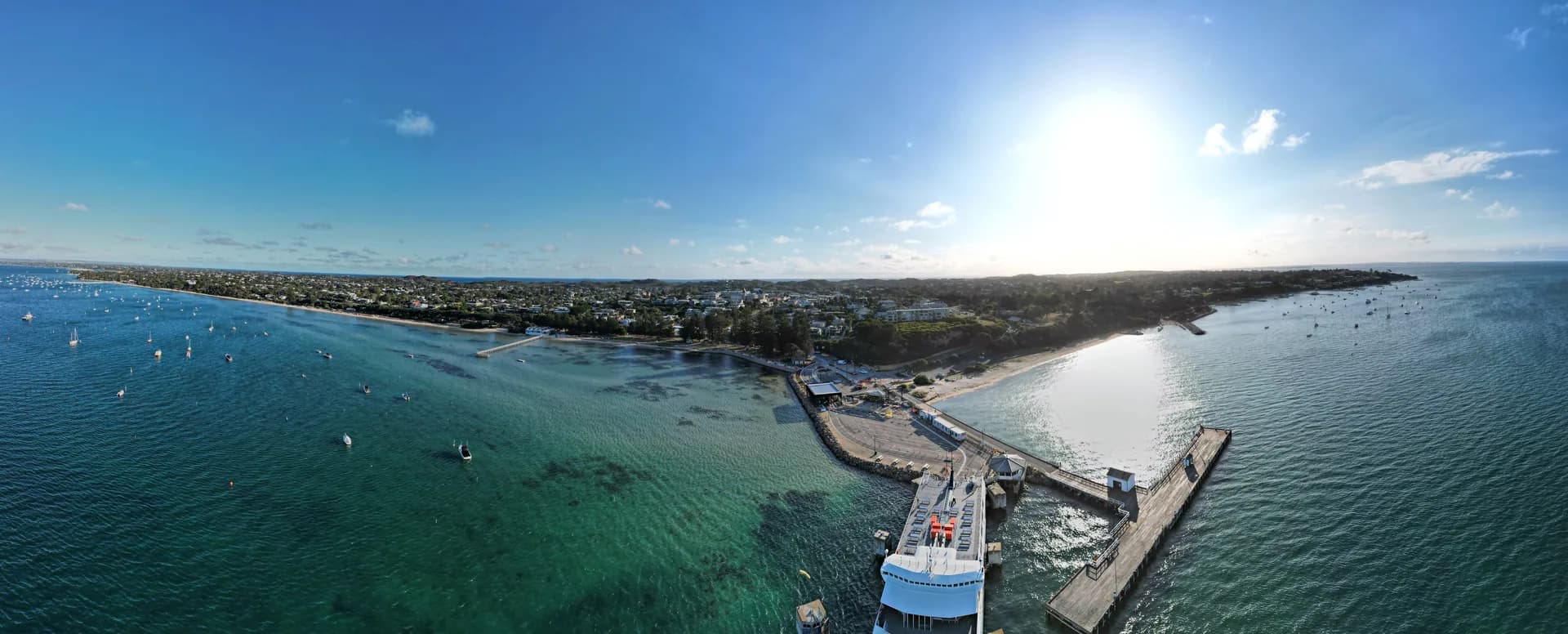
Lonsdale Wall is boat-access only. There is no shore entry to this site. Charter boats operate from two main locations:
Queenscliff Harbour
The primary departure point for Lonsdale Wall charters. Queenscliff is a historic fishing town at the eastern entrance to Port Phillip Heads, about 100 kilometres from Melbourne. The harbour is home to several established dive charter operators who run regular trips to The Heads and Lonsdale Wall.
- Drive time from Melbourne CBD: ~1.5 hours via the Bellarine Highway
- Charter operators: Check with local Queenscliff-based dive shops for current schedules and availability
- Boat journey to Lonsdale Wall: 10-15 minutes from Queenscliff Harbour
Portsea Pier
Some dive charters depart from Portsea on the Mornington Peninsula side of The Rip. This puts you slightly closer to some sections of the wall but requires a longer drive from Melbourne.
- Drive time from Melbourne CBD: ~2 hours via the Mornington Peninsula Freeway
- Boat journey to Lonsdale Wall: 5-10 minutes from Portsea pier
Both departure points are valid. Queenscliff is generally more popular for wall diving due to its proximity and the concentration of experienced charter operators. Most serious Victorian scuba divers and technical divers know the Queenscliff boats well.
Charter Booking Tip
Lonsdale Wall dives are entirely dependent on tidal conditions and weather. Charters may be cancelled or rescheduled at short notice if the current or sea state is unsafe. Book with flexibility and have a backup plan. Many operators offer alternative dive sites if The Heads are too rough.
Depth Profile
The depth at Lonsdale Wall varies significantly depending on which section of the wall you're diving. Here's a general profile:
- Top of the wall: 8-10m at the shallowest sections
- Mid-wall: 12-18m — the sweet spot for most recreational scuba diving
- Base of the wall: 25-35m in typical diving areas
- Beyond the wall: 40m+ in deeper sections and channels
Most recreational charters focus on the 10-25m range, where the marine life is densest and bottom time is maximised. Technical divers exploring deeper sections of the wall will descend beyond 30 metres, where the soft coral coverage becomes even more spectacular but narcosis and decompression obligations increase.
The wall itself is not perfectly vertical in all places. Some sections are near-vertical cliffs, while others are steep slopes with ledges, overhangs, and bommies jutting out from the main face. This variation creates diverse habitats and allows different species to occupy different niches.
Sub-Sites
“Lonsdale Wall” is actually a collective term for several distinct dive sites along the submerged gorge. Your charter operator will choose which section to dive based on current conditions, tidal timing, and their assessment of the day's safest and most interesting option.
Foggy Reef
One of the most popular sections of the wall. Foggy Reef features a sloping wall that drops from around 12 metres to 25-30 metres, with excellent soft coral coverage and a resident population of blue devilfish. The reef is named for the occasional patches of low visibility caused by tidal upwellings, though on good days visibility can exceed 15 metres.
This is a forgiving section of the wall for divers new to the site — the slope is manageable, the depth is recreational, and the marine life is outstanding. Expect to see schools of bullseyes, old wives, and sweep, along with crayfish, large sponges, and colourful gorgonian fans.
Paradise Wall
A more vertical section of the wall that drops from 10 metres to beyond 30 metres. Paradise Wall is known for its soft coral coverage — the wall face is carpeted in pink, orange, and yellow soft corals that extend their feeding polyps in the current. This is also a prime spot for blue devilfish, which seem to enjoy hovering along the wall in loose aggregations.
Paradise Wall offers dramatic underwater scenery. Looking down the wall into the blue is a humbling experience — the rock disappears into the depths, and the scale of the ancient river gorge becomes apparent.
Party Point
A prominent outcrop along the wall with ledges, swim-throughs, and overhangs. Party Point is named for the concentration of marine life that gathers here — schools of fish shelter under the ledges, crayfish hide in crevices, and the cracks in the rock support dense colonies of sponges and ascidians.
This section is slightly shallower than Paradise Wall, making it a good choice when current or visibility conditions are marginal. The topography is more complex, with features to explore rather than just a vertical drop.
The Grotto
A sheltered section of the wall with cave-like features and overhangs. The Grotto is darker and more enclosed than the open wall sections, and it attracts species that prefer low-light environments. Wobbegong sharks, eastern blue gropers, and large crayfish are often found here.
A torch is essential for diving The Grotto — the colours of the sponges and soft corals only reveal themselves under artificial light. It's a dramatic and atmospheric dive, but not recommended for divers uncomfortable in overhead environments.
Marine Life
The marine life at Lonsdale Wall is what elevates it from a geological curiosity to a world-class dive site. The combination of depth, current, and vertical terrain creates habitat for species rarely seen elsewhere in Port Phillip Bay.
Blue Devilfish
The star attraction at Lonsdale Wall. Blue devilfish (Paraplesiops meleagris) are medium-sized fish with electric blue spots covering their dark bodies. They're territorial and curious, often hovering in place as divers approach. Schools of 10-20 blue devilfish are common along the wall, making this one of the most reliable places in Victoria to see the species.
Blue devilfish are bold — they'll often approach divers closely, making them a favourite subject for underwater photographers. Their iridescent blue spots stand out brilliantly against the colourful wall.
Soft Corals, Sponges, and Gorgonians
The wall itself is the canvas. Pink, orange, yellow, and white soft corals coat the rock face, extending their feathery polyps to filter feed in the current. Sponges — massive barrel sponges, vase sponges, and encrusting species — dominate the lower sections of the wall. Gorgonian sea fans spread their delicate branches perpendicular to the current to maximise feeding efficiency.
This invertebrate coverage is what makes Lonsdale Wall so visually stunning. Entire sections of the wall are solid colour — there's barely a patch of bare rock visible.
Crayfish
Southern rock lobsters (crayfish) are abundant at Lonsdale Wall, sheltering in crevices and under ledges. These are large, healthy individuals — some exceeding 5 kilograms — protected by the no-take regulations of the marine national park. They're often visible during the day, with their long antennae protruding from their hiding spots.
Nudibranchs and Invertebrates
Like most Victorian dive sites, Lonsdale Wall supports a rich diversity of nudibranchs. Tambja verconis (blue-and-yellow), Chromodoris westraliensis (orange-and-purple), and many aeolid species can be found crawling over the sponges and soft corals. The wall is also home to feather stars, sea stars, brittle stars, sea urchins, and countless smaller invertebrates.
Weedy Seadragons
Weedy seadragons occasionally appear along the shallower sections of Lonsdale Wall, drifting in the kelp and over the reef. They're less common here than at sheltered pier sites, but sightings are regular enough that divers should keep an eye out. Finding a seadragon hovering along the wall is a memorable experience.
For more on diving with seadragons, see our guide to freediving with weedy seadragons.
Other Species
Expect to see old wives, sweep, bullseyes, leatherjackets, wrasse, magpie perch, eastern blue gropers, Port Jackson sharks, smooth rays, and schools of yellowtail. Deeper sections of the wall occasionally attract pelagic visitors — kingfish, tuna, and even seals have been recorded.
Freediving Considerations
Lonsdale Wall is not a freediving site in the conventional sense. Let's be very clear about this.
The wall is primarily scuba territory. The depth, the currents, the boat-only access, and the remote location make this an advanced dive site that requires equipment redundancy and decompression planning. Most recreational scuba divers consider Lonsdale Wall to be at the upper limit of their experience level.
That said, there are shallow sections of the wall — particularly around 8-12 metres — that are technically accessible to very experienced freedivers in perfect conditions during slack water. But this is not beginner freediving. This is advanced, expedition-style freediving that requires:
- Significant freediving experience, including training to at least AIDA 3 / SSI Level 2 or equivalent
- Comfort freediving in open ocean conditions with current and limited visibility
- A freediving-experienced buddy and surface support person
- Careful coordination with the boat operator
- Perfect timing with slack water windows
- Acceptance that the dive may be aborted if conditions change
Most freedivers visiting Lonsdale Wall will be doing so as part of a mixed scuba/freediving charter where the primary activity is scuba diving and the freediving is opportunistic. If you're a freediver interested in exploring The Heads, speak directly with charter operators to discuss your experience level and whether they can accommodate you.
Advanced Site Warning
Lonsdale Wall is not a site for recreational freediving. The combination of depth, current, boat traffic, and isolation makes this an advanced dive requiring careful planning and experience. Do not attempt to freedive Lonsdale Wall without proper training, experienced support, and favourable conditions. For accessible freediving sites, see our guide to Melbourne's best freediving spots.
Conditions & Tides
Conditions at Lonsdale Wall are dominated by one thing: The Rip.
The Rip is the narrow channel at the entrance to Port Phillip Bay, and it's one of the most powerful tidal passages in Australia. Twice a day, billions of litres of water rush in and out of the bay through this bottleneck, generating currents that can exceed 8 knots at peak flow. These currents are strong enough to rip poorly secured boats from their moorings and sweep divers away in seconds.
Diving at Lonsdale Wall is only possible during slack water — the brief window around high tide and low tide when the current slows to a manageable level. Even during slack water, there is often residual current, and divers need to be prepared to hold onto the wall or abort the dive if the current picks up.
Tidal Planning
Charter operators time their trips around the tide tables. A typical Lonsdale Wall dive might look like this:
- Depart harbour 1-1.5 hours before slack water
- Steam to the site and brief the divers
- Drop divers into the water as the current eases
- Allow 30-45 minutes of dive time during the slack window
- Recover divers before the current picks up again
- Steam back to harbour or move to a second dive site
The slack water window at The Rip is short — typically 30-60 minutes depending on the strength of the tidal exchange. Miss the window, and the dive is off.
Visibility
Visibility at Lonsdale Wall is highly variable. On excellent days, it can reach 20 metres or more, allowing you to see the full vertical drop of the wall. On poor days, it can be as low as 3-5 metres, particularly if recent rainfall has brought sediment into The Rip or if upwellings are stirring nutrients from deeper water.
Average visibility is 8-12 metres, which is more than adequate for enjoying the wall and its marine life.
Water Temperature
- Summer (Dec-Feb): 16-20°C
- Autumn (Mar-May): 14-18°C
- Winter (Jun-Aug): 11-14°C
- Spring (Sep-Nov): 12-16°C
Water at The Heads is generally cooler than inside the bay due to the influx of Bass Strait water. A 5mm wetsuit or drysuit is recommended year-round for scuba divers. Freedivers will want a 5mm or 7mm suit depending on personal cold tolerance.
Sea State
The entrance to Port Phillip Bay is exposed to swells from Bass Strait. Even on relatively calm days, there can be swell running through The Rip. Charter operators will cancel trips if the sea state is unsafe for boarding and diving.
Safety
Lonsdale Wall is an advanced dive site. Treat it with respect.
Current Hazards
The greatest danger at Lonsdale Wall is being swept away by current. If you're diving during what should be slack water and you feel a strong current developing, end the dive immediately. Do not try to fight the current. Ascend safely, deploy your surface marker buoy (SMB), and allow the current to carry you while the boat tracks your position.
All divers at Lonsdale Wall must carry an SMB and know how to deploy it. The boat will be tracking bubbles and SMBs — stay visible.
Depth and Decompression
It's easy to go deep at Lonsdale Wall. The wall drops away beneath you, and following it down is tempting. Monitor your depth constantly and stick to your planned maximum depth. Decompression stops are common on deeper dives, and missed decompression is a serious risk.
For scuba divers, a dive computer is mandatory. Dive tables are not adequate for multi-level profiles on a wall.
Equipment Redundancy
Many experienced divers treat Lonsdale Wall as a technical dive and bring redundant gas supplies (pony bottles or twin tanks). If your primary regulator fails at 25 metres with a current running, you need a backup. Consider your experience level and equipment configuration carefully.
Boat Separation
If you surface away from the boat, stay calm. Deploy your SMB, stay at the surface, and conserve energy. The boat will come to you — charter operators are experienced in recovering divers swept by current. Do not attempt to swim against the current back to the boat.
Buddy Protocols
Buddy separation is a serious risk at Lonsdale Wall, particularly if visibility is reduced. Maintain close contact with your buddy throughout the dive. Agree on hand signals and contingency plans before descending.
Critical Safety Reminder
Lonsdale Wall is one of Victoria's most advanced dive sites. Do not dive here unless you have significant open-water experience, are comfortable in current, and have practiced emergency ascents and SMB deployment. If you are uncertain about your ability to handle the conditions, speak to your charter operator and consider diving a less challenging site until you have more experience.
Marine National Park Status
Lonsdale Wall sits within the Port Phillip Heads Marine National Park, a no-take marine reserve established to protect the unique ecosystems at the entrance to Port Phillip Bay. This means:
- No fishing: All fishing, spearfishing, and collection of marine life is prohibited
- No anchoring on reef: Boats must use moorings or anchor on sand to avoid damaging the reef structure
- No collection: You cannot remove shells, rocks, or any natural objects from the marine park
These protections are why Lonsdale Wall supports such healthy marine life. The large crayfish, abundant fish schools, and dense invertebrate coverage are the result of decades of protection. Respect the park regulations and help preserve this site for future generations.
The marine park also includes several other dive sites in the area, including nearby reefs and the iconic Pope's Eye, a historic fort structure that now serves as a marine reserve and wildlife sanctuary.
Frequently Asked Questions
How do you get to Lonsdale Wall?
Boat only. Charter boats depart from Queenscliff harbour or Portsea pier. The wall is located at Port Phillip Heads near Point Lonsdale. You cannot access it from shore. Charters must be booked in advance, and dives are entirely weather and tide dependent.
Is Lonsdale Wall suitable for freediving?
Only the shallowest sections (8-12m) are accessible to advanced freedivers, and only in perfect conditions during slack water. Most of the wall is scuba territory. It requires significant experience, careful planning, and experienced support. This is not a site for recreational or beginner freediving. For accessible freediving sites, see our guide to Melbourne's best freediving spots.
How deep is Lonsdale Wall?
The top of the wall starts at around 8 metres and drops beyond 40 metres in places. Most diving occurs between 10-25 metres where the marine life is densest and recreational dive limits are respected. Technical divers explore deeper sections, but this requires advanced training and equipment.
When can you dive Lonsdale Wall?
Only during slack water periods when tidal currents are minimal — typically a 30-60 minute window around high tide and low tide. The Rip generates powerful currents that make diving dangerous at other times. Dives must be carefully planned around tide tables, and charters may be cancelled if conditions are unsafe.