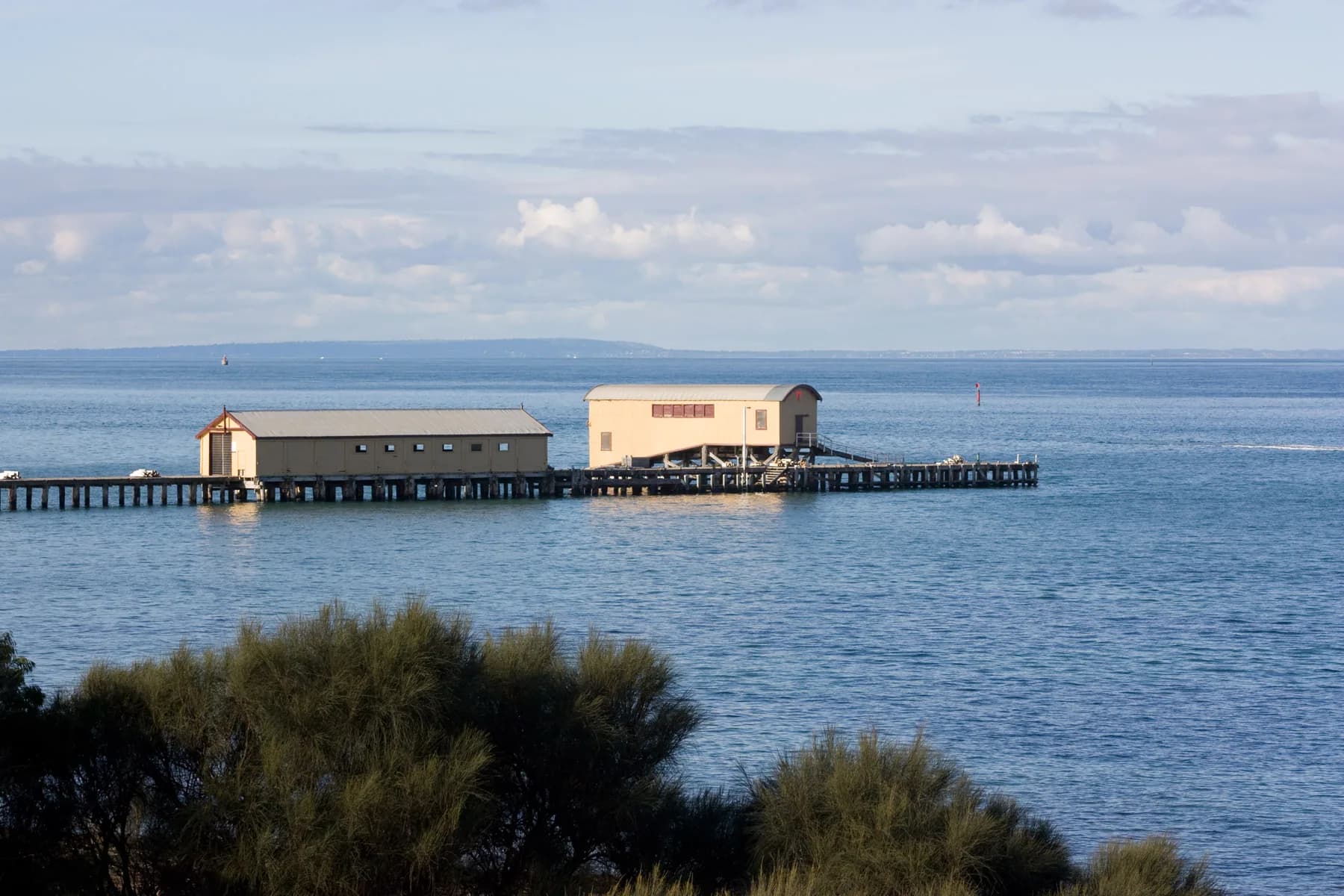
Queenscliff Diving & Snorkeling Guide
Gateway to Port Phillip Heads — shore diving at Cottage by the Sea, the historic Queenscliff Pier, and the departure point for Lonsdale Wall, Pope's Eye, and seal and dolphin encounters.
Last updated:
Queenscliff sits at the southern tip of the Bellarine Peninsula, at the entrance to Port Phillip Bay where the sheltered waters of the bay meet the wild currents of Bass Strait. This geographic position gives Queenscliff a dual identity: it is both an excellent shore diving destination and Victoria's premier boat diving hub for some of the state's most iconic dive sites.
Cottage by the Sea is the best shore dive on the Bellarine Peninsula — a kelp forest and reef system accessible from the beach that rivals many boat-only sites. Queenscliff Pier offers easy pier diving for divers and snorkelers of all levels. And from Queenscliff harbour, boats depart daily for Lonsdale Wall, Pope's Eye, Chinaman's Hat, and the wild open waters of The Rip.
Whether you are a freediver seeking kelp forest immersion, a scuba diver looking to access the Heads area, or a snorkeler wanting a relaxed afternoon at the pier, Queenscliff delivers. This guide covers everything you need to plan your visit.
Overview
Queenscliff is a historic maritime town with a population of around 3,000, swelling to many times that during summer. It sits at the mouth of Port Phillip Bay, facing across The Rip toward Point Lonsdale on the opposite side and Portsea on the bay's eastern shore. For over a century, Queenscliff has been a gateway to the sea — home to commercial fishers, naval facilities, and recreational boaters navigating one of the most challenging entrances in southern Australia.
For divers, Queenscliff offers variety. Unlike many dive destinations that specialise in one type of diving, Queenscliff gives you access to shallow shore dives, deep boat dives, pier diving, kelp forests, open water, seals, dolphins, and some of the most dramatic underwater topography in Victoria. It is one of the few places where you can do a beginner-friendly snorkel at the pier in the morning and a deep drift dive on Lonsdale Wall in the afternoon.
The town itself is charming and well-equipped for visitors. Cafes, restaurants, accommodation, and a strong maritime culture make Queenscliff a comfortable base for a weekend of diving. It is quieter and less developed than the Mornington Peninsula towns across the bay, which gives it a more relaxed, local feel.
Cottage by the Sea Shore Dive
Cottage by the Sea is the standout shore dive in the Queenscliff area and arguably the best shore dive on the entire Bellarine Peninsula. This is a proper kelp forest dive — not a rubble field with a few strands of kelp, but dense stands of bull kelp (Durvillaea potatorum) and crayweed swaying in the surge over a reef structure that drops from 3 metres to around 12 metres.
The site is named after the Cottage by the Sea holiday camp that sits on the foreshore. Access is via the beach immediately adjacent to the camp. From the shore, you swim out over sand and scattered low reef, and within 100 metres you hit the main reef edge where the kelp begins. The kelp forest is extensive — you can spend an hour working along the reef without covering the full area.
Marine Life at Cottage by the Sea
The kelp forest is the main attraction, but it is the ecosystem it supports that makes the dive worthwhile. Kelp forests are among the most productive marine habitats on Earth, and this one is no exception. Old wives, leatherjackets, wrasse, and sweep shelter in the kelp canopy. Crayfish tuck into crevices in the reef. Blue-throat wrasse — one of Victoria's most colourful fish — dart between the fronds. Port Jackson sharks rest on the sand at the base of the reef during winter and spring.
Weedy seadragons are occasionally seen here, though they are less common than at sites further up the bay like Flinders Pier. Nudibranchs are present, though again, not in the density you would find at dedicated macro sites. The highlight is the reef structure itself and the immersive feeling of diving through a healthy kelp forest — a habitat that is increasingly rare in parts of southern Australia due to warming waters and urchin barrens.
Depth and Dive Profile
- Entry point: Sandy beach next to Cottage by the Sea (western end of the beach)
- Inshore area: 1-3m depth, sand and scattered reef, suitable for snorkeling
- Main reef edge: 5-8m depth, kelp forest begins, accessible to all divers and freedivers
- Deeper reef: 8-12m depth, sparser kelp, larger boulders, more fish life
The depth profile makes this an excellent site for freedivers. You can spend a full session exploring the 5-8 metre zone where the kelp is densest, or venture deeper for more solitude. The kelp fronds provide visual reference for navigation, and the gentle sloping reef means you can adjust your depth easily.
Conditions at Cottage by the Sea
Being on the ocean side of the Heads, Cottage by the Sea is more exposed than bay-side sites. Conditions are highly dependent on swell, wind, and tide. Northerly winds are best as they provide offshore conditions and flat water. Southerly and south-westerly winds bring swell and make the site undiveable. Check the surf forecast before heading out — if there is any significant swell running, give it a miss.
Tidal currents can be significant here, particularly on spring tides when large volumes of water are flowing in and out of the bay. The safest time to dive is around slack water (the period around high or low tide when the current pauses). Avoid diving during peak tidal flow, especially if you are not experienced in currents.
Cottage by the Sea Entry and Conditions
Cottage by the Sea is an exposed ocean-side site. Only dive here on calm days with northerly winds and small swell. Check the surf forecast and the tide chart. Dive around slack water (high or low tide) to avoid strong currents. If there is visible surge or white water at the entry point, do not enter. Conditions can change quickly near the Heads.
Queenscliff Pier
Queenscliff Pier is the more accessible and sheltered diving option in town. It sits in the harbour on the bay side, which means it is protected from ocean swell and generally dived in far calmer conditions than Cottage by the Sea. The pier is a working structure used by fishing boats and recreational vessels, but it also serves as a popular dive and snorkel site.
The pier structure is concrete with a mix of pylons and platform sections. The pylons support typical pier marine life — sponges, ascidians, bryozoans, and the small creatures that live among them. You will find nudibranchs, brittle stars, sea stars, small fish sheltering in the pylon shadows, and occasionally an octopus or cuttlefish. Seahorses are present but require patience and a keen eye to locate.
Depth and Layout
The inshore area near the pier entrance is very shallow — 1-3 metres — making it ideal for snorkeling and beginner freediving. The outer sections of the pier reach depths of 6-8 metres. The bottom is mostly sand with some rubble and low-profile reef.
Entry is from the shore adjacent to the pier, or from the beach on the eastern side of the harbour. Swim out along the pylons, working your way methodically along the structure. The best marine life is on the pylons themselves rather than the surrounding sand.
When to Dive the Pier
Queenscliff Pier can be dived year-round, and because it is sheltered from ocean swell, it is diveable on days when Cottage by the Sea is too rough. High tide is best for depth and visibility. On very low tides, the inshore area becomes too shallow to dive comfortably.
Be aware of boat traffic. This is a working pier, and vessels come and go regularly. Always use a dive float or surface marker buoy to make yourself visible. Stay close to the pylons and avoid the main channel where boats manoeuvre.
Snorkeling at Queenscliff Pier
The pier is an excellent snorkeling spot for families and beginners. The shallow depth, calm conditions, and easy access make it low-stress and approachable. There is enough marine life to keep snorkelers entertained — sponges on the pylons, small fish, and the occasional starfish or urchin. For a broader overview of snorkeling in Melbourne, see our guide to Melbourne's best snorkeling spots.
Boat Dive Hub
Queenscliff is not just about shore diving and pier diving. It is the primary departure point for boat dives to some of Victoria's most famous and dramatic dive sites, all of which sit in or near the entrance to Port Phillip Bay.
Lonsdale Wall
Lonsdale Wall is the ancient gorge of the Yarra River, carved during the last Ice Age when sea levels were 100 metres lower and the Yarra flowed through this channel on its way to Bass Strait. Today it is a sheer underwater cliff face dropping from 12 metres to over 40 metres, covered in sponges, gorgonians, and soft corals. Schools of kingfish, snapper, and trevally patrol the wall, and large bull rays glide over the sandy bottom.
Lonsdale Wall is one of Victoria's premier scuba dive sites, but it is less suited to freediving due to the depth. That said, the upper sections of the wall (12-20 metres) are accessible to advanced freedivers, and the wall face itself is so visually dramatic that even a shallow dive along the top is worthwhile. Most boat trips to Lonsdale Wall depart from Queenscliff.
Pope's Eye
Pope's Eye is Victoria's first marine reserve — a ring of bluestone rocks originally built as a fortification in the 1880s. The structure sits in the middle of the bay entrance, exposed to strong currents and nutrient-rich water. Over the decades it has become an artificial reef teeming with life: sponges, ascidians, fish schools, crayfish, and seals.
Australian fur seals haul out on the rocks and are commonly encountered in the water. Diving or snorkeling at Pope's Eye is as much about the seals as it is about the reef. Many seal swim tours stop at Pope's Eye as part of a broader marine wildlife tour. The depth ranges from 3 metres to around 15 metres, making it accessible to freedivers and snorkelers as well as scuba divers.
Chinaman's Hat
Chinaman's Hat is the largest seal colony in Port Phillip Bay — a rocky outcrop where hundreds of Australian fur seals haul out. This is the primary destination for seal swim tours. The juvenile seals are incredibly playful and curious, and swimming with them is one of the best wildlife encounters you can have anywhere near Melbourne.
Access is boat-only, and most tours depart from either Queenscliff or Sorrento on the Mornington Peninsula. Freedivers have a distinct advantage here — the seals respond enthusiastically to duck dives and playful movement underwater, making freediving the best way to interact with them.
The Rip
The Rip is the narrow channel between Point Lonsdale and Point Nepean where billions of litres of water flow in and out of Port Phillip Bay twice a day. The currents here are ferocious — among the strongest in Australia — and diving The Rip is strictly for experienced drift divers. When the conditions are right, The Rip offers exhilarating drift diving through a landscape of boulders, sand channels, and marine life adapted to high-flow environments.
This is not a beginner dive. It requires advanced skills, experienced boat operators, and a solid understanding of tidal flows. But for those with the experience, The Rip is one of the most adrenaline-fuelled dives in Victoria.
Seal & Dolphin Encounters
Queenscliff is one of two primary departure points for seal and dolphin swim tours in Victoria (the other being Sorrento). The proximity to the Heads means that seal colonies and dolphin feeding grounds are only a short boat ride away.
Australian fur seals are resident year-round at Chinaman's Hat and Pope's Eye. Seal swim success rates are very high — over 90% of tours result in seal encounters because the seals are always present. Bottlenose dolphins patrol the southern bay near the Heads, and while dolphin encounters are less predictable than seal encounters, the resident pod is large and sightings are common.
For a detailed guide to swimming with these animals, including what to expect, how to maximise your chances, and why freediving gives you a significant advantage, see our complete guide to swimming with seals and dolphins in Melbourne.
Dive Operators
Several dive operators are based in or service the Queenscliff area. Here are the main ones you should know about.
Scubabo
Scubabo is a freediving-focused operator based on the Bellarine Peninsula. They offer freediving courses (SSI Level 1, Level 2, and specialty courses), guided freediving sessions, and custom charters. If you are looking to improve your freediving skills or explore Queenscliff's sites with an experienced freediving guide, Scubabo is the operator to contact.
For advice on choosing a freediving course, see our guide to choosing a freediving course in Melbourne.
Bay City Scuba
Bay City Scuba is a scuba-focused operator that runs boat charters to Lonsdale Wall, Pope's Eye, and other sites around the Heads. They cater primarily to scuba divers but will accommodate competent freedivers on boat trips. Bay City Scuba also offers scuba training courses from beginner to advanced.
Sea All Dolphin Swims
Sea All Dolphin Swims operates seal and dolphin swim tours from Queenscliff harbour. Their tours focus on marine wildlife encounters — swimming with seals at Chinaman's Hat and Pope's Eye, and dolphin swims in the southern bay. Tours include wetsuit hire, snorkel gear, and a knowledgeable guide. They run year-round with the best conditions in summer.
Other Services
Several smaller charter operators and fishing charters in Queenscliff will take divers out on request. If you have your own group and want a custom trip, ask around at the harbour — the local fishing community is well-connected and experienced in navigating the Heads area.
Conditions
Conditions at Queenscliff are heavily influenced by the proximity to the Heads. Tides, currents, wind, and swell all play a role in determining whether a site is diveable on any given day.
Tides and Currents
The tidal exchange at the Heads is enormous. On spring tides (around full moon and new moon), billions of litres of water rush in and out of the narrow entrance twice a day. This creates powerful currents at sites near the Heads, including Cottage by the Sea, Pope's Eye, and Lonsdale Wall.
For shore dives at Cottage by the Sea, dive around slack water (the period around high or low tide when the current is minimal). For boat dives, your operator will time the trip to coincide with the best tidal conditions. Do not attempt to dive the Heads area independently without understanding the tides — the currents can be dangerously strong.
Wind
Northerly winds are ideal for Queenscliff diving. They provide offshore conditions at Cottage by the Sea and calm conditions in the bay. Southerly and south-westerly winds bring swell and rough conditions, particularly at exposed sites like Cottage by the Sea. If southerlies are forecast, stick to the pier or book a boat dive to a more sheltered site like Pope's Eye.
Visibility
Visibility at Queenscliff varies widely depending on tides, currents, and recent weather. At Cottage by the Sea and sites near the Heads, visibility can range from 3-5 metres on an average day to 10-15 metres on exceptional days when clear ocean water is being drawn into the bay. After heavy rain or strong winds, visibility can drop to 1-2 metres. Always check recent dive reports or ask local operators before committing to a dive.
Water Temperature
- Summer (December-February): 18-22°C — comfortable in a 5mm wetsuit, 3mm for warm days
- Autumn (March-May): 15-18°C — 5mm wetsuit recommended
- Winter (June-August): 12-15°C — 7mm wetsuit or drysuit, with hood and gloves
- Spring (September-November): 14-18°C — 5mm wetsuit, gloves useful in early spring
Best Time to Dive Queenscliff
Queenscliff is diveable year-round, but the best conditions are from November to April. During this period, water temperatures are warmer, winds are generally lighter, and swell is less frequent. Winter diving is still excellent for those who do not mind the cold — visibility is often better in winter, and the marine life is just as abundant. For more on timing your dives, see our guide to the best time to dive in Melbourne.
Nearby Sites
Queenscliff is part of a broader diving region on the Bellarine Peninsula. If you are spending a weekend in the area, consider visiting some of the nearby sites.
St Leonards Pier
St Leonards Pier is about 20 minutes north of Queenscliff along the Bellarine coast. It is a shallow, sheltered pier dive famous for seahorses and nudibranchs. The pier is less dramatic than Queenscliff Pier, but the marine life is exceptional if you are into macro photography or simply enjoy hunting for small creatures. For a full guide, see our St Leonards Pier diving guide.
Point Lonsdale
Point Lonsdale sits directly opposite Queenscliff on the western side of The Rip. Shore diving from Point Lonsdale is challenging due to surge and currents, but the Point Lonsdale Pier is a popular dive site. The underwater topography is dramatic, with large boulders and deep drop-offs close to shore.
Barwon Heads
Barwon Heads is further north along the coast toward Torquay. The Barwon River mouth and Barwon Heads Bluff offer shore diving and snorkeling, though conditions are highly dependent on swell and wind. This is more of an exploration site than a consistent dive destination, but it can be excellent on calm days.
Getting There
Queenscliff is located at the southern tip of the Bellarine Peninsula, approximately 90 minutes' drive from Melbourne's CBD. There are two main ways to reach Queenscliff.
Via Geelong and the Bellarine Highway
From Melbourne, take the Princes Freeway (M1) southwest toward Geelong. At Geelong, take the Bellarine Highway (B110) south through Drysdale and toward Queenscliff. The total drive time is around 90 minutes depending on traffic. This is the most direct route and the best option if you are coming from Melbourne or the western suburbs.
Via the Queenscliff-Sorrento Ferry
If you are coming from the Mornington Peninsula, the Queenscliff-Sorrento car ferry is a convenient and scenic option. The ferry runs multiple times daily (more frequent in summer) and takes approximately 40 minutes to cross Port Phillip Bay. The ferry accommodates cars, motorcycles, bikes, and foot passengers. This is a great way to combine diving on both sides of the bay in a single weekend.
Ferry bookings are recommended during peak summer periods (December-January) as crossings can fill up. Foot passengers and cyclists rarely need to book. For dive trips, arriving on the ferry is a pleasant start to the day — you cross the Heads and often see dolphins, seals, and seabirds from the deck.
Parking and Facilities
- Cottage by the Sea: Limited roadside parking near the beach access. Arrive early on weekends
- Queenscliff Pier: Public car park near the harbour and pier. Can be busy in summer. Pay-and-display parking in town
- Toilets: Public toilets available at the foreshore near the pier and at the harbour
- Change facilities: No dedicated change rooms at dive sites — most divers change at their vehicles or use a towel poncho
- Food and cafes: Queenscliff has several cafes, bakeries, and restaurants in the town centre, about a 5-minute walk from the pier. The 360Q restaurant is popular with visiting divers
- Accommodation: Multiple hotels, guesthouses, and holiday rentals in Queenscliff. The town is set up for weekend visitors
Frequently Asked Questions
Is Queenscliff good for diving?
Yes, excellent both as a shore dive destination (Cottage by the Sea is the best shore dive on the Bellarine) and as a boat dive hub for world-class sites like Lonsdale Wall and Pope's Eye. Queenscliff combines accessible shore diving with some of Victoria's most iconic boat dive sites, making it one of the most versatile dive destinations near Melbourne.
What dive operators are in Queenscliff?
Scubabo offers freediving courses and guided dives. Bay City Scuba runs boat charters to Lonsdale Wall and Pope's Eye. Sea All Dolphin Swims offers seal and dolphin swim tours. Multiple operators depart from Queenscliff harbour for boat dives and marine wildlife encounters. The town has good infrastructure for visiting divers.
Can you snorkel at Queenscliff?
Yes, Queenscliff Pier and the shallows at Cottage by the Sea are good snorkeling spots. The harbour area is sheltered and suitable for beginners. Cottage by the Sea offers deeper snorkeling over reef structures and kelp, while the pier provides easy access and abundant marine life. Queenscliff is one of the better Bellarine Peninsula locations for family snorkeling.
How do you get to Queenscliff?
90 minutes from Melbourne via the Bellarine Highway (via Geelong), or take the Queenscliff-Sorrento car ferry from the Mornington Peninsula (40-minute crossing). The ferry is particularly convenient if you are visiting both sides of Port Phillip Bay or combining Mornington Peninsula and Bellarine Peninsula diving in one trip. Queenscliff is at the southern tip of the Bellarine Peninsula, directly across from Sorrento and Portsea.